Porsche’s vision beyond electrification?

  • Brand: Porsche
  • Topic: Electric Vehicle Market, Strategy & Marketing, Supercars Future

Porsche recently shared an official announcement detailing its strategy for the foreseeable future. At first sight, it could look like the company is going back on its electrification plans after a few years of relatively underwhelming performances and heavy depreciation that affected the Taycan so much, it has almost become a symbol for the risks of buying luxury electric vehicles. However, on a second look, it appears there is more to it. But let’s back up a bit and look at the brand’s recent history.

Since launch, after a first period of strong interest by early adopters during which the Taycan sales grew quickly, the performance of full-electric vehicles has not satisfied expectations. After peaking in 2021, sales have stagnated at best through to 2023, and due to low demand and depreciation, they halved in 2024, going back to 2020 levels. In the first 9 months of 2025, Taycan sales fell by another 10% compared to an already poor 2024, but the new full-electric Macan seems to have obtained good results overall with over 36,000 units sold. These not only outpaced the 28,533 ICE ones but resulted in a total of 64,783, increasing by 18% the Macan sold up to Q3 2024.

Porsche's Yearly EV Sales (2021- Q2 2025*)
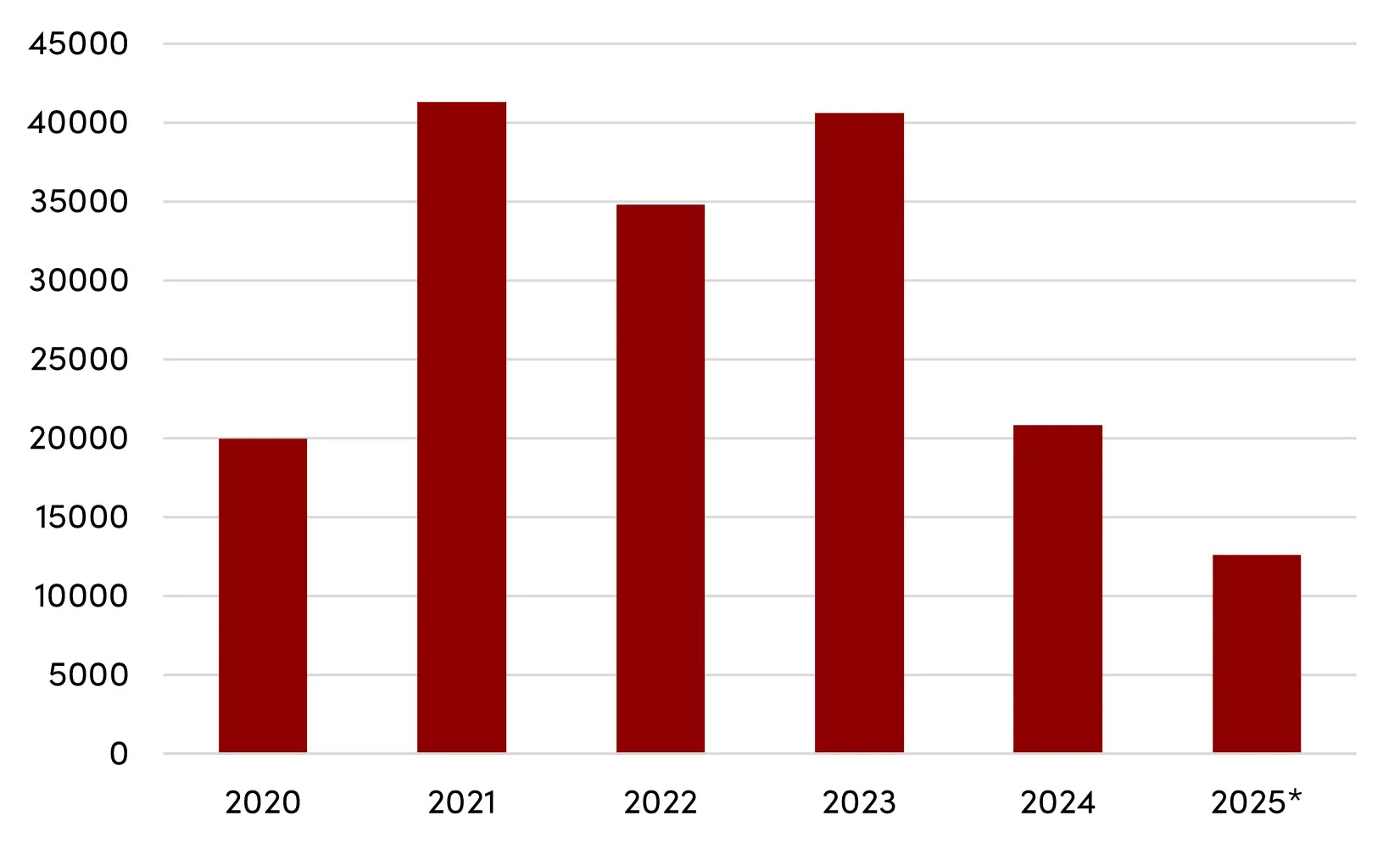
ev sales porsche

So, going back to Porsche’s recent announcement, while a substantial scale-back on electrification is definitely a key step in this renewed business and product strategy, the objective is not just steering away from it. But first, let’s see the announcement in detail.

Porsche’s key measures

The first line in the press release states the upcoming product line will be supported by ‘brand-defining’ models featuring combustion engines. These will likely include the 911 ahead of any other, and all its derivates.

Additionally, the new SUV line, which will be positioned above the Cayenne as was initially planned as full-electric, will be offered at least in its early phase only with an internal combustion engine (ICE) or as a plug-in hybrid (PHEV).  

The ICE models already present in the lineup will receive a longer life cycle, and in between these and the eventual electrified substitute, more models have been added. Similarly, the new EV-dedicated platform planned to be released in the 2030s will be delayed.
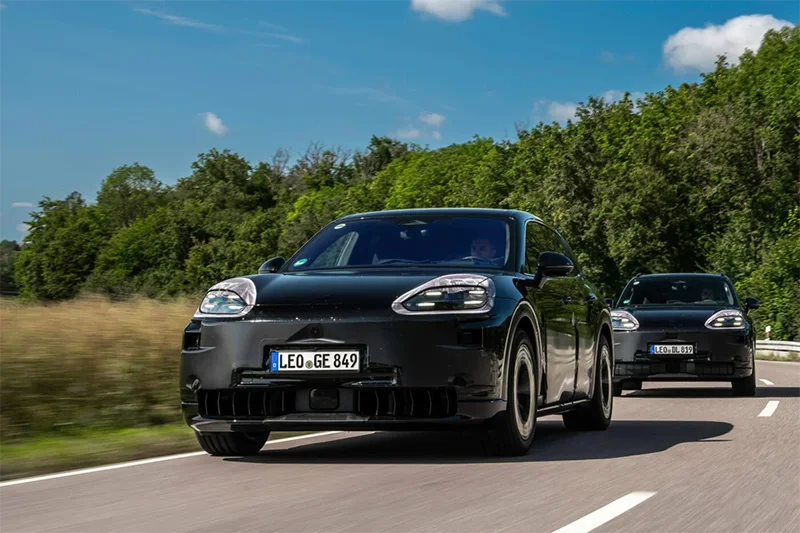
porsche cayenne copy*New Cayenne testing

Finally, the current full-electric models (Taycan, Taycan Cross Turismo, and Macan) will continue to receive updates and remain a consistent component of the product lineup. Additionally, a new all-electric Cayenne and 718, derived from the Mission-R teased a few years ago, will be added to the lineup as well.

According to the statement, while these measures are organised to secure long-term financial success, Porsche expects them to lead to additional depreciation and potential provisions. The financial expectations for the year are of similar revenues, but lower returns than previously forecasted. Lower automotive EBITDA is expected as well.

What does it mean for Porsche’s strategy?

The potential of electric vehicles is not overlooked, but requires a more cooperative effort by the group. After the many difficulties faced by Volkswagen software developer CARIAD, the Group has turned to American Rivian to create a Joint Venture that will grant them expertise to develop SDV platforms, both hardware and software, for the upcoming generation and new software.  

In the words of Porsche’s CEO Oliver Blume, with this strategic shift, the OEM wants “to meet new market realities and changing customer demands”, “These decisions build on the previously announced initiatives and help us to achieve a very balanced portfolio. This increases our flexibility and strengthens our position in a currently highly volatile environment. […] we want to meet the entire range of customer requirements.”
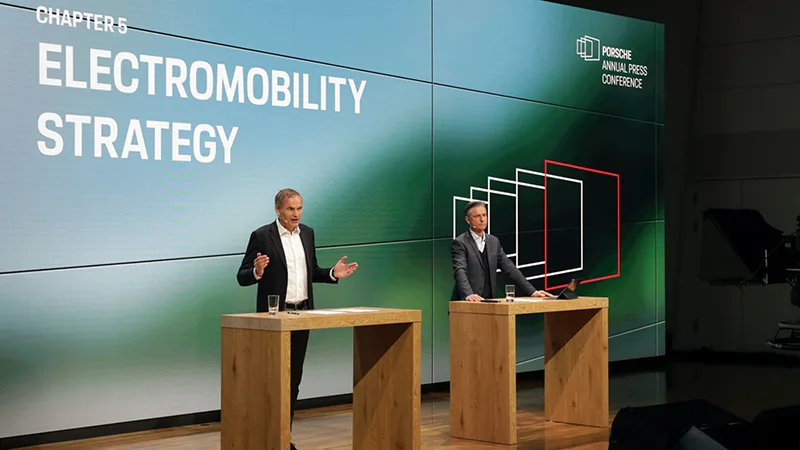
oliver blume*Porsche CEO Oliver Blume

The new strategic arrangement allows Porsche to be ready and more responsive to such an uncertain and fast-changing market. Sports cars, GT, and SUV lines will all offer choices between ICE, PHEV, and BEV powertrains to be able to cater to any potential new request. Through innovation and flexibility, companies can reduce risk by diversifying the product portfolio to maintain business stability. On top of that, effective marketing is the key to communicating to clients this diversity, the relative added value, and competitive advantages, building a stronger brand image. In these market conditions, this strategy builds resilience and ensures relevance by also playing on the brand strengths in the face of inevitable change and an increasingly stronger competition.

In time, this could also translate into a deeper diversification by adopting a geography-based approach that is usually not applied (or in a very limited way) by luxury brands such as Porsche. A 2019 research by the Journal of Risk and Financial Management investigates how this type of diversification can positively impact a company’s financial performance both in terms of return on assets and return on equity. From the research, the varying results obtained with different diversification models are explained through inefficient utilization of resources, especially in terms of innovation for a specific market. Additional risk with this approach is identified for both product diversification and geographic diversification based on the Agency Theory, with managers opting for diversification strategies that fit their personal benefits. These instances naturally negatively affect the financial performance, even though not in the totality of cases.

While it would be extremely capital-intensive for a luxury automaker to develop entirely new products for a single market (even though there could be noteworthy considerations to make for large markets such as China), a higher-level strategy seems feasible. One relatively common solution for the Asian markets in the past has been to introduce exclusively for those regions extended-wheelbase models. As the Chinese EV market continues to grow more rapidly than any other, Porsche caters to a more “traditional” audience used to the added value of its ICEs performance stabilising its business globally. At the same time, it can continue to develop its next-gen electrified generation more effectively and with less pressure to address the Chinese market and other more EV-focused ones that might develop in the coming years.
Is China moving away from European Luxury?

  • Brand: Aston Martin, Ferrari, Lamborghini, Porsche
  • Topic: Electric Vehicle Market, Supercars Future

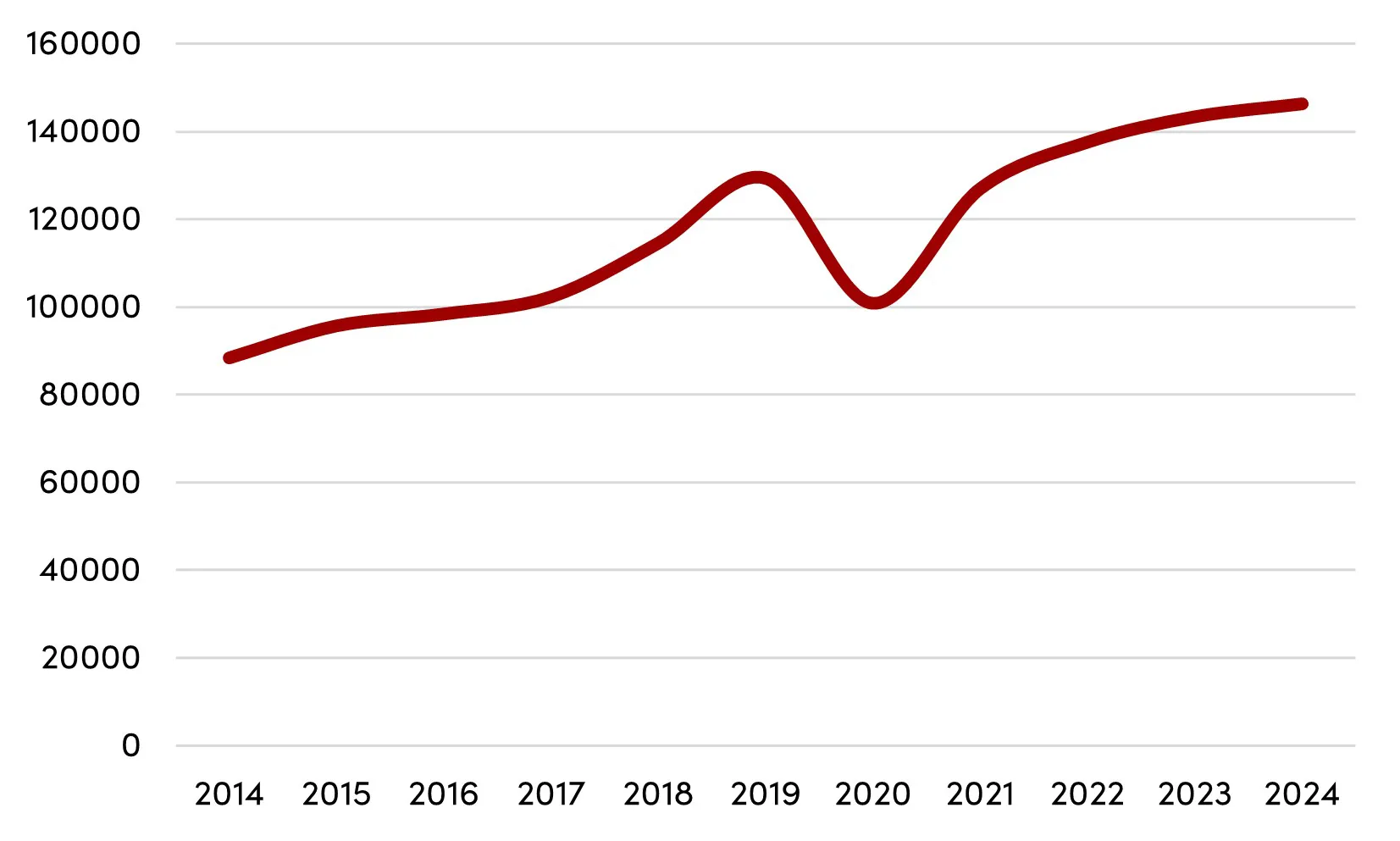
Over the past 10 years, the luxury car market has grown consistently, with several brands growing to financial and sales volume peaks in their history.

Yearly Luxury Vehicle Sales (2014-2024) 

luxury sales*The Graph includes annual sales by Aston Martin, Bentley, Bugatti, Ferrari, Koenigsegg, Lamborghini, McLaren, Pagani, Rolls-Royce, and models above the €150,000 mark from Porsche, Lotus, Maserati, Audi, Mercedes, and BMW.

While in the aftermath of the pandemic, it took only two years for the luxury market to reach and exceed the previous peak reached in 2019, the trend that seems to emerge and that could be confirmed in 2025, considering the volume reported so far by major OEMs is one of gradual slowdown or, in a worst-case scenario, stagnation.

A big factor in this trend could be the radical transformation of the Chinese market. Because, in this growth over the 2010s, the USA has almost always been the largest single-country market for most of these OEMs. However, a close second, and quickly growing (for some even larger than the US), has been China.

Porsche is one of the best examples of this. After a launch in 2001, by 2015 China had become the single largest market for the German automaker and has remained so up until 2023, when, with a 25% share of sales overall, it was overtaken by the USA at 27% (while Porsche still recorded a healthy +3.3% volume growth). And this is part of a larger trend that can be observed across different companies.

A luxury slowdown in China

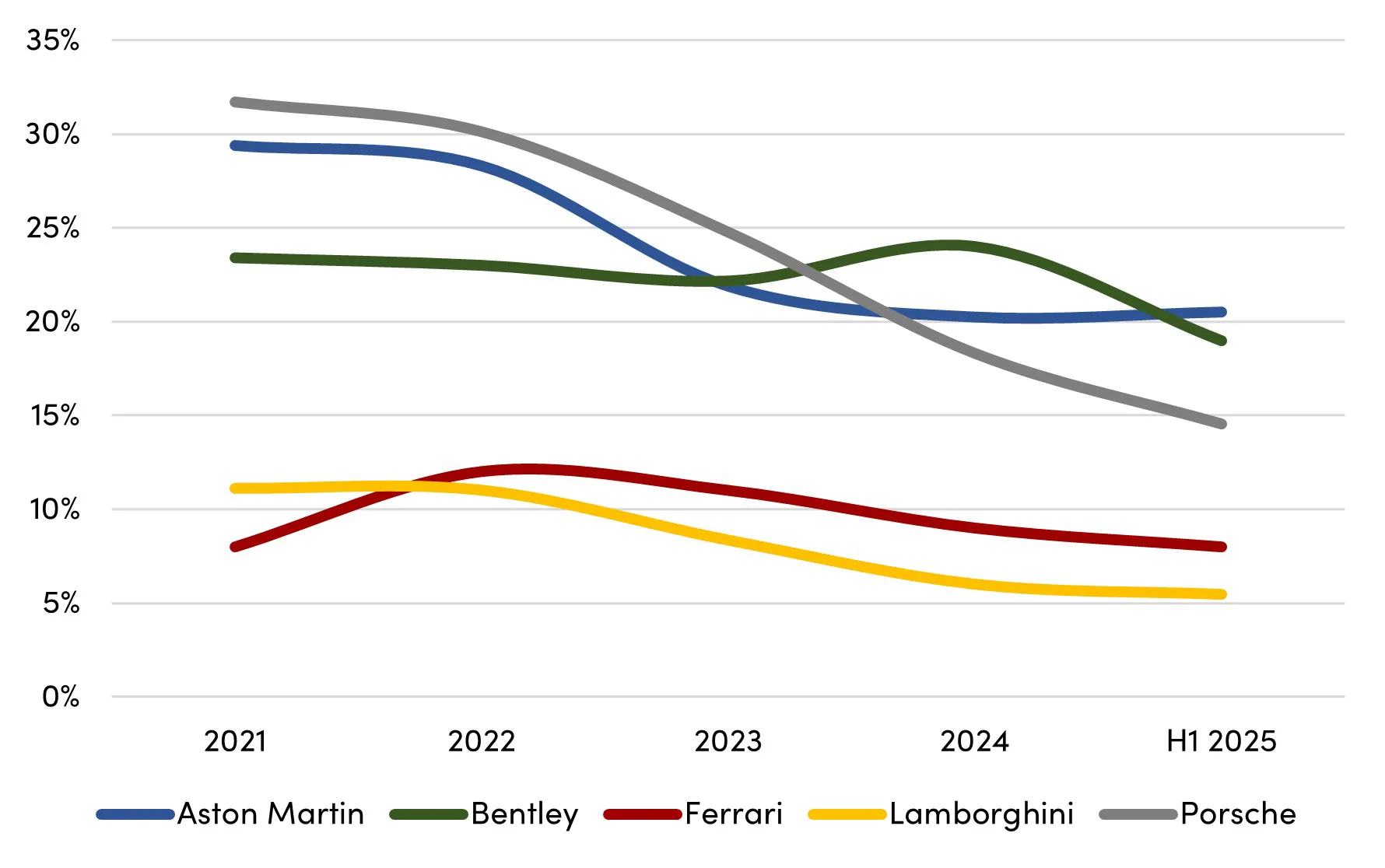
By looking at regional sales from automakers that shared the data over the past few years, it is evident a gradual slowdown in the Chinese market across the industry.

Luxury Automakers Yearly Share of Sales in the Chinese Market (2021-H1 2025)

china share

Since 2021, the one company that has remained more stable and for which China was never the largest market, as a much larger share of its sales relies on European Markets, with a sizeable one in the US as the largest single market, is Ferrari. Despite this, Ferrari too shows a slight decrease from the 2022 peak. A similar situation is observed for Bentley, for which China sales share remains quite stable, and a more noticeable slowdown is visible only in 2025 so far. It must be noted, however, that while shares for the British companies have remained mostly unchanged until last year, the overall sales figures haven’t. Sales in 2024 for Bentley were 30% lower than in 2022.

In the middle is Aston Martin, for which this decrease has been more evident, from a 29% share of sales in China in 2021 to 20% in 2024 and 2025 so far. The company, though, similar to what has been just said for Bentley, has also experienced a sales slowdown in 2024, and likely in 2025 too, albeit less dramatic than that of its British competitor.

Worse off, in this overview, instead appear Porsche and Lamborghini. With some ups and downs for the first one and consistent growth for the second, their presence in the Asian market has shrank more markedly than for the others. Both companies under the VW umbrella have seen their share of Chinese sales halved over these four and a half years. Porsche went from over 30% in 2021 to just 15% so far in 2025, and Lamborghini over the same period from 11% to just 5%.

Why is this happening?

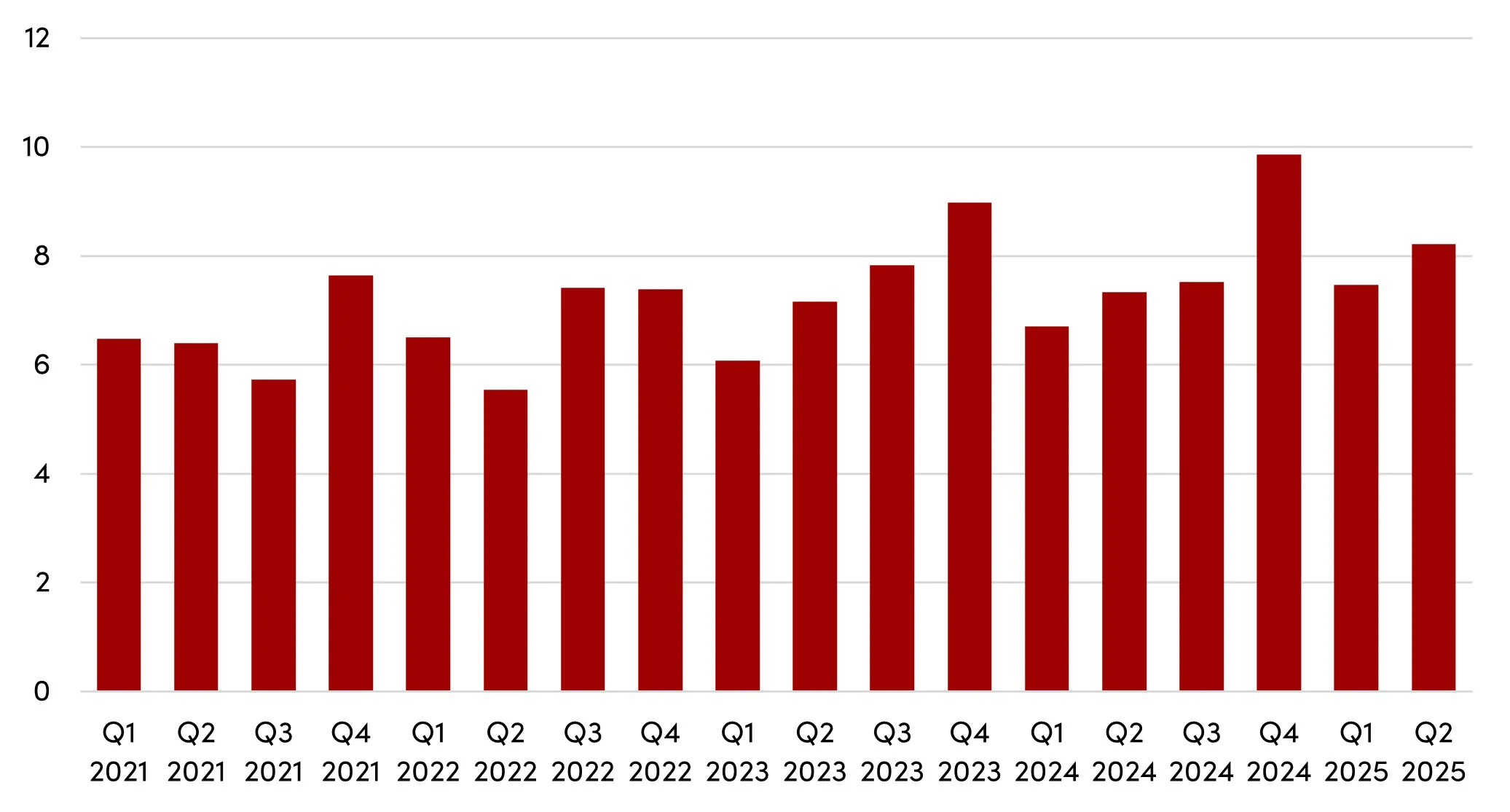
The Chinese automotive market has not slowed down, but actually kept growing after recovering from the pandemic, reaching 30 million in 2023, exceeding that in 2024, and 2025 seems on track to get even higher.

China Passenger Vehicle Quarterly Sales (2021- H1 2025) 

quarterly sales

However, Chinese customers are increasingly buying domestic brands, vehicles, and technology. The introduction of EVs has been the perfect opportunity for the Chinese government to push for a fast change in a market that had been dominated by European automakers up until a few years ago. This came mostly thanks to their performance, quality, and brand equity, all coming from a much longer experience. The most established segments, therefore, were the premium and luxury ones. On the volume side, while foreign OEMs had a consistent share, that was already decreasing earlier due customers' price sensitivity and Chinese OEMs' lower prices.

So when it came to luxury, the introduction of the electric powertrain leveled the playing field in terms of performance, and domestic companies also learned throughout the 90s and 2000s’ joint ventures with which foreign brands entered the Chinese market. Additionally, Chinese brands were better at interpreting their customers' preferences and offering them a new automotive experience focusing much more on software capabilities and convenience features compared to their European counterparts.

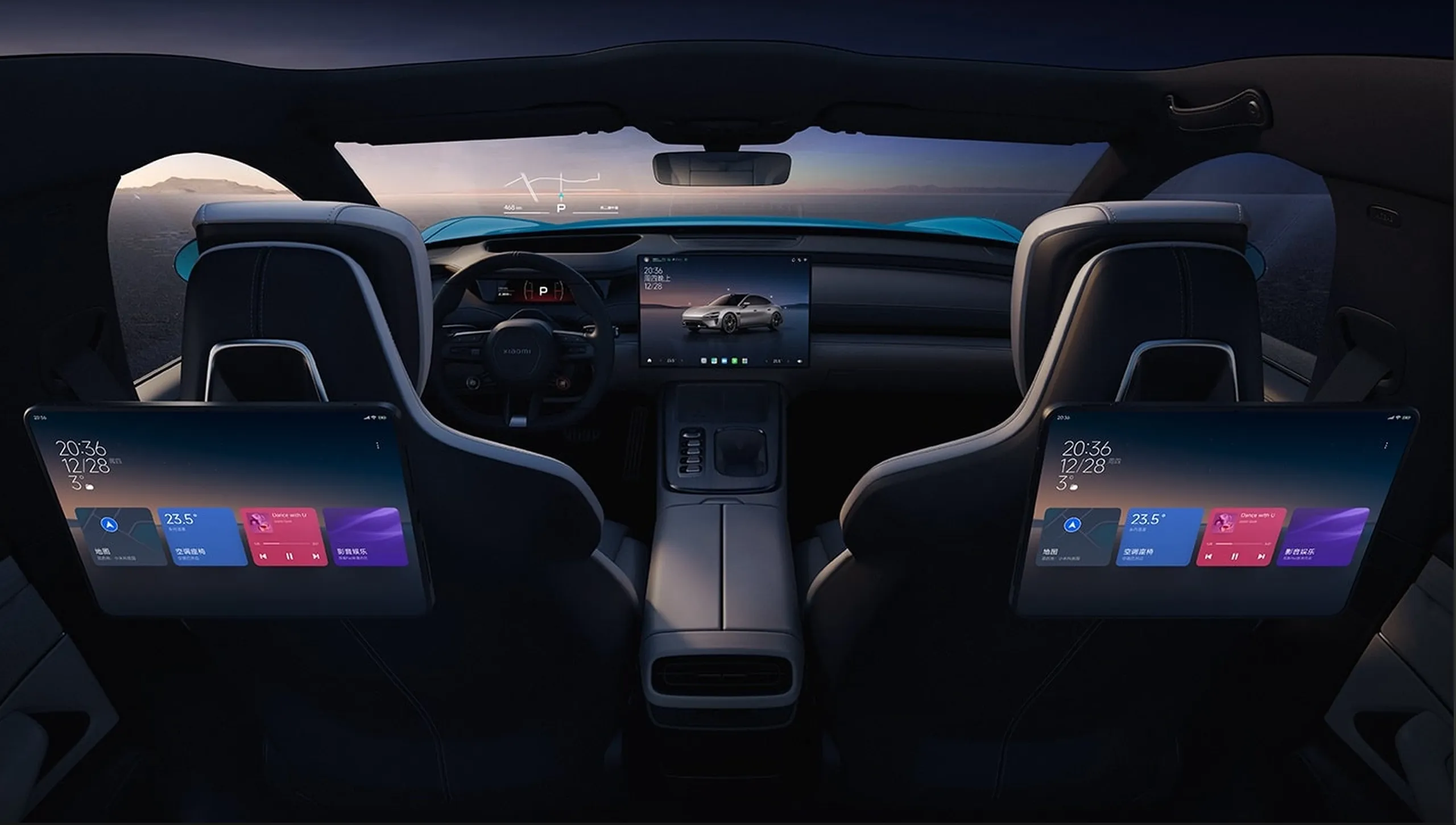
Some of the legacy luxury OEMs are actually going back to older solutions like the manual gearbox because their average customer wants that feeling of driving engagement that is lost with increasing automation. Chinese companies instead went in the opposite direction, going all-in on technology and creating a new and highly customizable experience for a customer base that generally has not the same long-standing attachment to combustion engines and the feeling they bring. Thus, it does not have the same expectations of driving performance from a luxury brand, but is actually showing to care more about technology.

xiaomi su7*Xiaomi SU7 interior

With significantly cheaper prices, many Chinese OEMs offer an in-vehicle experience that aims at driving performance but also a lot more, while the value proposition of European OEMs offering has likely become somewhat less relevant to the point where even the stronger branding cannot compensate the perceived lack of features and technology.

Can European OEMs turn this around?

The stronger players in the sector are managing to keep stable sales and constantly improving financial results thanks to significant increases in revenues coming from personalisation programs.

This strategy has been working very well for most players involved, led by Ferrari and Lamborghini, but also OEMs in more uncertain conditions, like Aston Martin, have reaped the fruits of this trend improving consistently their average selling prices over the last few years.

A gradual diversification of the product lines with the introduction of fully-electric vehicles that have currently been postponed for most luxury OEMs, could bring back the interest in the Asian market. However, improving success in a single market, however large, might not warrant the substantial investment needed for the development of these models.

The other option could be to gradually shift toward even more exclusive and limited models with a strategy closer to what the likes of Koenigsegg or Pagani have been doing. This would definitely shake the current company structure for these established OEMs, but potentially ensure strong profits with a more limited production that could also shield customers from depreciation that has been plaguing the segment lately, even for limited-run models.

New Online Course Available Now

  • Brand: Aston Martin, Bentley, Bugatti, Ferrari, Lamborghini, Maserati, McLaren, Pagani, Porsche, Rolls-Royce, Mercedes, BMW
  • Topic: Electric Vehicle Market, Finance, Strategy & Marketing, Supercars Future

Following up on the first half of the Luxury Automotive Strategy and Marketing online course published a while back, the second half is now available on Udemy at the link HERE.
As for the previous one, this course too is thought for enthusiasts and university students who want to learn more about the workings of the industry. While it is not necessary to have completed the first half to be able to understand and learn this second one, the two are closely linked and form a complete picture.

So, after learning about the key players in the industry and how their branding and strategies compare to each other, this new section looks at market dynamics highlighting the main trends, some academic analysis of them, and an overall view of the global luxury market numbers. Last but not least, a couple of interesting case studies conclude the course comparing diversification strategies and innovation in luxury automotive.

I hope you'll enjoy it. Don't forget to leave feedback and get in touch to know more.

Cover homepage alt copy 3

Is luxury automotive marketing changing?

  • Brand: Aston Martin, Bentley, Ferrari, Lamborghini, McLaren, Pininfarina, Porsche, Rimac
  • Topic: Strategy & Marketing

Times of uncertainty and overall luxury market slowdown as highlighted in previous articles have brought difficulties to several brands in the segment. However, regardless of current and recent success or struggles, trends in brand, diversification, and marketing strategies have changed significantly.

Driven by various factors for different brands, whether one calls it a more cautious approach or a focused one, after quite a few years of expansion and diversification, most OEMs in the segment seem to be pulling back on both product and marketing strategies.

Diversification

While quite a few brands in the segment had diversified quite aggressively in the past, some of these strategies have gradually changed. One of the best examples of this is Aston Martin. As discussed in a previous article (Not just Luxury Cars: Aston Martin Diversification Strategy), through the 2010s the British automaker started several partnerships and diverse activities that materialized in several limited products and concepts including the likes of bicycles, speedboats, real estate, and even submarines and aircrafts. The latest of these projects is probably the motorcycle AMB 001 developed along with British motorcycle manufacturer Brough Superior and introduced in 2020 for a limited run of 100 units sold for around £100,000.

aston martin amb001*Aston Martin AMB 001

But Aston Martin is not the only one. Some of these activities continue and will most likely continue in the future. The collaboration with video game developers is by now one of the most established strategies in the industry in which every automaker takes part and that has even expanded in the last few years beyond just racing games.

Others however could have been a phase or one-offs to look for new opportunities or business models but seem to have been completely abandoned.

Real estate projects have been relatively popular for a while among luxury automakers, with the likes of Bugatti, Porsche, Pininfarina, and Bentley (as well as the just-mentioned Aston Martin) and more all entering partnerships with high-end developers for residential buildings in selected areas such as Dubai or Miami. These have recently slowed down or almost disappeared.

Similarly, various OEMs have also reduced the release of branded merchandise like Ferrari removing a significant share of everyday objects and accessories, or Bentley not following up on its collaboration with Fanatec for driving simulators steering wheels.

Product trends

On the product side, a key trend that seemed destined to get stronger in the coming years, but that, at least for now, has almost completely stopped is the production of one-offs.

An initiative that in the era of high customisation represented the absolute top of luxury automotive tailoring. Something that Ferrari has been doing for the past 20 years now, and that over the last 8 or 9 has been consistently growing with more OEMs developing similar initiatives year after year. This went on up until 2023, to almost completely stop in 2024.

Yearly One-Off and Few-Off production by Brand (2006-2023)

graph one off

A similar result would be displayed if few-offs were included. 2024 saw only a few releases and only some were very limited (below 100 units) and presented significant updates compared to the “regular models” like the Lamborghini Huracán STJ released in only 10 units to celebrate the end of the model’s lifecycle.

It is still unclear whether this is just a casual slowdown, while the automakers continue developing their own personalisation programs, but the slowdown is certainly noteworthy.

On the product side, 2025  so far has also seen a substantial slowdown in the release of production models, with only 2 major releases by an established automaker consisting of Aston Martin’s convertible versions of its new Vantage and Vanquish models. This is certainly not only due to strategic changes, as over the last 5-6 years, most established brands released entirely new product lines that in this market tend to last between 5-10 years, sometimes without any significant mid-life refresh. That said, uncertainty with electrification in the luxury segment and other factors have certainly played a role too, and overall the release rate over the first 4 months of 2025 represents an average 71% slowdown compared to the previous 6 years.

Reversing Course on Electrification

As just mentioned this is probably one of the biggest factors of instability in the current market. As the electric vehicle market started developing legacy OEMs and luxury brands started working on the development of luxury EVs. But things did not go according to plan.

Porsche was among the first and its Taycan has been one of the fastest depreciating vehicles on the market reaching a -51% in just 4 years, with over 30% over just one.

Similarly, other OEMs that launched electric supercars or hypercars have struggled to sell out even extremely limited runs. It has been the case for the likes of Pininfarina and Rimac too which has been at the forefront of this transition right from the start. However, since the beginning, even Rimac’s CEO Mate Rimac has been quoted saying that customers in this segment simply do not want full-electric vehicles, which will likely force the brand to introduce hybrid powertrains facilitated by its joint venture with Bugatti. Aston Martin too has currently delayed its first EV.

As traditional strategies have not worked as expected, OEMs had to rethink or expand their plans. Ferrari, set to release the first fully-electric vehicle in 2025, is likely to introduce a unique vision for it as discussed in a previous article (New Luxury Automotive: Going Beyond Performance?).

macan*Porsche Macan EV

Porsche while still struggling in selling its GT Taycan, despite the mid-cycle refresh which brought several improvements, seems to have found a solution to successfully build its EV portfolio. In 2025, 25.9% of the vehicles sold were EVs, led by the recently introduced Macan EV SUV. Over the first 3 months of the year, the SUV sales grew by 14% to 23,555 units sold. Of these over 60% (14,185) were full-electric ones, confirming a certain appetite for comfortable and sporty family luxury vehicles rather than exclusively performance ones.

This trend is surely going to reflect on the marketing and product strategies of luxury OEMs preserving their strong identity instead of exclusively focusing on what the future holds for the industry, which in turn could also give them competitive advantages against upcoming competitors.

Refocusing on motorsport

Beyond Formula 1 which has been skyrocketing in popularity over the last few years, endurance is certainly getting more attention and become a key marketing tool for most legacy luxury performance brands.

mclaren lmdh

Following Porsche and Ferrari, most other brands followed in rapid succession. Lamborghini announced its LMDh participation with the SC63, Aston Martin confirmed its entrance in the LMH category in 2025 with a racing version of its Valkyrie. Last but not least McLaren too announced they will be participating in the FIA endurance championship from 2027.

Conclusions

Luxury automakers’ marketing and programs' expansion slowed down over the past 1-2 years following difficulties in the industry for several brands driven by a general slowdown in automotive and in the larger luxury sector, along with changing trends in consumer preferences.

Where for a while it seemed like most companies were more and more frequently trying new strategies, these have ultimately been decreasing with automakers refocusing on core values, legacy products, and (when relevant) motorsport.

One exception however is coming from Ferrari. After the pull-back in diversification and the claim of wanting to become “a luxury brand”, a few days ago Chairman John Elkann announced a new project for a Ferrari sailboat coming soon. While the sailing segment is not exempt from crossovers with the luxury automotive one, this seems like it could be a larger project with a bigger commitment that will be discussed in future articles.

Are Luxury Performance EVs Dead in 2025?

  • Brand: Porsche, Rimac, Rolls-Royce, Mercedes
  • Topic: Electric Vehicle Market, Supercars Future

2024 was a complex year for the automotive industry, with legacy automakers losing significant ground either in EV market shares, financial results, or both. This is due to several factors affecting the industry. Geopolitical, technological, and trends among consumers. While there is no doubt that the future of automotive is electric (at least in large part if not completely), the same might not be completely true for the luxury performance niche for the foreseeable future.

EVs are “young”. While cars have been around for well over a century, the true development of consumer-ready electric cars is barely around 15 years, and there are still countless areas of significant improvements that can completely change the product and user experience in years to come. Going from batteries to software, and more.

After early adopters jumped on the bandwagon and the excitement “died down”, it left space to critics and doubters. This, particularly in 2024, is reflected in a significant drop in EV sales in the West. China is the great exception, with EVs not only growing but reaching around 65-70% of the global share.

Luxury Automotive OEMs review their electrification strategies

It is throughout this difficult period for the industry with many OEMs committing significant investments in EV-related technology, like Ford's $14 billion for the EV expansion in the US, that some started going back on their development strategies.

The latest of which is none other than Porsche. The German automaker has been a strong and early promoter of the new powertrain technology, with its Taycan, initially named Mission E, and many more in between from concepts like the Mission R, or Mission X, to actual all-electric production version of its “traditional” lineup like the latest Macan.

It has to be said that Porsche never fully went in only one direction. A while back they made the headlines with their big investment in E-fuel development for their legacy models and classic cars (Link E-fuel article here), but an estimate of their investment in EV technology just in the last 3 years is around $25 billion.

Only a few months ago Porsche announced it was reviewing its EV strategy stating they are reducing their EV development targets. Key reasons for this have been sluggish sales of its EV models due to low demand, the significant investment required to continually develop software and technology for its new models, and, not to be underestimated in the luxury sector, the drastic depreciation hitting EVs in general, trend for which the Taycan has unfortunately become a symbol.

Porsche Taycan Depreciation over 1 and 4 years

depreciation

A quick look at the Taycan (Coupé) current rate of depreciation shows a quite worrying situation, that any buyer in this segment would seriously consider before the purchase. Compared to 2024’s prices for the different trim levels as new starting at £86,000, and topping at £161,000 (excluding the Turbo GT version that was not available in the previous generation Taycan), models purchased earlier in the same year depreciate by an average of 31% on starting prices that do not include options yet, and over 51% in 4 years. If options were included in original sales prices these percentages would increase even more.

A first announcement by the German automaker stated that the previous target of 80% of BEV sales by 2030 might not be achieved due to factors previously stated. Chairman Lutz Meschke said: “We will refresh our combustion engine cars, including the Panamera and the Cayenne, and of course, we will continue to rely on plug-in hybrids”. He continued “When it comes to research and development, you’ll see more flexibility in the upcoming years. We will develop new combustion-engined derivatives in order to give the right answer to customer demand”. This could, for example, be reflected in the decision of releasing an ICE version of the upcoming 718 that was notoriously set to become a BEV only, announced by the Mission R concept a few years ago, to try and renew the product line and revive its sales that has been somewhat slow over quite a few years.

mercedes cla elettrica*Mercedes-Benz BEV CLA Concept

Right before the German automaker, compatriots at Mercedes-Benz went through a similar process. Initially the development of the MB.EA-Large EV platform planned for 2028 was halted, then came the delay of the target of 50% sales of electrified models (BEVs and PHEVs) from 2025 to 2030, and it’s a few days ago the announcement that the production of the CLA concept unveiled a while back has also been delayed due to development issues.

In Great Britain too, automotive OEMs follow the trend. Aston Martin, amid a slowly and very gradually recovering financial situation, delayed the announcement of its first EV to 2026 which was initially set to come this year. Geely-owned Lotus has reportedly abandoned the plans to go 100% electric and Bentley too, which was set to reach the same target by 2030 confirmed that hybrids will likely remain on sale even after that date.

Is there more to this trend?

As mentioned previously, China is going strong and its EV market is in constant evolution with serious competitors coming to the global stage and making the headlines with important achievements. These days in the Western media the peak of this wave has surely been Xiaomi’s SU7 which in its “Ultra Prototype” iteration (which is not road legal) managed to attract everyone’s attention with a lap time of 6:46.874 at the Nürburgring Nordschleife becoming the fastest EV on the track. It comfortably outpaced the £1.8 million Rimac Nevera (7:05.29) and the new £186,000 Porsche Taycan Turbo GT with Weissach Package (7:07.55) with a prototype that is said to cost just around £94,000.

While this is working well for the mass market though in China, luxury automakers have a different and much smaller customer base, and on top of that for several of these brands the largest markets are still in the West (usually the USA) and currently made on average in larger part of people around 50+year-old or older. This demographic, grown up with specific expectations about the performance and sensations that a performance luxury car can and should offer seems fairly opposed to electrification and its added value proposition compared to combustion-engined cars. So, this is the obvious and most likely factor due to which the market niche is highly likely to remain mostly ICE-driven in the short to medium term, with hybrids decisively taking their place.

There are potential alternatives with the likes of Ferrari attempting a new approach to BEVs as discussed previously, or a new developing trend of Extended-range Electric Vehicles (EREV) which is mostly aimed at solving range-anxiety and thus not likely to make luxury car buyers fall in love with performance EVs.

xiaomi record*Xiaomi sets lap time at the Nordschleife

The most emblematic example of this change happening over the last year or so is the statement released by Rimac’s CEO Mate Rimac confirming that luxury car buyers simply do not want performance EVs. According to some, this could be hinting that upcoming models by the Croatian brand will get some sort of internal combustion powertrain component. In terms of sales the only exception in the year just passed has been the Rolls-Royce Spectre, which is naturally not focused on performance and thus (as founder Charles Rolls said over 100 years ago) takes advantage of the silent and smooth powertrain enhancing all the characteristics that brand’s clients look for.

What could be next?

As the market composition, especially for traditional luxury automakers seems unlikely to drastically change in the short term, a significant change could be once more driven by forward-looking markets like China.

With the offering of sporty BEVs increasing in China, customers more used to, or growing up in a market dominated by EVs may first start trends that define new value propositions more suited to the electric powertrain that go beyond straight-line acceleration (already proven not sufficient to convince sceptics) and would probably fall in technology applications and EV-specific driving-related use-cases.

Last but not least, a determinant factor that could change traditional performance car buyers’ mind is a revolution in EV battery technology. If new chemistries bring a significant improvement not much in power density, but in volume and weight reduction like some such as solid-state promise, they could help OEMs bringing down the overall cars' weight to the 1,500 kg average of current performance cars and thus significantly benefit dynamics and driving capabilities.

Automotive Luxury Market in 2022: The Growth Continues

  • Brand: Aston Martin, Bentley, Ferrari, Lamborghini, McLaren, Porsche, Rolls-Royce
  • Topic: Strategy & Marketing, Supercars Future

The luxury automotive sector showed significant resilience over 2020 as the Covid pandemic broke out. While the wider sector has been faltering in its recovery, the luxury segment kept growing in the following year and in 2022 as well. Along with the general growth though there are other interesting dynamics that can be observed.

Larger volumes

The top-end of the segment, driven by a few extremely successful brands, has registered yet another growth year, increasing over 2021 by about 9%, and a further 3% the next one as displayed in the graph below. The larger automotive sector instead despite a sizeable improvement in 2021, almost stagnated in 2022, with the main cause for delays and bottlenecks still being the shortage of semiconductors.

Luxury Automotive Market Sales Volumes (2018-2022)

volume

The main contributor to this success over the past two years has been the continued growth of brands like Bentley, exceeding 15,000 yearly sales for the first time in its history, Ferrari (13,221), Lamborghini (9,233), and Rolls-Royce (6,021) all posting record results. Other OEMs such as Aston Martin, Porsche, and Maserati (still on the path of recovery) instead have been consistent while probably not exceeding expectations. Finally, more niche brands still going strong like Pagani, Rimac, Koenigsegg, and the likes also contributed albeit with very low numbers. Of the public companies in the segment only McLaren, which has not published its full-year figures (and is accounted for here with an estimate), will likely report a drop in sales since it stood at -13% in Q3 YOY.

Reflecting the general health of the segment is the market size evaluated at €566 billion.

Luxury Automotive Market Value (2018-2022)

value market

Evolving market trends: prices and personalisation

The most interesting data that emerges from these reports though is that while the value of the market has not only recovered but exceeded the record of 2019, sales numbers haven’t.

This is reflected by the growth numbers of various companies in the segment. While for all these the sales numbers have increased, both revenues and operating profits reached much higher growth suggesting an overall improvement in efficiency, and most of all a trend already seen over quite a few years: the general increase of luxury vehicle prices.

2022 Luxury OEMs with the largest revenue and operating profit growths

table growth

This increase in average selling price (ASP) takes different forms.

In 2022, Aston Martin boasts a 26% increase in ASP exceeding the £200,000 mark. This has been mainly thanks to the destocking efforts over the past few years.

In other instances, the base price of production models has comparatively increased, either because of new technologies or because they represent new additions to a lineup, as is the case for Ferrari’s SF90 Stradale and Purosangue. The first is priced at £379,000, while the latter specifically substituting the GTC4 Lusso, introduced in 2016 and sold at a price of around £243,000, is offered now at a starting price of £313,000. This trend is observable in pretty much every other luxury car manufacturer, with even more extreme examples in super low-volume ones such as Pagani.

Last but not least, the other important trend that is common to all these companies and represents an important and increasing source of revenue is personalisation. Every luxury OEM over the last 10-15 years has introduced and gradually expanded its bespoke program. Over the last two years, most OEMs quote bespoke and coachbuilding programs as major contributors to the sudden increase in revenues and profits.

The luxury market keeps evolving and, as mentioned previously in the article Tailor-made: What luxury car customers can't go without, the product itself is not sufficient anymore. With general wealth increasing in most developed markets, and a higher number of HNWIs, expectations have become higher too. Clients are looking for more than a high-end car, they want something that is also unique and distinguishable. So, virtually limitless selections of colours, materials, interior, and exterior specifications have been added by every automaker.

The other method used by automakers to cater to this demanding audience is the release of limited-edition models. Often derived in most parts from production cars, limited runs usually feature a few unique additions that can, at times, be only cosmetic. These rare models are more desirable as they also suffer much less from depreciation. The peak of this trend is represented by one-offs which have also been constantly increasing over the past 10+ years as shown in One-off Supercars: What’s the next step for luxury automotive?

dbs 770 ultimate volante*Latest example of limited-run by Aston Martin DBS 770 Ultimate Volante

Additionally, each OEM used different methods to realise efficiencies in production and resource management. Bentley’s ‘Dream Factory’ realised with a £2.5 billion investment significantly reduced water consumption, improved waste management, and overall carbon footprint. Others such as Aston Martin optimised product development processes that allowed them to maximise cross-carline component sharing. In turn this reduced processes and engineering complexity.

Unfortunately, for some OEMs, this also corresponded to significant layoffs over the last two years, which surely contributed to the reported results.

Further Brand diversification

Other important factors contributing to the growth of luxury automotive brands apart from the delivery of new cars, and the ones quoted above, are the pre-owned market and events.

As discussed previously (Luxury Automotive Resale Value and Depreciation: How and Why) the pre-owned market is extremely important for luxury automakers, and not only because low depreciation makes cars more attractive for potential buyers, but also because most new clients when approaching their first purchase chose a used vehicle.

What often happens next is that these clients end up owning more than a single car, in fact over 50% of a large sample of owners claim to possess more than one luxury vehicle. This choice is often strictly tied to branding and brand value, so clients effectively become part of a restricted elite where they also get involved in a plethora of activities that offer OEMs more opportunities to create additional revenue streams.

Bentley's latest announcement on this field is particularly interesting. With its latest program called “Extraordinary Journeys”, the brand offers highly curated road trips in selected locations revolving around the best driving experiences possible while moving through high-end hotels, fine dining, and other interesting cultural activities. While this is something that many brands organise for their clients, what is unique in Bentley’s case is that for the first time, they are opening these programs to non-clients, giving them the opportunity to drive a range of different models during the trip. This is not only a great additional revenue source, but also a smart way to attract new potential buyers and create brand advocates thanks to a proper 360° experience that goes beyond just the product.

Coming Years

Over the coming years, the luxury market has new important opportunities coming from the transition to electrification and with new technologies. SaaS (Software as a Service) creates even more options for personalization throughout the entire customer journey. From early stages to after-sales, OEMs can offer additional services and make their ownership experience even more unique.

rr spectre*Rolls-Royce Spectre is the first offering a customisable digital cluster according to clients' preference

The segment has been more resilient despite the difficulties the wider sector went through over the past 3 years, and so far signs seem to indicate the positive momentum might continue.

Luxury automotive Q1 2022: diversification and changing management

  • Brand: Aston Martin, Bentley, Ferrari, Lamborghini, McLaren, Porsche, Rolls-Royce

The global automotive industry is still going through a difficult period, with sales in the first quarter of 2022 shrinking in each continent. With negative effects stemming from Covid-19 cases still present despite the general media indifference of the last few weeks, supply shortage, especially with semiconductors, and uncertainties with the Russia-Ukraine war, the outlook is still worrying.

March 2022 saw sales in both the US and EU drop by over 20%. Q1 decrease was less severe overall but still reached a significant -10% in both markets (Nasdaq, Statista, Unrae). Asia might partially be an exception. While Reuters reports a 14% drop in sales in Japan in January, according to CAAM, instead, China maintains the positive momentum with a 10% growth in March, and an 8% overall in Q1. Notable is also the sales of NEV doubling in March with around half a million units sold.

Automotive Market growth % in Q1 2022/March 2022 by Region

graph

This again shows the difference between the volume market compared to the high-end luxury one where. As discussed before, and while for some the hardship is not over yet, for “the usual winners” it all seems smooth sailing and more.

Luxury segment: Winners and Losers

The usual 5, Rolls-Royce, Ferrari, Lamborghini, Bentley, and Porsche, manage again to post yet another record quarter or a really strong one at least. In terms of sales, Rolls-Royce and Ferrari top the chart, increasing their respective sales both by 17% and reporting strong financial results as well.

Right after Lamborghini increases its sales by 4.8% and reports positive financial results as well with revenues and operating profits improving by 13 and 25%.

Porsche and Bentley both reported a sales drop of 4.9 and 4.6% but record financial figures signalling an important focus on business efficiency during this uncertain time. Revenues and operating profit at Bentley improved by 41 and a staggering 162%. At Porsche, the same figures grew by 4.1 and 17.4%.

table q1 2022

After a positive 2021, with a bold recovery from the previous year, thanks to the introduction of the SUV DBX, Aston Martin seems to be back in troubled waters. Sales decreased by almost 14% with only the GT segment improving, and the DBX sales dropping 41%. Also, despite the revenues increase, financial results are not positive as well.

What’s next?

The continued growth of the segment is probably coming from increasing property prices and the stock market growth of 2020 and 2021. According to property consultants, Knight Frank these unique conditions created over 51,000 new Ultra-high-net-worth individuals (UHNWI), classified as people with at least $30 million of investable capital, bringing the overall number to 610,569.

Top automakers are responding by following the current trend in the industry and expanding their portfolio to cover the widest portion of the market possible.

The one that paved the way over the last two decades and is still pursuing such a strategy is Porsche. Q1 of 2022 confirms the Taycan range as the third best-selling after the two SUVs, but above the 911, which is a key indicator of how more and more people are interested in the sporty luxury automotive experience (and in this case even electric mobility) without being “limited” by the typical sports car’s lack of practicality and everyday usability.

Notably, Ferrari has been doing the same. If it does maintain the growth rate by the end of the year, while still strictly controlling its sales numbers, it will have almost doubled the figure in 9 years, from the 7,000 units of 2013.

Ferrari Sales, Growth Percentage (2013-2021) and Product Range value Proposition

ferrari graph and percentage

Ferrari product

More important than that though, is the portfolio expansion. Since 2013, right after the LaFerrari, the brand added a 4-door line (FF, GTC4 Lusso), that will now be substituted with the SUV Purosangue, a new GT line (Roma), a higher-end, high-performance hybrid (SF90 Stradale). Most recently the new V6 Hybrid, that while dictated, as a choice, by the more restrictive environmental regulations, does not substitute the mid-engine V8 line (at least not yet).

Along with all this Ferrari makes sure to retain also the very top niche of its clientele with the personalisation program and the One-off, discussed more in detail as a trend here. Its latest born the SP48 Unica introduced just a few days ago.

The other brands Rolls-Royce, Lamborghini, and Bentley, as discussed have all very successfully entered the SUV segment, but that is not all. Much like Ferrari and Porsche, they too are nearing the release of additional models that will expand their lineup. For Lamborghini, it will be the full-electric fourth model, which according to what has been said by some representatives it could be more of a GT model. Rolls-Royce too has the full-electric Spectre coming soon. And last but not least, Bentley’s new model which debuts today will sit at the top of the range, expanding the brand’s reach, but not introducing a new electric powertrain.

Other OEMs that are going through difficulties or “losers” (in a figurative way regarding this last period, of course) are adopting similar strategies. But there is more going on behind the scenes for both McLaren and Aston Martin in the search for stability.

McLaren, whose market potential was investigated in the last article’s 5 forces analysis, unexpectedly has not released any report after Q3 of 2021. Its range expansion has consisted so far in the addition of the GT to the range. More importantly, however, there is also an important restructuring.

It is of last week the announcement of the new CEO finally taking place at the head of the British company after Mike Flewitt left its role. Michael Leiters will start in his new position effectively on July 1st. Before this, he held senior positions at Porsche and has been CTO at Ferrari. This important announcement followed some other major changes in important corporate roles within the company.

There is also the now long-standing rumour about the Audi buyout of McLaren’s F1 team that would at one point involve also the automotive division. The deal was first denied by McLaren in November, but speculations continued as ongoing discussions were not excluded. Despite various media outlets still talking about it, from recent statements by the likes of Zack Brown, it looks like nothing is going to happen (at least in the short term).

Similarly, it is of a few days ago the announcement of Aston Martin’s change of leadership. After just two years, Tobias Moers, the man behind the rise to power of AMG, called by Lawrence Stroll to save the British car manufacturer, will be substituted. While Moers will remain close to the top management of the firm, the role of CEO will go to ex-Ferrari Amedeo Felisa who held the same role in Maranello from 2008 to 2016. With him, another former Ferrari executive, who worked at Alfa Romeo and BMW, Roberto Fedeli will join Aston Martin as the new CTO. Both of them arrive from Chinese Silk-FAW which is attempting to establish a presence in the Italian motor valley to produce electric performance cars.

amedeo felisa roberto fedeli*Amedeo Felisa and Roberto Fedeli

Aston Martin too has a significant product expansion planned, but its recent difficulties have left it behind the competition. Especially in the transition to hybridisation and electrification. The mid-engines Valkyrie and Valhalla have already been significantly delayed. In an interview with the Guardian, Stroll himself said that Moers’s contribution was key to restructuring the company in a critical moment. Now, someone else is needed to bring it to the next stage. While all the people involved are certainly capable, and extremely experienced professionals, only time will tell if these fast changes in management will have the positive effect Mr. Stroll is hoping for. Aston Martin went through the rough destocking phase, and out of it had a good 2021. The financial risks however are not over, and this first quarter does not look promising.

Between restructuring and vast portfolio expansions, the luxury segment continues its overall growth while the rest of the industry falters. Despite the global increase of HNWIs, one wonders if all the contributing factors that caused such a severe contraction of the automotive sector in 2022 will eventually affect the luxury segment as well. For now, a few companies are setting the trend and look very much in control of the narrative and the direction of the market.

Lamborghini Releases Huracán Tecnica: Are Sports Cars losing their appeal?

  • Brand: Lamborghini, Porsche
  • Topic: Electric Vehicle Market, Supercars Future

A few hours ago Lamborghini released its latest and probably final version of the V10 Huracán as it approaches the hybridisation of its full line-up. The Huracán Tecnica. According to the Cor Tauri strategy, announced by CEO Stephan Winkelmann, and discussed here Lamborghini Reaches for the Stars with Stephan Winkelmann: Direzione Cor Tauri, over the next two years the company will renew its entire line-up and then move forward to release the fourth model which should finally introduce the full electrification at Lamborghini.

In the OEM’s history, the Huracán has been an extremely successful model, even more than the game-changing Gallardo before it. Also, thanks to the new updated releases it has proven to be resilient as well in its almost 10-year lifecycle. But then the Urus has come.

Huracan tecnica*Source: Lamborghini media

In the lower segment, however, the 2-seater sports car is somewhat losing relevance. Why is it happening? Can it still be the strategic answer for struggling automakers? And is this trend going to reflect on the top-end of the market as well?

Over the last few years, the “go-to model” to ramp up sales figures has been the SUV, and it is still the hottest segment at any level of the automotive industry. For a clearer view of the impact of SUV models on the luxury performance automotive market here are a few related pieces:

Looking back 25 to 15 years ago, that role was up to the “entry-level” sports car. But since then, things have changed. One example now is Porsche’s 718 family with Cayman and Boxster.

It is well-known how during the 90s’ Porsche was practically saved from bankruptcy by the introduction of the Boxster. However, lately, the segment has stagnated for a few years.

Porsche 718 Boxster/Cayman deliveries by Year (2005-2021)

boxster sales

Apart from the clear effect of the 2008 financial crisis, the Cayman/Boxster range has been steady and has actually shown a slight downward trend since 2017 (considering also the virus outbreak impact).

The factors determining this dynamic are various.

1. The Pandemic

As just mentioned, the pandemic is definitely a factor affecting the sales of sports cars in lower sections of the market. A report from Forbes shows how these two years with Covid-19 have unequally impacted different consumers in the US. Luxury vehicles sales from $70,000 upwards have increased. Below that, up until a $40,000 price threshold, they have just remained stable, while between $40,000 and less than $20,000, the sales drop has been gradually more severe as the prices get lower.

sportscar income*Source: Forbes

Also, while sports cars like the 718 are already in the premium pricing bracket, they represent the entry-level option. So while the super-wealthy are likely to opt for the top-of-the-line 911, younger customers or less wealthy ones will probably be more conscious about spending on a vehicle that does not provide everyday practicality. Porsche itself, in fact, claims that the average 718 buyer in China, its largest market, is 31 years old.

Car Industry Analysis confirms the trend reporting that over 2020 C and D sports segments in Europe suffered a -70% and -33% registrations respectively.

2. Chip Shortage

The lack of semiconductors supply following the lockdowns and the gradually recovering demand caused more sales delays and higher prices that even rippled into the pre-owned market. These factors have probably discouraged potential buyers from purchasing a sports car. So, the resources have likely been focused on everyday usable vehicles not just by consumers, but also by OEMs to reduce delays on cars more in demand.

3. Generational changes

Last but not least is the general change in preferences. SUVs today are generally preferred because of their practicality, and in many cases, they have just become more representative of the current lifestyle. Also thanks to technical development, automakers are able to produce sportier and more dynamic SUVs that offer a driving experience closer than ever to that of a sports car.

According to Road & Track in modern society, compared to the 1990s, financial conditions, and especially the housing market and even rent affordability are forcing millennials and genZs away from sports cars and car ownership in general.

Forbes too, along with financial reasons for younger generations, suggests a substantial underlying change in how they perceive driving as just a necessity to move from one place to another, and the ownership experience as a burden and a potential cause for concern. Not only that but it is suggested also that this combination of variables could be what eventually will drive the majority of people toward self-driving cars (when the technology becomes available). This would effectively negate the main value proposition of any sports car.

Going Forward

Going back to Porsche’s example, even though entry-level sports cars back in the day have done for OEMs what SUVs are doing today, it is difficult to imagine how the same situation could repeat itself. Especially considering that whatever market is present has been probably already captured.

This is where electrification could offer a new path. First of all in terms of appeal to younger generations. EVs are the most modern option and definitely closer to the way millennials and genZs are used to interacting daily. Secondly, environmental consciousness is also likely to play an important role in this potential development.

Unsurprisingly, as of now, there are no real full-electric affordable sporty options. Earlier last year though, Porsche showcased its vision for the future of this segment.

mission r*Source: Porsche Media

Presented in the shape of a race car, the Mission Rhas been said to potentially represent the future direction for the next generation 718. Also, it will be the most technologically advanced model that Porsche will produce in the near future. Offering performance, and technology but with (relative) affordability in mind. This paradigm shift could be key to revitalising the interest in small 2-seater sports cars.

The luxury market

Certain trends seen in higher volume sections of the market have transferred to the top-end luxury one. Entry-level, more affordable options for customers to gain easier access to aspirational brands have been successful in the past. Both Ferrari California, and Lamborghini Gallardo have proven that.

The Huracán has done even better and has been a consistent seller so far, reaching what President & CEO Automobili Lamborghini America LLC Andrea Baldi said to be the physical production capability limit of around 2,500 units per year.  

Lamborghini Gallardo/Huracán deliveries by Year (2005-2021)

huracan sales*Huracán sales began in 2014, summing up with the last 265 Gallardo units.

With over 18,000 units delivered it is the best-selling Lamborghini ever, even though Urus will exceed this figure soon. The SUVs' popularity, in fact, has taken the luxury market by storm as well.

However, even if luxury OEMs are boldly diversifying, extending their reach to attract different audiences, it seems highly unlikely that sports cars in this market will suffer the same fate as those from volume car manufacturers.

The main reason is that apart from luxury and exclusivity, the driving experience and car capabilities are not just part of the vehicle, but they are part of the brand. This is already a stronger value proposition. Plus, branding is much more important for luxury firms.

Secondly, luxury brands maintain exclusivity and resale value by limiting the production numbers. Even more so with the current trend of developing successive more focused limited runs, like we have seen earlier this year with the Aston Martin Vantage V12.

In the current market, the traditional 2-seater small sports car is not going back to what it was, and OEMs might decide to discontinue certain models (like Mercedes did with its SLC). While this loss of appeal could be part of the reason why we do not yet have an affordable fully-electric option on the market, some should arrive in the coming years. A different approach, like the one shown by Porsche to better communicate with younger generations, could prove to be the missing piece needed to revitalise this segment.

At the same time, low-volume manufacturers are gradually moving forward too, but thanks to the characteristics of the luxury market, its exclusivity, and the very own DNA of the majority of these brands, they are unlikely to see the same decline suffered by volume automakers.

Why 2021 was a record year just for Luxury Automotive

  • Brand: Aston Martin, Bentley, Lamborghini, Porsche, Rolls-Royce
  • Topic: Supercars Future

2021 just ended and several companies in the luxury space have been publishing news reporting record sales this year. In many sectors, a significant recovery from 2020’s crisis caused by the pandemic was expected, but few foresaw results exceeding or even equalling 2019’s ones. The average predictions claimed that the full recovery up to 2019 levels would be likely reached only by 2023.

It is early to talk about financial results since the complete annual reports will be published in a month or so from now. However, Q3 reports can already tell a lot, and the results indicate two important facts. One is the difference between the top-end of the luxury market and the lower segments. The second is that forecasts should always be considered with extreme care.

Luxury Automotive Revenue Percentage Change by Company (Q3 2019 Vs Q3 2021)

luxury revenue

Automotive Revenue Percentage Change by Company (Q3 2019 Vs Q3 2021)

mass revenue

The main reasons for the difficulties of high-volume car manufacturers are the uncertainty brought by the latest wave of the virus that impacted the market especially in the second half of the year, and the ongoing chip shortage that severely affected the supply chain and cars delivery to dealers and clients. The latter is discussed in more detail in Chip Shortage in Luxury Automotive: The Perfect Storm.

In Europe, in fact, over the 12 months of 2021, 11,774,885 vehicles were sold (UNRAE), a decrease of 1.5% over 2020 and 25.5 over 2019. The five major European markets, France, Germany, Italy, Spain, and the UK were mostly stable (with the exception of Germany that despite remaining the largest market lost 10%). The other important piece of data was the continued growth of BEV and PHEV. In France, Germany, Italy, Spain, and UK the increase in sales over 2020 was 64%, 72%, 128%, 66%, and 76% respectively. Even if starting from low numbers, the increase in just one year is quite significant.

5 Major European Market Total and Electrified Vehicles sales (2020-2021)

bev graph

So, what has made this year so different for luxury automakers?

Record Results

Quite a few companies at the top of the automotive luxury market announced their 2021 sales figures, and almost all were record-breaking. The last has been Rolls-Royce with 5,586 units, a 49% increase over last year. A few days before the British OEM, other announcements came from Bentley which sold 14,659 cars, up 31%, Lamborghini 8,405, +13%, and Porsche 301,915, +11%. Last but not least, Aston Martin also delivered 6,182 vehicles, thanks to a strong contribution of the new SUV DBX, for a total 82% improvement over 2020. While this is not a record result, it is still a strong improvement over 2020, and very close to the all-time high of 6,441 units of 2018.

How the luxury market reached record sales

There are several factors that distinguish the luxury segment from the rest of the automotive industry, most of which, in this case, were crucial to its success in 2021.

Semiconductors availability

Again the production volume plays a role in the resilience of luxury automakers in the current situation. With most of the companies producing in volumes below the 10,000 units, the chip shortage would arguably be more manageable than for companies producing in the hundreds of thousands or even millions of cars.

Additionally, companies that are part of a larger group benefit from the vast resources of their parent companies. Is the case of those under the VW umbrella, or Rolls-Royce with BMW. CEO Torsten Müller-Ötvös told Bloomberg:

“I’m very glad that we are part of the BMW Group. We had preferential delivery of semiconductors last year”

This allowed the company to fulfil every order in the book without delays and actually sustain a strong order book for this year as well.

dbx*Aston Martin DBX

Pandemic Indirect Effects

With regards to the record-breaking sales of Rolls-Royce, the CEO again interviewed, this time by Reuters, suggested that when Covid hit, travel restrictions followed leaving a lot of unspent disposable income. According to him a significant part of it has been spent on luxury goods.

Also, these past two years, surely made private vehicles the preferable choice over public ones for moving and even going on longer trips.

New models and hot segments

Each one of these manufacturers achieved the result thanks to one or two great performers. For low-volume manufacturers a single model can be a true game-changer, impacting the overall results much more than what a single model can do in the high-volume market. SUVs, once again,  were key in this context. Aston Martin is a good example. Its DBX, up until Q3 accounted for more than half of the overall sales. Lamborghini is too. In 2021, the Urus sales made up 60% of the total, with the Aventador slowing down again and the Huracán improving for the first time in three years thanks mostly to its new iteration, the STO.

Porsche improved also thanks to the success of its full-electric range. Another important trend, as mentioned in the beginning, is just starting now and it is set to accelerate in the coming years. Taycan and Taycan Cross-Turismo sold extremely well reaching 41,296 units, which made it the third most successful product range for the company, right below the two SUVs Macan and Cayenne, but above Panamera, 911, and 718. Porsche’s competitive advantage in the electric space could become even more important in the next years.

For Rolls-Royce instead, the new Ghost, and the release of its Black Badge version, contributed significantly to the record figure, along with the still successful Cullinan.

ghost black badge*Rolls-Royce Black Badge Ghost

A report from IEA claims that in 2021, SUV sales accounted for 45.9% of the total, reaching 35.5 million units globally. Clearly, the top-end luxury segment is still satisfying a strong and increasing demand. As proven by the numbers, most of the recent success and proper turnarounds, of luxury automakers are owed to the extreme popularity of this category, and the relevance of a single successful model in a relatively small product range produced in low volumes.

suv sales*Source: IEA

Environmental factors

An important role in the recovery of the luxury market in 2021 has been played by China, whose economy has grown by 8.1% this year, despite the challenges, and exceeding the 6% forecast established by the government.

Interestingly, the country had a major role during the 2008 global financial crisis as well. As the countries that were affected the most gradually recovered, a fast-growing China helped many companies offset the losses in other markets. This dynamic was reflected in the luxury market too of course.

All the automakers that reported great results in 2021 experienced significant growth in China. For some in particular, such as Bentley and Porsche (as visible in the Financials section) the APAC region is already the most important in terms of sales. So, a strong economy, paired with a significant concentration of high-net-worth individuals has been key, positively impacting their performance.

Considering the reports published in Q3, extremely positive results can be expected by the other competitors within the segment.

The factors that played a role last year will arguably continue to influence the market in 2022, but the electric transition will also play an increasingly important role. Like the SUV has helped drive many of these companies’ sales to new heights, the next turning point will likely be the introduction of electric vehicles and the capacity of the OEMs to connect their brand with the new automotive industry and a changing audience.

Porsche Vision GT: the Car that Only Gamers can drive

  • Brand: Porsche
  • Topic: Motorsport, Strategy & Marketing, Supercars Future
  • Year: 2021

On Monday Porsche revealed its Vision GT Concept. A futuristic racing car that will be featured in the upcoming Gran Turismo 7 releasing early in 2022 as a Play Station exclusive.

vision gt museum*Source: Porsche Media

This is only the latest concept designed by an automaker for this series developed by Japanese Polyphony Digital. And Porsche has been featured in it since 2017, right after the expiration of its exclusivity contract with Electronic Arts.

Even before the announcement, the partnership between the German automaker and the Japanese developer was evident as several other Porsche’s vehicles were heavily featured in the new game’s trailers over other brands.

But what is the impact of the Vision GT project for an automaker? And how has the game impacted the younger generations and OEM’s marketing?

Gran Turismo and Polyphony

Polyphony Digital, like a number of different smaller game developers, is a subsidiary of PlayStation Studios a division of Sony Interactive Entertainment since 1998.

The Studio was actually founded in 1994 under the name Polys Entertainment, and it was in this period that the first Gran Turismo was released for Play Station along with a couple more titles. The success was immediate, and since then it has remained pretty much the only franchise developed by Polyphony with 12 editions released so far.

The first edition alone sold an estimated 10.8 million copies. And the trend continued. According to Goodwood’s website, the Gran Turismo franchise sold over 85 million copies worldwide which puts it in third place among the best-selling racing games of all time. Head of Polyphony Digital Kazunori Yamauchi, in an interview earlier this year, confirmed the success of the latest release Gran Turismo Sport (2017) reaching 9.5 million users.

The game’s popularity has increased as well on streaming platforms after the pandemic. With people forced at home, virtual entertainment experienced a massive boost as highlighted in the article How Covid-19 Turbocharged the E-Sports Racing Industry for official e-racing competitions. The same happened for enthusiasts’ streaming channels with some of the most popular sim-racing platforms such as iRacing and Assetto Corsa reported with the Bentley and Fanatec Partnership deal.

Gran Turismo Sport, since its release in late 2017, experienced the same growth from 2020 on with a peak in viewership of over 30,000 people on May 14th, 2020, which is very good considering the game was already almost 3 years old.

Gran Turismo Sport Twitch Channels and Viewers ('000) since 2017 release

gran turismo twitch*Source: Twitch Tracker

Its presentation trailer released on YouTube in June 2020 has so far reached 10.7 million views, and it is only slightly behind a Need for Speed one from 2019 that reached 11 million clicks as the most-watched racing game presentation trailer. It is also ahead of its most direct competitor on Microsoft’s platform Xbox, the Forza franchise.

So, it is clear how Porsche’s and other automakers’ investments in the development of these concepts, which are usually realised as full-scale models too, has an important return. The capacity of influencing young generations of enthusiasts by transforming them into brand supporters and potential future clients. As mentioned by Luca Venturi during our interviewsome of those who went on to buy a specific luxury performance car as adults were influenced in their choice by the games they played and “their dreams” as children.

The concept is confirmed as well by Porsche’s Vice President Marketing Robert Ader claiming:

“We can engage young and digital target groups in the place where their automotive dreams are born: the world of gaming”

Not just videogames

Polyphony Digital has joined the FIA in a unique long-term deal for two official championship series: The FIA-certified Gran Turismo Nations Cup and FIA-certified Gran Turismo Manufacturer Fan Cup.

The series of events, and especially the World Finals in 2019 involved a number of personalities including several well-known internet celebrities as well as Formula One drivers such as Lewis Hamilton and Max Verstappen. This kind of participation and media coverage gave the Gran Turismo Championship huge popularity and several million views.

Additionally, involving this kind of audience, not only promotes easier access to motorsport to a wider audience but introduces also the possibility of a transition from sim-racing to real-life racing. By fulfilling a series of requirements, gamers can become eligible for the “FIA Gran Turismo Digital Licence” from their local national sporting authority.

All these factors combined created the incredible appeal of the Gran Turismo Franchise. And this is the reason why so many brands bought into this marketing opportunity with the likes of Lamborghini even presenting its concept officially during one of these events.

lamborghini vision gt*Lamborghini V12 Vision GT

Along with Porsche and Lamborghini, in fact, other brands that since 2013 participated in this project are: Alpine, Audi, BMW, Bugatti, Chevrolet, Daihatsu, Dodge SRT, Honda, Hyundai, Infiniti, Jaguar, Lexus, Mazda, McLaren, Mercedes, Mini, Mitsubishi, Nissan, Peugeot, Subaru, Toyota, Volkswagen, and Zagato.

Vision GT

The Porsche Vision GT will be only available in the upcoming game, and apart from the full-scale model it will not be produced in any other real-life form. However, the release of this model shows again Porsche’s forward-looking approach to the market.

A team of young designers that developed this car, had much more freedom not being constrained by real-life restrictions and technical requirements. This is not to say that the car was developed just to showcase an eye-catching yet unrealistic design. It actually appears much more grounded in reality than several concepts developed by competitors, while still looking at the future.

gallery7
gallery6
gallery5
gallery4
gallery3
gallery2
gallery1
gallery7
gallery6
gallery5
gallery4
gallery3
gallery2
gallery1

The company, in fact, highlighted how the Vision GT is undeniably Porsche bringing the brand’s DNA into the design with specific cues such as the low sloping lines, pronounced wheel arches, quad headlights, and rear light bar recalling the likes of Porsche Taycan and 911 992. In the presentation, they also took the time to showcase the team’s attention to sustainability pointing out how the concept was entirely built using sustainable materials. And finally, they provided technical details about its performance as well:

  • Acceleration 0 – 100 km/h: 2.1 seconds
  • Acceleration 0 – 200 km/h: 5.4 seconds
  • Top speed: 350 km/h
  • Peak power: 820 kW (950 kW with overboost & launch control)
  • Battery size: 87 kWh
  • Range: 500 km (WLTP)
  • Drivetrain: all-wheel drive

However, one element that was not mentioned but probably shows even more how the company is looking at its future market is this design’s resemblance with that of the Mission R presented at IAA in Munich earlier this year.

Several design elements in the front and even more in the back, as well as the overall shape, are clearly born from an evolving but univocal and cohesive design language.

r6
misr2
r1
misr1
r6
misr2
r1
misr1

A rumour that started right after the unveiling of Munich hinted that Porsche might have planned to introduce the Mission R as a substitute for the stagnating 718 line by 2024. This would be appealing for the young audience in China (Porsche’s biggest market), where the average 718 buyer is 31 years old. Porsche is also going to make the new Mission R its most innovative model in terms of interior technologies, once again showing its focus on the younger audience that this car is more targeted towards. In this context, creating the “hype” for the brand and, even more, for a specific design language in the audience that in a few years might be able to afford a sports car makes even more sense.

With the goal of creating an immersive and long-lasting brand experience, Porsche enhances its digital entertainment partnership making it an integral part of its marketing mix.


*Cover and Gallery images by Porsche Media

Taycan outsells the 911: Porsche’s strategy between EVs and iMaker’s Virtual Influencers

  • Brand: Porsche
  • Topic: Electric Vehicle Market, Strategy & Marketing

In its latest report, Porsche confirmed the record results of the first half of 2021. Despite the ongoing chip shortage that is affecting the industry with production and logistics bottlenecks, Porsche minimised the delays by retrofitting vehicles’ missing parts.

Some in the factory, others once delivered to the dealers, some even post-sale. So, on October 15th press release Porsche confirmed 217,198 deliveries, up 13% on the previous year.

porsche us*Porsche US

According to Member of the Executive Board for Sales and Marketing at Porsche, Detlev von Platen, flexibility in facing all these challenges has been key so far and will still be in the coming months.

PORSCHE’S 2021 SO FAR

In the picture below there are two clear winners. One is the SUVs Macan, selling 61,944 unitsand significantly improving on the previous year. Cayenne tops the sales at 62,451 cars delivered, but with a slight decrease over 2020. This is probably due to product life-cycle, but potentially also because Porsche’s electric line-up offers an appealing alternative. The second winner is in fact the Taycan family. These have reached an 28,640 units, up an impressive 161.7% on the same period in 2020. Naturally, a big part of this result has to be due to the addition of the Cross Turismo iteration. Along with being a more practical version of the regular Taycan, a similar pricing to Cayenne for all the trim levels, and the significant incentives in different countries (i.e. rebates for both private and company vehicles in the UK, or China where according to 工业和信息化部 – Ministry of Industry and information total incentives reached CN¥33 billion), are factors that are pushing Porsche buyers to opt for the EV instead of the traditional ICE.

The big news here though is that, so far, through 2021, the Taycan has surpassed the 911. While is not the first time over a single quarter, it is the first time over a YTD period. This however is not to say that the sports car did bad. Its sales increased by a sizeable 10.1% in 2021, making it the fourth model in the line-up.

PORSCHE SALES BY MODEL AND GROWTH % YOY (JANUARY TO SEPTEMBER 2021)

porsche sales

From a market share point of view, it is also interesting to observe how the regional markets are recovering from the 2020 hit. The most striking improvement has been recorded in America with a 29% growth (the US alone has increased its sales by 30%), followed by the APAC region with 12%. Europe instead has remained fairly stable.

PORSCHE’S REGIONAL MARKET SHARES (2020-2021)

MAP

WHAT WE KNOW SO FAR AND SOME OBSERVATIONS

Numerous Taycan owners report benefits of the EV ownership, going way beyond the initial purchase incentives. Several, especially when it comes to everyday use, report they do not see themselves ever switching back to an ICE car.

Porsche is releasing the EVs and the market has responded. Confirming that, as far as everyday cars go, the big shift to electric powertrains could come earlier than expected for many buyers. The combination of novelty, reduced ownership costs, good driving experience, and overall convenience are driving customers faster than some anticipated in certain countries.

So, following the market trends, the next EV by Porsche will be the smaller SUV Macan, likely coming in 2023. What is even more interesting though is a rumour started by a report of Car and Driver from a few weeks ago. It is said that the next in line for the “electric powertrain treatment” would be the 718 Cayman/Boxster, coming by 2024 and somehow teased by the Mission R seen at the Munich IAA show. This choice does not just make sense but could turn into a huge hit, for different reasons.

718 CAYMAN/BOXSTER SALES (2014-2020)

718

The 718 range has been stagnating for quite a few years now. Giving it a complete restyle, bringing it up to the most modern standards with new technologies and powertrain seems the best opportunity to shake up the segment bringing new interest especially in new generations.

The report quoted before claims that in China (Porsche’s biggest market by far as seen in the graph above), the average 718 buyer is around 31 years old. So, delivering an ‘affordable’ sports car that looks to appeal specifically to this generation could be the best strategic move to save this segment.

The second reason why a full-electric 718 could be a big hit is that effectively, as of now, there are no true competitors. Porsche, according to this rumour, would be focusing much of its efforts on weight reduction, with a 1655 kg target, significantly lower than the average current EV, while still delivering power close to the 911’s line. In Zuffenhausen though, they are not afraid of product cannibalisation because the two cars along with offering completely different technologies will also be marketed for different audiences.

If Porsche manages to release a similar vehicle in just over two years, it could really come to the market with few to no competitors and a product that significantly rejuvenates this segment.


NOT JUST AUTOMOTIVE: IMAKER

Porsche Ventures, the venture capital division of Porsche AG, has invested in iMaker, a Chinese startup specialised in the development of digital influencers and ecosystems. This is another initiative that shows its focus on the Chinese market and the new generations, but also its forward-looking attitude and which, has been perfectly expressed by an Italian automotive journalist who said: “Porsche has always been a company that sees the world five minutes ahead of anyone else”. President and CEO of Porsche China Jens Puttfarcken statement reflect this very concept too:

“In its role as a traditional sports car manufacturer, Porsche has always been the driving force behind change and innovation. We want to remain at the forefront of the automotive industry as we move into the digital age. The investment by Porsche Ventures is an important step in implementing our digital strategy and the start of an extended partnership with iMaker”

The strategic investment aims at creating an ecosystem to improve the user experience in future Porsche’s digital interfaces within the vehicles. The collaboration should contribute to providing new digital products and services and improving the overall digital journey.

ayayi*The digital influencer Ayayi created by iMaker is already quite popular in China’s 小红书 platform

Interestingly, digital influencers have been a growing trend for quite a while in Asia, started in 2007 by Japanese Hatsune Miku. They are digitally-created avatars, often (not always) with extremely photorealistic appearance, and used for product and events promotion, as well as a number of other marketing activities. This is significant as it has the potential to change a huge market. A survey on a sample of 10,000 Chinese users (2021中国虚拟偶像消费市场调研报告) reports that over 60% of the audience is willing to accept purchasing suggestions by virtual idols. A similar research by iiMedia Research 艾媒咨询 estimates this market core value at CN¥3.46 billion (£393 million).

While this, like other recent digital trends, could be one that catches the Asian markets but fails to do the same in the west, if it does gain momentum, could change the structure of the consumers’ digital experience translating in significantly lower costs for brands.

So, it seems highly unlikely even to imagine, in a few years, to be greeted by an AI upon entering a Porsche. Something that already happens on some Chinese vehicles. Nonetheless, it will be interesting to see how iMaker, being so exposed to new digital trends, interprets the future digital experience for Porsche.

Big Projects hint at Aston Martin and Porsche’s near future

  • Brand: Aston Martin, Porsche
  • Topic: Strategy & Marketing

Two big announcements were made by Aston Martin and Porsche just a couple of days ago. This time, however, they are not regarding new cars, but two big projects for new facilities that suggest plans for the two companies’ future.

ASTON MARTIN

As of H1 2021, Aston Martin starts to look like it might be seeing the light at the end of the tunnel. As planned, most of it is thanks to the latest luxury SUV DBX. As reported previously in ‘Aston Martin Restructuring: A year Later’, DBX had already shown promising signals in Q4 of 2020. Despite the overall industry slowdown it reached 1,171 units sold in the last quarter.

In 2021, results are in line with the rest of the industry, with the SUV trend still going strong. DBX sold 1,595 units in the first half of the year, accounting for 55% of the total 2,901.

AUTOMAKERS H1 2021 SUV SALES AS A PERCENTAGE OF THE TOTAL

suv percentage*Rolls-Royce data for 2021 is not available so 2019, closer to the current condition is used, as sales of 2020 were impacted by the pandemic.

Although the situation has improved since 2019, there is still doubt regarding the long-term success of the current line-up. By looking at the quarterly results over the past few years (excluding 2020 as it might misrepresent OEMs’ sales trend due to the pandemic impact), Aston Martin’s sales, like those of other British automakers starting slow at the beginning of the year, increase significantly by the last quarter (often the reason is a new model’s release).

This seems to go differently for other companies where Q2 often seems the strongest. If that was the case for Aston Martin, the outlook would be even worse considering the current results.

LUXURY AUTOMAKERS QUARTERLY SALES FIGURES (2017-2019)

quarterly sales

DBX’s sales in Q4 of 2020, while significant relative to the company overall sales, were much lower than its competitors’. The last quarter was arguably still affected by the economic slowdown caused by Covid-19, but other companies by that period had already fully recovered previous volumes. Also, Aston Martin’s SUV sales in the first two quarters of 2021 respect the trend reflected in the graph, as they have been both lower than the last one of 2020.

Naturally, when it comes to DBX’s success the stakes are very high. If they do not keep increasing over 2021, this could turn into a serious issue, as it sold a lot less than its competitors in 2021 as well. Right now this could be due to several factors, production constraints in the new factory. On the customer side, the brand has surely suffered some hits due to the less varied and ageing product line-up, as both the mid-engine models Valkyrie and Valhalla have been delayed.

The rest of the year will be an important indication of the brand’s condition and new models reception. And it is exactly for the company’s branding that this week’s announcement is extremely relevant.

ASTON MARTIN FORMULA 1 CAMPAIGN

Through a video, CEO Lawrence Stroll presented the new project for a state-of-the-art new Factory and Windtunnel dedicated to the Formula 1 development.

The first half of the season has not been the easiest. Even with some good results, Aston Martin, right now ranked 7th in the championship, can fight for the 5th spot, or, more realistically for the 6th. In terms of earnings at the end of the season, apart from the fixed income (set at $36 million for each team in previous years), a second income stream under the current regulations could vary between 10.4 and 8.7% of the amount dedicated to the second payment to F1 teams. Significantly far from last year’s fight for the 4th place with a close fight for the 3rd.

SHARE OF THE ‘2ND COLUMN’ PAYMENT TO FORMULA 1 TEAMS DEPENDING ON THE CHAMPIONSHIP RANKING

formula 1 prize money*Source:The Race

In 18 months Aston Martin Cognizant F1 Team will have a new 37,000 m2 headquartermatching its ambition of expansion and success in the following seasons. Three units will compose the complex, with one housing the design, manufacturing, and marketing departments, a second the wind tunnel, and the third will be a development of the current facility adding amenities for staff and a logistics centre.

Most importantly, however, this decision is important for the landscape of Formula 1 and for the company itself. Where the previous team owned by Lawrence Stroll was mostly considered a mid-field one, this kind of investment indicates the importance of the F1 campaign for Aston Martin.

Several automakers have been involved throughout the years. Sometimes for short periods of time. Aston Martin is clearly aiming at a long-term plan. This plan and its success in the future are what could vastly change the face, and reputation of the company in the coming years, much like the long stream of successes is benefitting Mercedes. Additionally, there is of course the innovation factor that would allow Aston Martin to transfer new racing technology to the automotive business, like other OEMs such as Ferrari or McLaren have been doing for years now.

PORSCHE

Porsche comes from a much more favourable situation. In the first half of 2021 it recorded a 31.4% growth in sales. Up to 153,656 units, even though 2020, all things considered, was not as negative as for other companies in the same segment with just a 2,8% sales decrease, and positive financial figures as well.

Also, Porsche, ahead of its competition, shifted earlier to full-electric cars production with the Taycan, which in its first full year has been a significant commercial success. 

PORSCHE SALES BY MODEL (2019-2020)

porsche sales by model

The 911, 718 (Cayman, Boxster), and Cayenne product lines have been consistent over the past two years. Taycan passed from 130 units sold at the end of 2019 in the US, to 20,015 worldwide in 2020.

The only two that declined were Macan and Panamera. The first one was probably due to the advanced product lifecycle (Macan received an update at the end of 2018, but also a facelift for 2021), and its pricing, placing it in a segment that was affected more by the pandemic. On the other hand, Panamera sales are more likely to have been partially cannibalised by the electric Taycan itself, which is priced in a very similar way at the different trim levels and boasts analogous selling points, such as the luxurious, but sporty and engaging driving experience, paired with the practicality of an every-day car.

2021 should clarify even further if this trend is developing in favour of the electric models. This year, in fact, Porsche followed the success of the electric GT with a lifted shooting brake version called Cross Turismo, which is even closer to the offering made by Panamera.

Overall, however, Porsche has had an encouraging and predictable success with its endeavour in the electric space. And it is here that comes its announcement.

PORSCHE’S ‘DUAL SOUL’

The automaker announced the start of the development of a synthetic fuels production plant in Chile with partners Exxon and Siemens Energy. This follows the announcement, made a few months back, of a large investment for the research in this field that should ensure the survival of the ICE at least for the foreseeable future.

If interested in going more in-depth in the topic make sure to check Porsche’s bet on Automotive Future: Synthetic Fuels Explained.

porsche efuel plant chile*Porsche new synthetic fuel site

So far, in fact, it seemed like Porsche would gradually shift toward electrification with all its product lines, except for its racing cars, classic cars, and the 911 line. This is mainly for two reasons. First, is the current limitation of the electric powertrain, especially regarding the weight and different driving characteristics. Second, to avoid alienating the loyal customer base of 911 passionate owners.

So, the decision to invest in research on E-Fuels seemed logical. At least up until now, when the company took some steps that seemed counterintuitive, at least at first sight.

First, a few days ago, Porsche presented the electric Mission R, labelled as its vision for the future of racing. Then, there has been the reply of Porsche’s CEO Oliver Blume to Italy’s objection to the 2035 ban of ICEs for low-volume manufacturers.

The Italian minister of ecological transition Roberto Cingolani claimed to be in talks with the European Union about the possibility of exempting low-volume manufacturers such as Ferrari, Pagani, and Lamborghini, from this ban.

Mr Blume opposed this request, saying that electric vehicles are more efficient, and also that the quest for a more sustainable industry must involve all its players, even those producing as little as 10,000 cars or less per year.

Why then a CEO would disapprove of the attempt at prolonging the life of internal combustion engines when its company is making large investments to develop an industrial plant aimed at that exact purpose?

Porsche aims at preserving the ICE as long as possible while also being fully focused on its electric future.With almost 15 years still to go, there is time for a softer transition even for the sports car dearest to its loyal customer base, while also being ahead of the competition with the electrification. Synthetic fuels could be the complement that will ensure a faster green transition, but most of all the preservation of existing Porsches, its classic icons, and pre-owned market which is a key component of a luxury car manufacturer brand strategy.

Porsche Mission R: How do concept cars benefit automakers?

  • Brand: Porsche
  • Topic: Strategy & Marketing

Just two days ago, ahead of the presentation at the IAA Mobility in Munich, Porsche unveiled a new electric car concept, the Mission R.

The last time we saw a car with a similar name, it was a few years ago and the model was the Mission E, which turned out to be the current Taycan, that in some markets, one above all the US, is already outselling the iconic 911. 5,367 EVs sold in the first half of 2021, against 5,108 911s in the single market. In Europe reaches 19,822 units sold, staying just behind the 20,611 of the 911, but selling almost double that of the 718 Cayman/Boxster.

r1
r6
r3
r5
R2
r4
r1
r6
r3
r5
R2
r4

*Porsche Mission R. Source:Porsche Media

This time, however, the subject is quite different. The Mission R, in fact, is an electric racing car, or at least it is intended to be (as of now, it features characteristics that are not approved by the FIA and would be considered illegal in racing). 1088 bhp in qualifying mode from the two electric motors (435 in front, 653 in the back), 680 in race mode which thanks to the 80 kW/h battery pack stored at the centre of the vehicle should ensure 30-40 minutes of action on the track. Recharge is claimed to reach 80% in just 15 minutes thanks to 900-volt technology and fast charging capabilities.

This concept hints at Porsche’s single-marque one-make racing future, for series like the Carrera Cup, and could arrive as early as 2025. But according to other sources, due to its dimensions, it could represent the future of the 718 Cayman line, very similar in length, height, and width, if the 911 will be the last to maintain the combustion engine.

The car, as concepts do, showcases new ideas and technologies, from cameras showing the driver from different angles to the new sustainable composite material used on the exterior instead of the carbon fibre.

The Mission R is just the latest of a long list of beautiful Porsche concepts. A few months ago, at the end of 2020 the German company, with ‘Porsche Unseen’ even revealed not one but fifteen concept projects that had been developed since the mid-2000s and kept ‘under lock and key’.

porsche 917 concept*Porsche 917 Concept


Concept cars development can get extremely expensive, and easily reaches the six figures as claimed by Ford’s Vice President of Design Moray Callum in an interview with CBS, and there is a number of reasons why automakers decide to invest this kind of money in such a project. What are these reasons and how do concepts ultimately benefit automakers?

THE RATIONALE BEHIND CONCEPT CARS

Concept cars have been around for decades. Today, Porsche’s example indicates already two important motivations for automakers to undergo the effort of developing a concept car. The first one is the opportunity to test new technologies and innovations. This is important both from an internal and an external point of view. On the one hand, an OEM can implement new features, aerodynamic solutions, powertrain technologies, and software integrations. This is key to constantly improve their products and remain at the forefront of the industry. They effectively become test laboratories. On the other, through concepts OEMs can also test the response of an audience of potential customers to specific innovations.

This is seen very often in international auto shows, and the aforementioned IAA Mobility is no exception, as is the case for VW’s ID.Life, Hyundai Prophecy, and BMW’s iVision. Right now, with the ACES developmentareas (autonomous driving, connectivity, electrification, and shared mobility), the level of experimentation is peaking. Not just automakers but tech companies too are approaching the market giving their interpretation of modern mobility as the car becomes more and more integrated with digital and connected instruments.

A second reason for automakers to introduce a concept car is showcasing a new design language for an upcoming model. On these occasions too, design and tech features will be exaggerated to leave a long-lasting impression on the public. Some of the most extreme features, or most expensive parts to manufacture seen on concepts usually do not make it to the production version, as it happened to the Alfa Romeo Tonale or Aston Martin Valhalla to name just a couple.

tonale alfa*On the Left: Alfa Romeo Tonale Concept presented at Geneva in 2019. On the Right: Alfa Romeo Tonale probable production version

This is especially important for luxury low-volume automakersfor which the design element is generally much more important and distinctive than for regular companies. By doing this they can get immediate feedback from the clients on potential directions for the future, which again is key for luxury companies that have a highly selected and limited list of customers who are usually closer to the brand and have an almost personal relationship with it. After all, increasingly demanding and wealthy clients nowadays have a strong influence on most companies’ decision-making when it comes to cars design.

The car that receives very positive feedbacks can ultimately make it to production.

Last but not least, they are a statement. Apart from attracting a demographic of potential clients, concept cars create more brand awareness. Regardless of their actual feasibility, quite obvious for some models, less so for others, the more daring they are, the more the ‘Wow’ effect is ensured. To this end, some concepts often do not present any similarity with their brand’s design language, but actually display striking and totally unprecedented features. So, even when the car is clearly thought to never become a production model in any shape or form it can still bring an important ROI to a company. Moray Callum, again claims that the money invested in the concepts’ development is always worth it in the end.

ezultimo*Renault EZ Ultimo. Photos byMatti Blume

From dedicated market research using big data, focus groups, or sales teams reports, to marketing tools such as Net Promoter Score, Client Retention Rate, Customer Lifetime Value, and Customer Acquisition Cost, there are several KPIs that can be used to measure the impact or success of a concept car presentation. Digital tools have significantly changed the way this is monitored, giving more data, and more in-depth information.

As mentioned previously, this aspect is naturally more important for low-volume car manufacturers as they are expected to deliver the highest quality of service possible. The close relationship with the most important clients, however, gives them the advantage of being able to access feedback, information about needs and preferences more easily.

In just a couple of days since its launch, Mission R already got massive media coverage, and it is easy to understand the potential of this campaign. Sure it is a Porsche, other companies would not make the same noise, as a production car would most likely not get the same attention. With a concept, car manufacturers have the great advantage of having the freedom to push the boundaries creating something astonishing both in terms of numbers and looks without having to worry about restrictions and regulations. Especially in these days of fast, and continuous innovation, they can bring to the present a proper vision of the future.

Subscription Service for Supercars: Does it work?

  • Brand: Bentley, Porsche
  • Topic: Strategy & Marketing

Between 2017 and 2018, numerous automakers released pilot tests of their own subscription models versions. Services that, for a monthly fee, would grant a client the choice of a new vehicle among a wide range of options and include insurance, (almost always) servicing and maintenance costs, and other advantages.

This new wave came about for different reasons. First, as a response to the numerous car-as-a-service companies (Zipcar, Uber, Didi, Lyft) that proliferated, especially in big cities where car ownership is more rarely perceived as a necessity. And secondly, as a wider generational evolution that saw the birth, or growth, of the sharing economy in several sectors such as the mobility one with the aforementioned companies, real estate and hospitality, fashion, finance, and travelling especially with Millennials and GenZ.

Fast-forward to three years later though, and most players are pulling out and shutting down their programsas things did not go as expected. 

AUTOMAKERS’ CAR SUBSCRIPTION PROGRAMS ACTIVE BETWEEN 2016 AND 2021

 graph subs*Only automakers' services are included, not car rental companies ones

Naturally, OEMs are not the only ones approaching this segment. They already compete against third-party companies who started their own subscription program as well, which is usually not their core business anyway. One example is Hertz, which already had a platform for car buying and selling, rent, and financing.

These two types of companies have different competitive advantages. Car trading and rental websites are likely to offer a wider range of vehicles, not being limited to a single brand, and have a better online platform already in place to offer a more seamless experience, which is a crucial factor in today’s subscription services, and not just for automotive.

On the other hand, however, OEMs can enjoy brand loyalty and reputation, gained with their customer. Then, there is awareness, which is surely easier to achieve for an automotive brand. And finally, thanks to big data and customers’ behaviour and preferences knowledge they can make more informed decisions regarding service offering.

Car manufacturers, anyway, have not lost their faith in the potential of this model. Several of those who abandoned their first run, such as BMW, Mercedes-Benz, Cadillac, and Ford, according to several sources, are rethinking it to come again with updated strategies in the future.

volvo care*Source: Volvo

Not all, in fact, have failed at it. Porsche and Volvo above all, with their respective programs called Drive and Care. But first, let’s see why the subscription model failed in many instances.

WHY THE SUBSCRIPTION MODEL DID NOT WORK (MOST OF THE TIME)

The main reason seems to be that the advantages of being able to change cars more often, thus trying different models, and in general having a more stress-free ownership experience were not perceived as valuable enough to justify the price premium asked for these services.

Very often, in fact, subscription models’ monthly fees can be two to three times (or more) higher than the lease payment for an equivalent vehicle. This, despite the fact that the latter usually requires a significant initial down payment, in the thousands of dollars, which is much higher than a subscription activation fee that is in the hundreds instead. The monthly price asked by OEMs such as Audi, BMW, or Mercedes, started at around $1,000 per month, to easily reach over $3,500 for more premium vehicles. The overall cost was naturally much higher than leasing a car over the same period of time, and the included insurance and maintenance did not seem enough to convince a significant number of clients.

bmw access*BMW as other companies are working on a new launch for their subscription models

Plus the programs got very expensive for automakers as well. The possibility for a customer to switch cars often meant more management costs along with fleet maintenance. In an interview with Car and Driver, Gartner VP Mike Ramsey claimed: “They [the automakers] have to build a ton of inventory ahead of time to allow for people to swap in and out of vehicles. In order for it to make sense, you have to charge a fortune for it”.

Then, the ‘generational change’ that happened in other industries with younger people being more open to share or adopt different ownership models did not happen in the automotive industry.

Probably, people attach a different value to a car, which is not yet seen just as a tool to move from A to B. Also, in this respect, not as many people as expected took advantage of the opportunity to swap cars monthly, or simply did for a while but got tired quite quickly. As Adam Chamberlain, Mercedes-Benz sales vice-president in the US said “At the start, customers enjoy changing the car. After a certain period of time, they want to leave their car with their stuff in it”. This makes the problem even more serious, considering the costs involved to build the fleet, as mentioned before.

Overall, then, these programs seemed to lack focus in certain areas, along with the pricing strategy. First is the specific demographic that the subscription should appeal to. And second, a clear, or strong enough, value proposition. Which might be the key to the success of Porsche’s program Drive.

WHAT WORKED SO FAR?

Back in 2017, like many others, Porsche started its pilot trial called Porsche Passport in Atlanta, United States.

Initially, Passport offered two tiers of membership called “Launch” and “Accelerate”. The first gave access to a more limited range of just 8 models for a monthly fee of $2,000. The second offered a more complete selection of 22 model variants including 911 Carrera S, Panamera 4S, and other sportier product lines, for $3,000 a month.

The service has later been expanded to other cities in the US, and along with it new offerings for added flexibility have been added. From the same fleet, there is the opportunity to rent a car for just a day, or up to a month, and even to buy gift vouchers to rent a Porsche. Then, as automakers learned that not many customers were interested in constantly swapping cars, Porsche extended its program including a cheaper option that includes the rent of a single vehicle.

Most of all, however, Porsche not only did not lack focus in its offering and services updates but neither did it in its communication. The claim on its websites says ‘Dreams on Demand’. And this is what Porsche offers. Not an everyday vehicle, not even a daily luxurious driving experience for the sake of it. Drive offers access to an aspirational experience, something that very few can afford and that brings with it all the brands prestige and status. It is clear how both the communication and the value proposition behind this service differ from those of other companies. And this is also why prices did not matter as much in this case. The service was aimed at rich people looking for a hassle-free experience that does not substitute the car ownership in the long term.

porsche drive claim*Source: Porsche

Is not just the luxury carmaker status that made subscription success possible anyway. Volvo’s Care has succeeded in understanding that clients preferred to maintain a single vehicle instead of swapping constantly. But also that a seamless, immediate customer experience was key both in subscribing and getting the car delivered, as well as unsubscribing from the service.

WHAT ABOUT LOW-VOLUME LUXURY AUTOMAKERS?

At the top-end of the market, naturally, things change quite a bit. A subscription service is not feasible for companies with a build-to-order production unless decision-makers actually change the business model, or simply increase production to account for a fleet dedicated to such service. Also, most of them, having already an extremely sophisticated brand experience and customer journey, offer a somewhat similar experience through dedicated events.

Inviting clients to new car unveilings and test drives are not only ways to increase loyalty but also to keep them interested in the product line.

Then there is the potential detrimental effect on the company’s reputation. Giving access to a super-exclusive brand through rent could have negative effects on its image. But that is not the only option available. In 2017, Bentley too, with a trial run in a few US cities, introduced its own ‘rental’ service called Bentley On Demand and defined as a concierge-style luxury experience.

bentley on demand*Source: Bentley

On Demand avoided the issue of brand dilution as it is offered only to existing clients. The service is accessed through Bentley’s dedicated app. Here the client can choose from a fleet of available cars and after the order, a concierge delivers the car to a preferred location and collects it once the reservation ends.

There seem to be no further news about the development of this program, which could mean that even if still active it has not been expanded since its introduction. Nonetheless, this is a highly valuable service that can truly benefit a client by solving a problem. For instance, someone who travels often, whether it is for mobility necessity or just for driving enjoyment, can take advantage of the same automotive experience in a different city whenever needed.

The initial failure of automotive subscription plans does not an indication of future failures, or the service lacking potential. This is actually demonstrated by those few that were successful so far. But some assumptions on the overall market direction did not come about and so a revision of the business models will be necessary.

As showed by Porsche, luxury automakers can take advantage of their name and reputation as long as the experience offered matches the brand’s message. So for a luxury automaker, a subscription for a high-end or sports car means more than just having a new vehicle to go from one place to another. Bentley’s example too shows the opportunity offered by alternative ownership models backed by a creative marketing process. And even though, in this instance, the service does not turn into an additional income stream, it still represents an extremely high level of customer service that can increase brand loyalty and reputation making it worth the investment.

Rimac signs historic Strategic Joint Venture with Porsche to form Bugatti-Rimac

  • Brand: Bugatti, Porsche, Rimac
  • Topic: Electric Vehicle Market, Strategy & Marketing

On Monday, July 5th, 2021, Rimac Automobili held a live event during which were announced a series of changes at the corporate level that represent historic milestones for the young Croatian company.

Mate Rimac, on the stage, revealed the birth of Bugatti-Rimac, a strategic Joint Venture between his company, now the leader in the super sports electric vehicles, and the long-standing high-end French automotive brand part of the VW Group.

The discussion began around 18 months back, and after a while rumours started to spread on the internet about VW selling Bugatti to Rimac, and Porsche simultaneously acquiring a higher stake in the EV automaker.

There are not many details about what went on behind closed doors, but on Monday the result of this discussion was finally revealed. So, let’s have a look at what are the deal’s implications and why it is important in this moment of the luxury automotive market.

RIMAC’S NEW STRUCTURE

rimac share holder structure*SourceRimac Media

This is Rimac's updated corporate and shareholding structure as announced during the event.

From the top line, we can observe all of Rimac’s major shareholders, and there is no real surprise there. Mate maintains a 35% stake in his company, so does Porsche at 22% and Hyundai at 11%. The remaining 32% sees other automakers such as Kia, Chinese battery manufacturer Camel Group and more.

In the next row of the chart, things start to get more interesting. We see, in fact, the entity called Rimac Group now, where Rimac Automobili stood. The group then splits into two separate units that despite remaining distinct from one another, will maintain their synergies where necessary.

The first one is Rimac Technology. This division will remain completely under the Rimac Group, and independent. This is, in the words of its founder, the initial and biggest competitive advantage the company had and perfectly complementary to the automotive business.

He spoke frequently about how the technological know-how has been the real game-changer that allowed the company to flourish and establish itself as a major player in this market, before the car itself. Rimac’s current model Nevera, whose production is set to start in the coming weeks, is in fact, entirely produced in-house. This expertise in EV battery and drivetrain manufacturing, as well as software development its components’ management is what brought in the partnerships with Pininfarina, Aston Martin, Koenigsegg, and many more. Expertise that without the opportunity for economies of scale with these deals, would be extremely difficult to maintain with Rimac’s low production number.

Most importantly in this case though, this is also what initially captured the interest of Porsche and ultimately led to the present partnership.

On the other side of the graph appears the real news. Bugatti-Rimac. The Joint Venture between the two automakers should bring together the best of Bugatti’s century-old history and automotive heritage with Rimac’s unprecedented boost of innovation.

Bugatti Rimac Porsche cars*SourceRimac Media


The majority stake in Bugatti-Rimac will also stay under Rimac Group with 55%, the remaining 45% will be held by Porsche. Both the divisions then will be run by Mate Rimac himself, who stays as the CEO of Rimac Group. Porsche will have a role in the company support as an advisor.

The mission is clear. To bring Bugatti into its new century and secure its future, but it doesn’t end there. While both Rimac and Bugatti will keep producing their own hypercars, at their own headquarters near Zagreb, Croatia and Molsheim, France respectively (except for EV-related components for both brands that will be entirely developed and produced in Croatia), the strategic JV will combine the companies’ R&D efforts and other areas of development.

Being under Porsche, naturally, the German automaker will benefit as well from a consistent know-how and technology transfer that will help the development of future high-performance electric models.

WHY THIS JOINT VENTURE IS IMPORTANT

The shift toward electric mobility is happening faster than many predicted. The reasons are many, not just restrictive Governments’ environmental regulations. On the customers’ side, the novelty, performance, and features enabled by digitalisation, connectivity, and OTA updates have created a stronger appetite for electric vehicles and they are changing the customers’ preferences. According to a survey by McKinsey 45% of current car owners will consider buying an EV as their next vehicle.

mate rimac*Monday’s presentation participants. In order from the left, Oliver Blume, CEO of Porsche AG, Mate Rimac, Founder and CEO of Rimac, Lutz Meschke, Deputy Chairman and Member of the Executive Board Finance and IT at Porsche AG

An EY market research reported by Bloomberg, claims that by 2033 the EV market will be the dominant one. EV sales should outpace ICE car ones, by 2028 in Europe, 2033 in China, and 2036 in the US. Also, by 2045, their analysts predict that non-EV sales will account for less than 1% of the entire market.

This, even if in a different way, is happening in the luxury performance market as well.

A few days ago in Modena, Italy, home of some of the most iconic luxury automotive brands in the world, it was held theMotor Valley Fest. During the opening speech, McKinsey Senior Partner Gianluca Camplone reported some noteworthy forecasts.

When it comes to the luxury segment, the continued growth is ensured by a constantly increasing number of high-net-worth individuals, especially in the APAC region. Also, as discussed when addressing the transformation of Luxury and Super Sports cars into consumer electronics, with the difference in performance between brands and models flattening and the loss of that ‘emotional factor’ with the electric drivetrain, the differentiating factors and value proposition for each brand will have to change or at least expand, becoming more experiential.

Bugatti’s 100-plus-year long expertise and knowledge of its customer base will play an important role in this development and can definitely benefit Rimac too.

Most importantly though, the market analysis reported the growth forecast of the hypercar market and its shares by powertrains.

mckinsey chart*SourceMcKinsey

The graph highlights two important facts.

First is the overall growth of this segment, which signals a trend in the market where super-wealthy clients look increasingly for rarer products, as seen with the trend in one-off supercars which almost always exceed the pricing of the average hypercar.

Secondly, the fact that by 2025, over 60% of the entire segment will be represented by electrified models, divided in half between hybrids and full-electrics. This is the most important piece of information. In this context because it gives an image of a changing sector, even in the niche where up until a few years ago it seemed impossible to have a car without a gearbox and with a motor that does not make any sound.

In turn, it is easy to understand the benefits and the importance of the new Bugatti-Rimac JV, where the French automaker does not have synergies with other brands of the group like Lamborghini and Bentley have with Audi and Porsche, but still needs a change of pace when it comes to electrification. This partnership gives Bugatti access to world-leading high-performance electric technology. Additionally, both the brands pricing-wise are similarly positioned, differently from the other companies in the VW Group.

For now, it seems like the change will not be sudden for Bugatti anyway. The French automaker will also pass the hybrid intermediate step. But the backing of Rimac puts it in the best shape possible to go through this transition. As for Rimac, apart from the joint R&D efforts, the access to Bugatti’s experience in the sector, services, and CRM, will surely enjoy increased brand awareness and most of all reputation that will solidify even more its position as a world’s leader.

Privacy Policy - Cookie Policy