Luce: A Misstep, or Ferrari’s Smartest Gamble?

  • Brand: Ferrari
  • Topic: Electric Vehicle Market, Supercars Future

A few days ago, Ferrari released its much-awaited first electric model, the Ferrari Luce. Since the launch, there has been a continuous stream of opinions and pieces discussing its controversial exterior (and interior) design, whether the car truly represents the brand’s values or not, whether it is going to be a success or not, and whether it is going to damage the brand value in the long run or not.

When a company like Ferrari releases a new model, given its history and status, there will always be massive expectations around it by enthusiasts, experts, and actual customers. For this reason, when the design language changes, initial reactions are often mixed. In time, however, the perception shifts and eventually, as people get used to that new aesthetic, without fail, opinions become vastly favourable.

This time the initial reaction has been significantly stronger and (apparently) unanimous, moving personalities of the calibre of former Ferrari president and CEO Luca Cordero di Montezemolo, who expressed dismay towards the new vehicle and its potential detrimental effect on the brand. After this first negative wave, as it often happens, a second one arrived of people supporting the “underdog” and thus going against most negative views of the Luce.

Time will tell who is right, and the truth could very well be in the middle. In the meantime, it is useful and interesting to take a step back and look at the new Ferrari Luce from a higher perspective.

A New Vehicle

Although the Luce’s design, by Apple’s former Chief Design Officer Jony Ive and industrial designer Marc Newson (who previously worked on automotive and transportation projects like the Ford 021C), has been criticised, we all know Ferrari does know how to produce beautiful vehicles even beyond the collaborations with famous Italian coachbuilders such as Pininfarina, Scaglietti or others. Two of the most recent examples are the acclaimed 296 GTB and Daytona SP3. Vehicles that strike a perfect balance between modern lines, tribute to some of the best designs in Ferrari’s history and overall captivating looks. Beyond that, we can also confidently assume that Ferrari, being a company filled with talented people, fully expected the reaction they got at the Luce’s launch. So, what is the rationale behind this vehicle and its looks and what are its true target and purpose?

sp3 296*Ferrari Daytona SP3 and 296 GTB

Some key statements released by Ferrari’s key people are useful to start looking at the Luce with a better understanding:

“This type of operation allows us to explore alternative territories, encouraging what we call cross-fertilisation. In many cases, it is something out of the ordinary precisely because the designer was given the freedom to conceive a form completely outside the box.” Flavio Manzoni, Ferrari Chief Design Officer

“This is going to be the most versatile car we have in our range. Is not one size fits all, but is a car that is going to be great for any possible occasion” […] “Whenever we unveil a car, there are going to be incredible discussions. We’re going to have some great lovers and we’re going to have a lot of haters. We do expect this” Emanuele Carando, Ferrari Head of Global Product Marketing

“To my petrol heads that I meet, I always tell them, please don’t buy the Luce” Enrico Galliera, Ferrari Chief Marketing and Commercial Officer

These words already reveal the company’s stance toward the new electric model. There is a clear intention to cater to a new audience. An audience that potentially does not care for roaring engines and timeless Ferrari design identity, but for which the historical badge on a new practical, fast and technologically advanced electric vehicle is worth more. They are expected to represent around 80% of the buyers of the Luce. Reinforcing this vision is CEO Benedetto Vigna himself who said Ferrari would not force Ferrari clients to buy the Luce to have access to other models like it happens for more special ones. While not usually explicitly stated, it is well-known that Ferrari only invites and allocates slots for its most limited and sought-after models to its most loyal clients and collectors. It seems the Luce will not be part of this.

Last but not least, as car-related YouTuber Tim Burton (Shmee150) highlighted, one of the first internet personalities to release Luce-related content online this time was Marques Brownlee. A tech reviewer. One with a second channel discussing electric cars, but most famous for being a tech reviewer, not one of the countless car experts active on many platforms today.

It is important to remember that, whether one might agree or not, the modern Ferrari company is not afraid to experiment with new solutions to keep up with the times. The clearest example of this, even more than the first two hybrid models, is the SUV Purosangue. Although right from the name, to the V12 engine, and the strictly 4-seat interior Ferrari clearly wanted to maintain a strong connection with its heritage with this one, there is no doubt that the vehicle layout itself is something that was never attempted before in the history of the brand. And the markets so far have proven Ferrari right. Purosangue has been a success in sales and its resale value has been quite stable so far, something that cannot be taken for granted in today’s market, even for a brand like Ferrari.

Ferrari Models Average Depreciation Percentage in 2026 by Model Year

depreciation

Average depreciation in the UK for the most innovative Ferrari models SF90 Stradale, 296 GTB, and Purosangue (the first two because of the hybrid powertrain and the third because of the body type), considering an additional £50,000-£75,000 for options, is actually much lower for the SUV. Despite the scepticism of some toward electrification, this could be unexpected for some considering the much more conventional vehicle type of the other two from the perspective of a Ferrari customer expectation.

This success has probably given Ferrari even more confidence in the project that has been in the works for quite a while.

What is the Luce like?

While the Ferrari SUV has been a great success so far, the company was surely aware of the market rejection of the “electric supercar” as a concept itself. Superfast and more classically beautiful full-electric supercars such as Pininfarina Battista, Rimac Nevera, and even a GT like Porsche Taycan have not been a success, for both sales and resale value. Mate Rimac himself, involved in the future of Bugatti stated that there is simply no appetite for full-electric supercars.

battista*Pininfarina Battista

From there, the vision of a different electric Ferrari.

From a design perspective, except for the quad round taillights the Luce has basically nothing of the Ferrari look one might expect. The interior, while luxurious and highly refined has no visible carbon fibre, but mostly leather, aluminium, and glass. Also, while Ferrari has a great history of luxurious grand tourers, no four-door car was ever produced, before the Purosangue and Luce.

The Luce is also not the fastest Ferrari. While very quick (0-100 km/h or 0-62 mph in 2.5 seconds, and 310 km/h or 193 mph top speed), other Ferrari models match it or exceed its performance as do countless much cheaper fully electric competitors. This is relevant as another controversial fact about the Luce (despite Ferrari certainly not being famous for its affordability) is the price. The Luce is expected to start in the UK between £440,000 and £470,000. Significantly more than any other production model in the lineup.

ferrari luce*Ferrari Luce

On the technological side, Ferrari famously filed around 60 new patents for it. Among the most significant features is its four-motor electric architecture. Each wheel is independently driven, allowing Ferrari to manage torque for vehicle handling, not just a source of acceleration. Through advanced torque vectoring, the car can actively influence traction, rotation and stability in real time.

Another key development is the active suspension, four-wheel steering and electronic torque management to counteract the mass of the battery and preserve the vehicle’s agility despite size (the longest Ferrari ever at over 5 metres) and weight (2,260 kg). These should help make the car feel lighter, sharper and more responsive.

Its battery pack, while very large at 122 kWh, does not allow for an equally impressive range, rated at 530 km (330 miles). It is, however, developed with a long-term “Forever” philosophy. Reports indicate that the Luce’s battery has been conceived with a modular structure that could allow future cell upgrades as battery technology evolves.

The Luce also reinterprets Ferrari’s traditional gearshift paddles for the electric era. With no gearbox, the paddles adjust the car’s torque delivery and regenerative braking, giving the driver a more active role in shaping the car’s response.

Finally, the Luce introduces a new approach to electric sound. Instead of imitating a combustion engine, Ferrari uses the real mechanical vibrations of the electric drivetrain, particularly from the rear axle, and processes them according to the driving mode as previously discussed in New Luxury Automotive: Going Beyond Performance? This solution gives the car an authentic acoustic identity, rather than a synthetic soundtrack.

Questions and potential risks

One of the main reasons for this decisive change of direction could be the drastic evolution of the Chinese market. Once one of the largest, if not the largest market for most European OEMs, particularly premium and luxury ones, today, it is shrinking by the day under the fierce competition of technologically advanced and price-competitive domestic brands. While sales in China were never the largest share of Ferrari’s yearly volume, the sales in the region have been decreasing for the Italian automaker as well.

Ferrari Yearly Sales in Mainland China, Hong Kong and Taiwan (2021-2025)

sales

This different approach could help boost the interest in the brand’s future in the Asian market. According to many though, regardless of the reasons behind it, it comes with severe risks.

The first is to be seen as derivative and dilute the brand value. One of the most common phrases heard in these days from the countless pieces and videos about the Luce goes more or less like this: “You could put any other badge on it and you would not know it is a Ferrari”. Something that would definitely never happen with most iconic Ferrari models of the past, even recent ones. Usually, the comment that follows is that Ferrari should have put the car under a separate badge like it happened for the Dino in 1969.

Another reasonable doubt or potential risk regards the EV-enthusiast audience itself. The new vehicles increasingly rely on an excess of screens, technological and connectivity features. Ferrari took a very refined and aesthetically toned-down route with the Luce, using several tactile physical controls and a somewhat restrained use of screens. This could be potentially seen as a limitation for a part of that audience that the Luce seems to be aimed at.

Finally, the more existential question that some pose is: Does Ferrari even need a new audience? One could argue that in 20 years Ferrari almost tripled its sales, which are always tightly controlled to maintain exclusivity. Thus to remain an exclusive, low-volume automaker it does not really need more sales or new audiences.

Ferrari’s electric future

The truth is that electrification is here to stay and it has to be a part of an automaker planning a long-term strategy. Ferrari has made a bold move in releasing a different vehicle such as the Lucewhile many competitors such as Lamborghini, Aston Martin, Pagani, have either cancelled or delayed their plans for fully electrified vehicles.

Does the Luce run the risk of feeling “disposable” as many other luxury EVs released over the past few years?

Enzo Ferrari famously said: “I don’t sell cars; I sell engines. The cars I throw in for free, since something has to hold the engines in”. Despite the lack of the iconic engine, it is quite safe to assume that Ferrari will sell quite a lot of Luce, as it has done lately with every model. Early reports suggest that the order book is already approaching the end of 2027. But the true measure of success will be in its desirability (or lack thereof) in the after sales and pre-owned markets.

Some have said the Luce took its place as the new Multipla. It is a provocative comparison, but not necessarily an empty one: the Multipla, after all, is still remembered for being an extremely smart and ingenious vehicle even if beauty was never its strongest argument. Ferrari, however, is also about beauty and that makes the Luce a far more delicate experiment. By establishing a presence in the EV market with a very different and more practical and approachable, yet highly refined, vehicle could enable Ferrari to draw in new enthusiasts. If successful, this would not only allow Maranello to gain valuable expertise, but also to preserve its positioning in a changing market and in time, introduce more “classically Ferrari” models, preserving its precious and unique heritage even in the EV space. Time will tell.
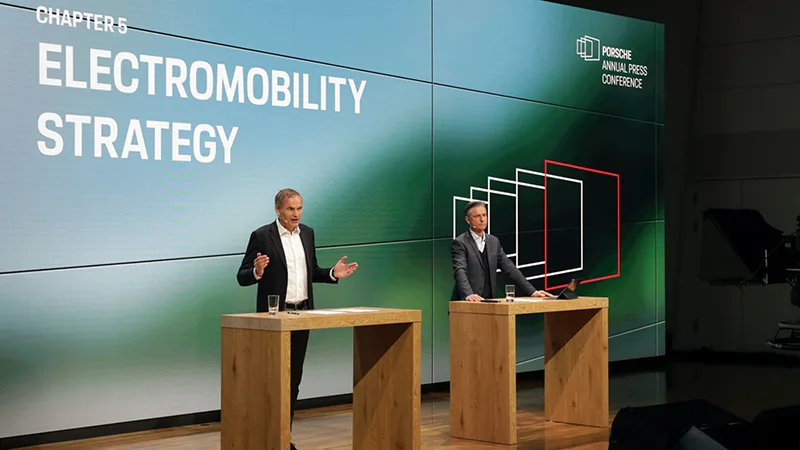
Porsche’s vision beyond electrification?

  • Brand: Porsche
  • Topic: Electric Vehicle Market, Strategy & Marketing, Supercars Future

Porsche recently shared an official announcement detailing its strategy for the foreseeable future. At first sight, it could look like the company is going back on its electrification plans after a few years of relatively underwhelming performances and heavy depreciation that affected the Taycan so much, it has almost become a symbol for the risks of buying luxury electric vehicles. However, on a second look, it appears there is more to it. But let’s back up a bit and look at the brand’s recent history.

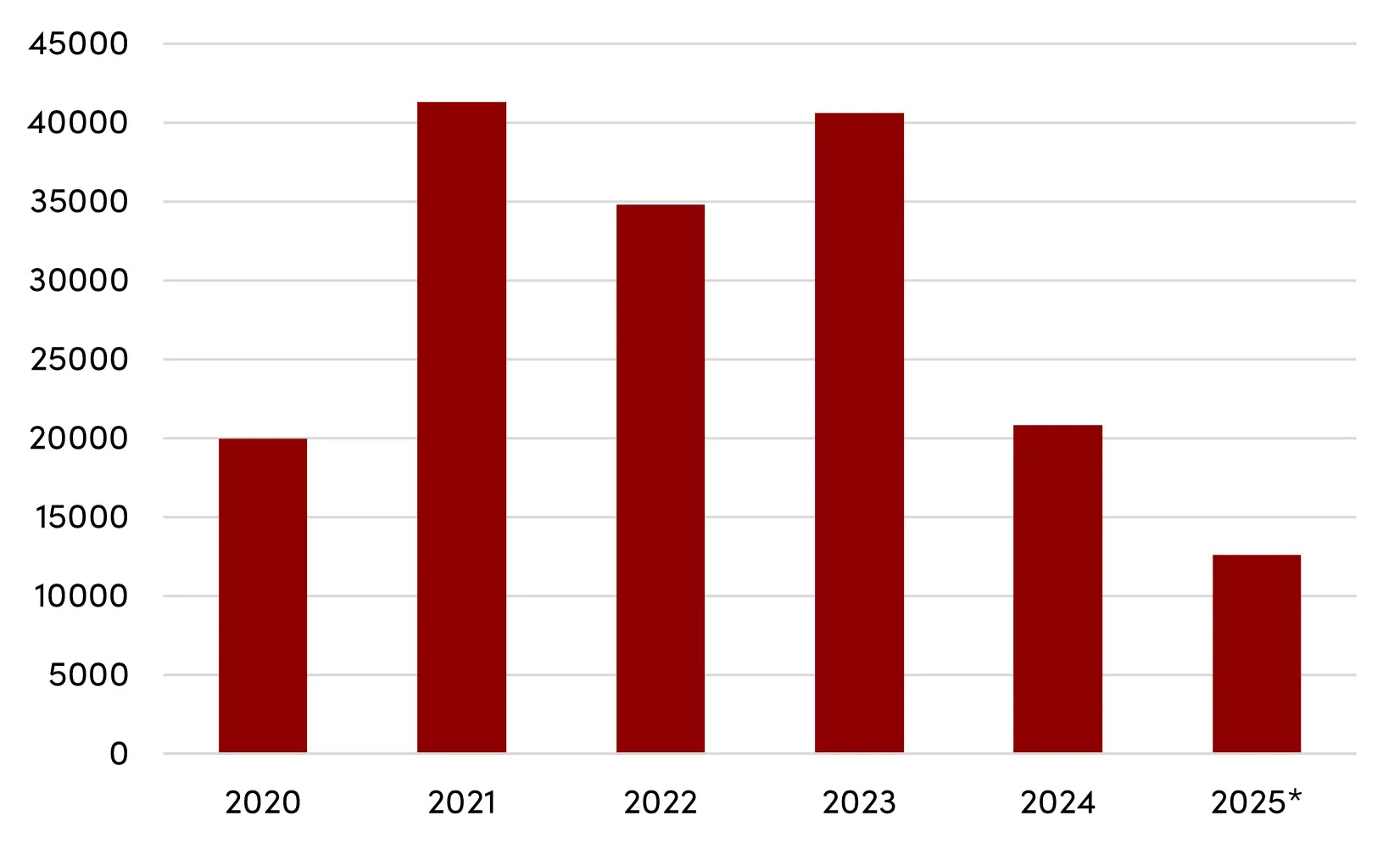
Since launch, after a first period of strong interest by early adopters during which the Taycan sales grew quickly, the performance of full-electric vehicles has not satisfied expectations. After peaking in 2021, sales have stagnated at best through to 2023, and due to low demand and depreciation, they halved in 2024, going back to 2020 levels. In the first 9 months of 2025, Taycan sales fell by another 10% compared to an already poor 2024, but the new full-electric Macan seems to have obtained good results overall with over 36,000 units sold. These not only outpaced the 28,533 ICE ones but resulted in a total of 64,783, increasing by 18% the Macan sold up to Q3 2024.

Porsche's Yearly EV Sales (2021- Q2 2025*)

ev sales porsche

So, going back to Porsche’s recent announcement, while a substantial scale-back on electrification is definitely a key step in this renewed business and product strategy, the objective is not just steering away from it. But first, let’s see the announcement in detail.

Porsche’s key measures

The first line in the press release states the upcoming product line will be supported by ‘brand-defining’ models featuring combustion engines. These will likely include the 911 ahead of any other, and all its derivates.

Additionally, the new SUV line, which will be positioned above the Cayenne as was initially planned as full-electric, will be offered at least in its early phase only with an internal combustion engine (ICE) or as a plug-in hybrid (PHEV).  

The ICE models already present in the lineup will receive a longer life cycle, and in between these and the eventual electrified substitute, more models have been added. Similarly, the new EV-dedicated platform planned to be released in the 2030s will be delayed.

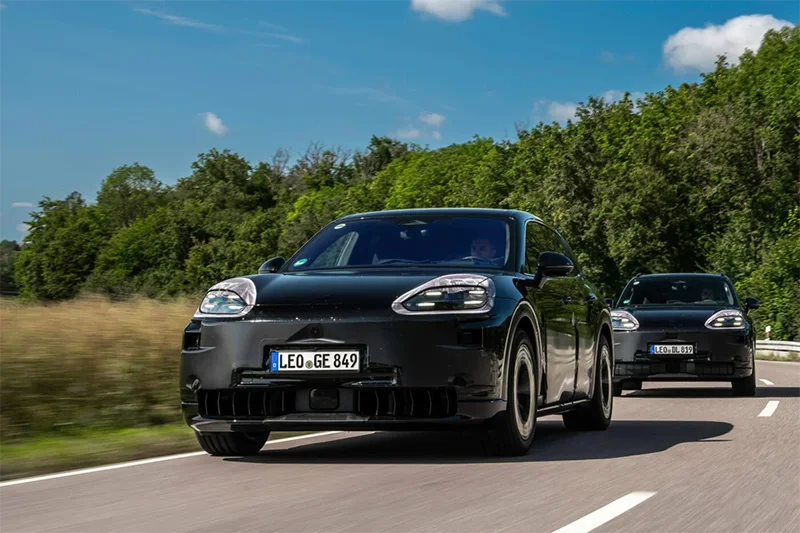
porsche cayenne copy*New Cayenne testing

Finally, the current full-electric models (Taycan, Taycan Cross Turismo, and Macan) will continue to receive updates and remain a consistent component of the product lineup. Additionally, a new all-electric Cayenne and 718, derived from the Mission-R teased a few years ago, will be added to the lineup as well.

According to the statement, while these measures are organised to secure long-term financial success, Porsche expects them to lead to additional depreciation and potential provisions. The financial expectations for the year are of similar revenues, but lower returns than previously forecasted. Lower automotive EBITDA is expected as well.

What does it mean for Porsche’s strategy?

The potential of electric vehicles is not overlooked, but requires a more cooperative effort by the group. After the many difficulties faced by Volkswagen software developer CARIAD, the Group has turned to American Rivian to create a Joint Venture that will grant them expertise to develop SDV platforms, both hardware and software, for the upcoming generation and new software.  

In the words of Porsche’s CEO Oliver Blume, with this strategic shift, the OEM wants “to meet new market realities and changing customer demands”, “These decisions build on the previously announced initiatives and help us to achieve a very balanced portfolio. This increases our flexibility and strengthens our position in a currently highly volatile environment. […] we want to meet the entire range of customer requirements.”

oliver blume*Porsche CEO Oliver Blume

The new strategic arrangement allows Porsche to be ready and more responsive to such an uncertain and fast-changing market. Sports cars, GT, and SUV lines will all offer choices between ICE, PHEV, and BEV powertrains to be able to cater to any potential new request. Through innovation and flexibility, companies can reduce risk by diversifying the product portfolio to maintain business stability. On top of that, effective marketing is the key to communicating to clients this diversity, the relative added value, and competitive advantages, building a stronger brand image. In these market conditions, this strategy builds resilience and ensures relevance by also playing on the brand strengths in the face of inevitable change and an increasingly stronger competition.

In time, this could also translate into a deeper diversification by adopting a geography-based approach that is usually not applied (or in a very limited way) by luxury brands such as Porsche. A 2019 research by the Journal of Risk and Financial Management investigates how this type of diversification can positively impact a company’s financial performance both in terms of return on assets and return on equity. From the research, the varying results obtained with different diversification models are explained through inefficient utilization of resources, especially in terms of innovation for a specific market. Additional risk with this approach is identified for both product diversification and geographic diversification based on the Agency Theory, with managers opting for diversification strategies that fit their personal benefits. These instances naturally negatively affect the financial performance, even though not in the totality of cases.

While it would be extremely capital-intensive for a luxury automaker to develop entirely new products for a single market (even though there could be noteworthy considerations to make for large markets such as China), a higher-level strategy seems feasible. One relatively common solution for the Asian markets in the past has been to introduce exclusively for those regions extended-wheelbase models. As the Chinese EV market continues to grow more rapidly than any other, Porsche caters to a more “traditional” audience used to the added value of its ICEs performance stabilising its business globally. At the same time, it can continue to develop its next-gen electrified generation more effectively and with less pressure to address the Chinese market and other more EV-focused ones that might develop in the coming years.

Is China moving away from European Luxury?

  • Brand: Aston Martin, Ferrari, Lamborghini, Porsche
  • Topic: Electric Vehicle Market, Supercars Future

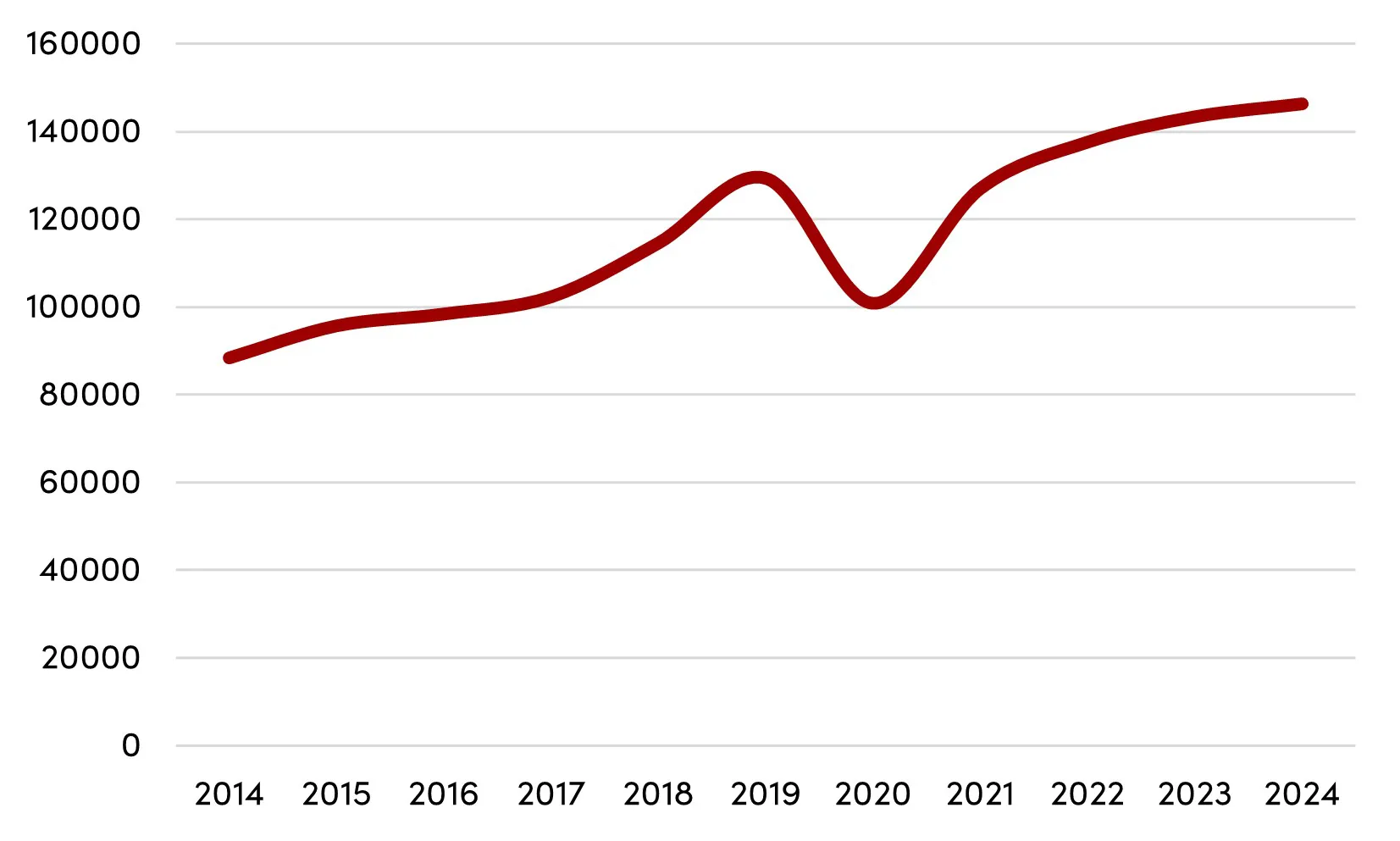
Over the past 10 years, the luxury car market has grown consistently, with several brands growing to financial and sales volume peaks in their history.

Yearly Luxury Vehicle Sales (2014-2024) 

luxury sales*The Graph includes annual sales by Aston Martin, Bentley, Bugatti, Ferrari, Koenigsegg, Lamborghini, McLaren, Pagani, Rolls-Royce, and models above the €150,000 mark from Porsche, Lotus, Maserati, Audi, Mercedes, and BMW.

While in the aftermath of the pandemic, it took only two years for the luxury market to reach and exceed the previous peak reached in 2019, the trend that seems to emerge and that could be confirmed in 2025, considering the volume reported so far by major OEMs is one of gradual slowdown or, in a worst-case scenario, stagnation.

A big factor in this trend could be the radical transformation of the Chinese market. Because, in this growth over the 2010s, the USA has almost always been the largest single-country market for most of these OEMs. However, a close second, and quickly growing (for some even larger than the US), has been China.

Porsche is one of the best examples of this. After a launch in 2001, by 2015 China had become the single largest market for the German automaker and has remained so up until 2023, when, with a 25% share of sales overall, it was overtaken by the USA at 27% (while Porsche still recorded a healthy +3.3% volume growth). And this is part of a larger trend that can be observed across different companies.

A luxury slowdown in China

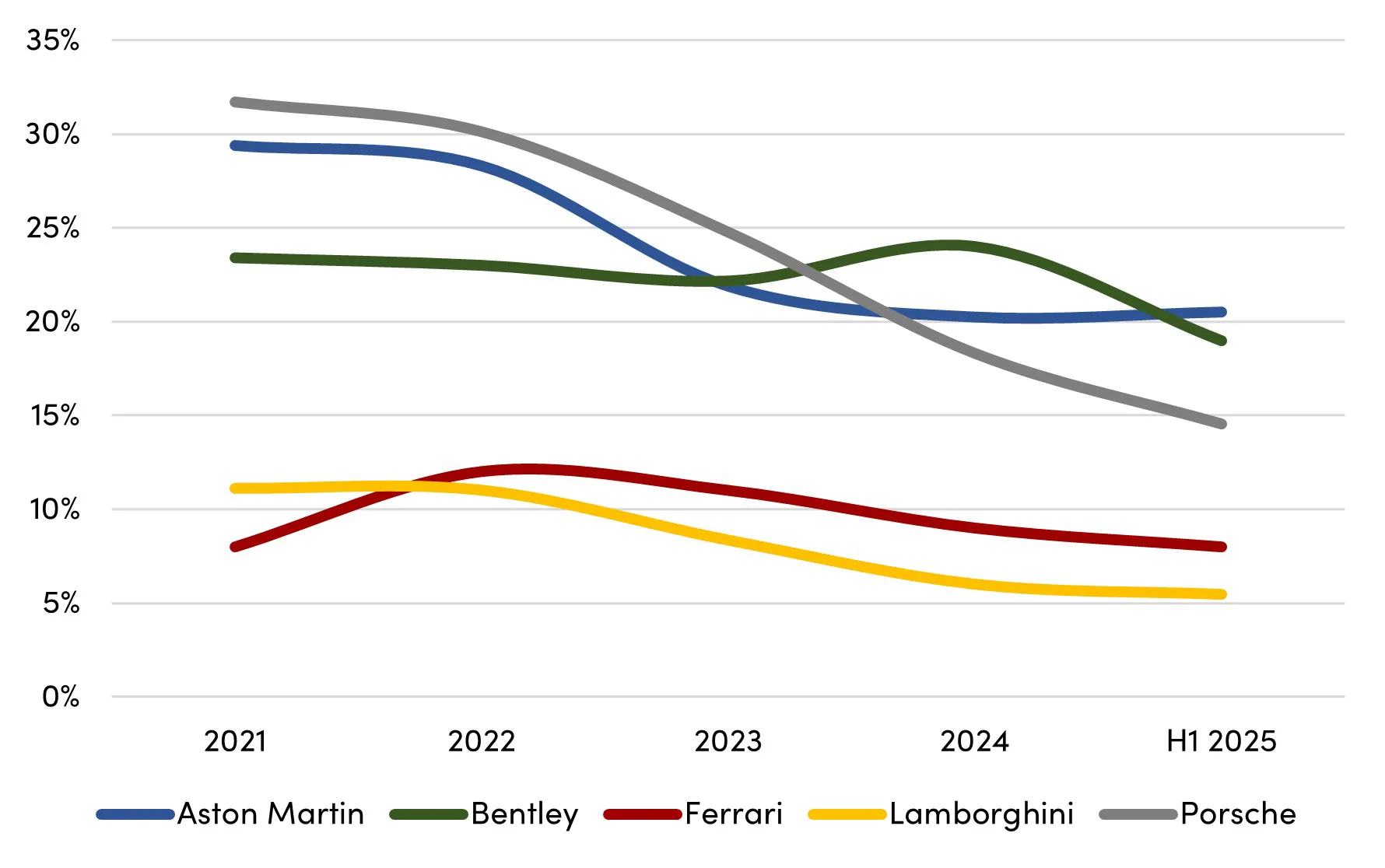
By looking at regional sales from automakers that shared the data over the past few years, it is evident a gradual slowdown in the Chinese market across the industry.

Luxury Automakers Yearly Share of Sales in the Chinese Market (2021-H1 2025)

china share

Since 2021, the one company that has remained more stable and for which China was never the largest market, as a much larger share of its sales relies on European Markets, with a sizeable one in the US as the largest single market, is Ferrari. Despite this, Ferrari too shows a slight decrease from the 2022 peak. A similar situation is observed for Bentley, for which China sales share remains quite stable, and a more noticeable slowdown is visible only in 2025 so far. It must be noted, however, that while shares for the British companies have remained mostly unchanged until last year, the overall sales figures haven’t. Sales in 2024 for Bentley were 30% lower than in 2022.

In the middle is Aston Martin, for which this decrease has been more evident, from a 29% share of sales in China in 2021 to 20% in 2024 and 2025 so far. The company, though, similar to what has been just said for Bentley, has also experienced a sales slowdown in 2024, and likely in 2025 too, albeit less dramatic than that of its British competitor.

Worse off, in this overview, instead appear Porsche and Lamborghini. With some ups and downs for the first one and consistent growth for the second, their presence in the Asian market has shrank more markedly than for the others. Both companies under the VW umbrella have seen their share of Chinese sales halved over these four and a half years. Porsche went from over 30% in 2021 to just 15% so far in 2025, and Lamborghini over the same period from 11% to just 5%.

Why is this happening?

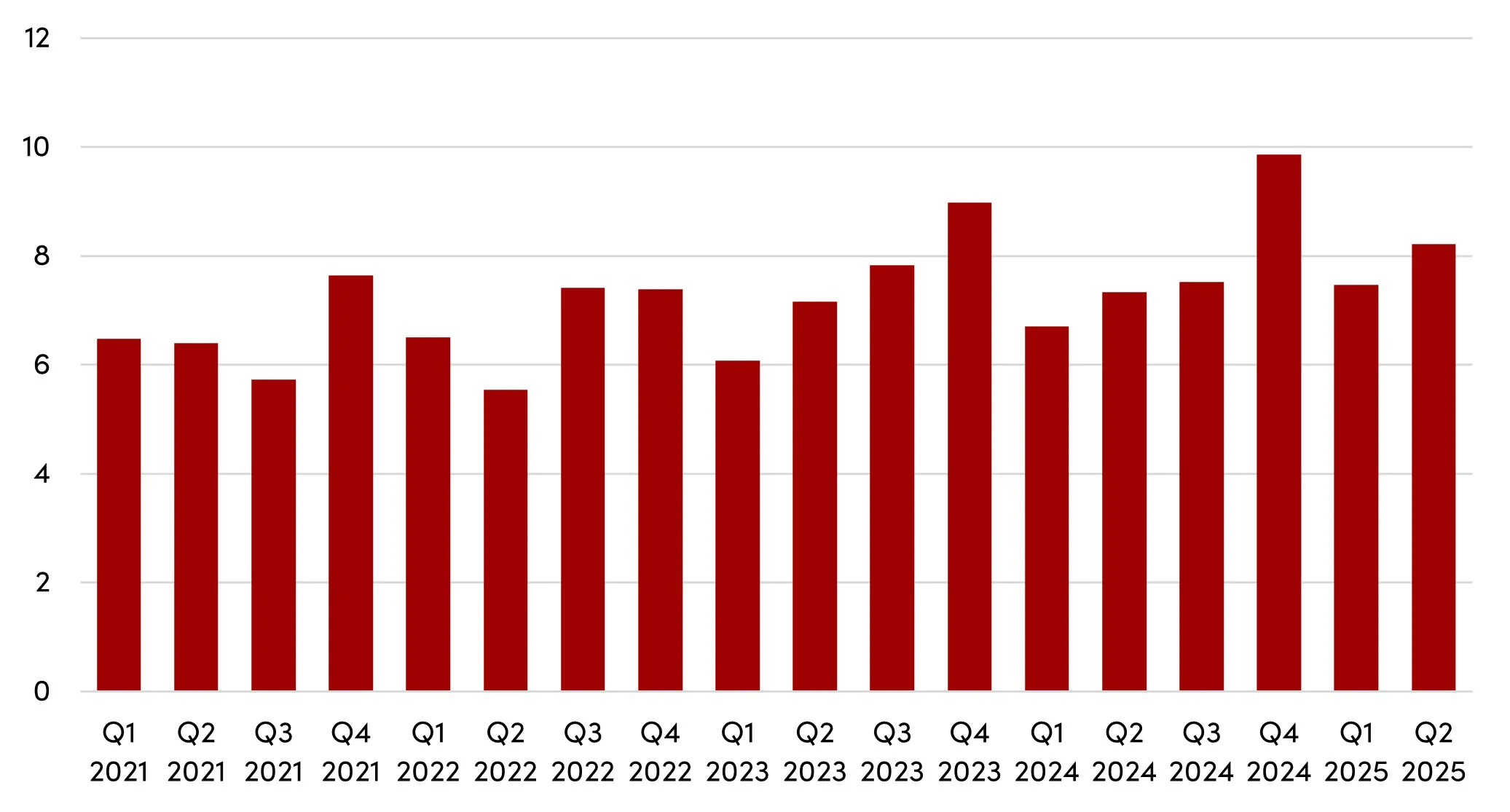
The Chinese automotive market has not slowed down, but actually kept growing after recovering from the pandemic, reaching 30 million in 2023, exceeding that in 2024, and 2025 seems on track to get even higher.

China Passenger Vehicle Quarterly Sales (2021- H1 2025) 

quarterly sales

However, Chinese customers are increasingly buying domestic brands, vehicles, and technology. The introduction of EVs has been the perfect opportunity for the Chinese government to push for a fast change in a market that had been dominated by European automakers up until a few years ago. This came mostly thanks to their performance, quality, and brand equity, all coming from a much longer experience. The most established segments, therefore, were the premium and luxury ones. On the volume side, while foreign OEMs had a consistent share, that was already decreasing earlier due customers' price sensitivity and Chinese OEMs' lower prices.

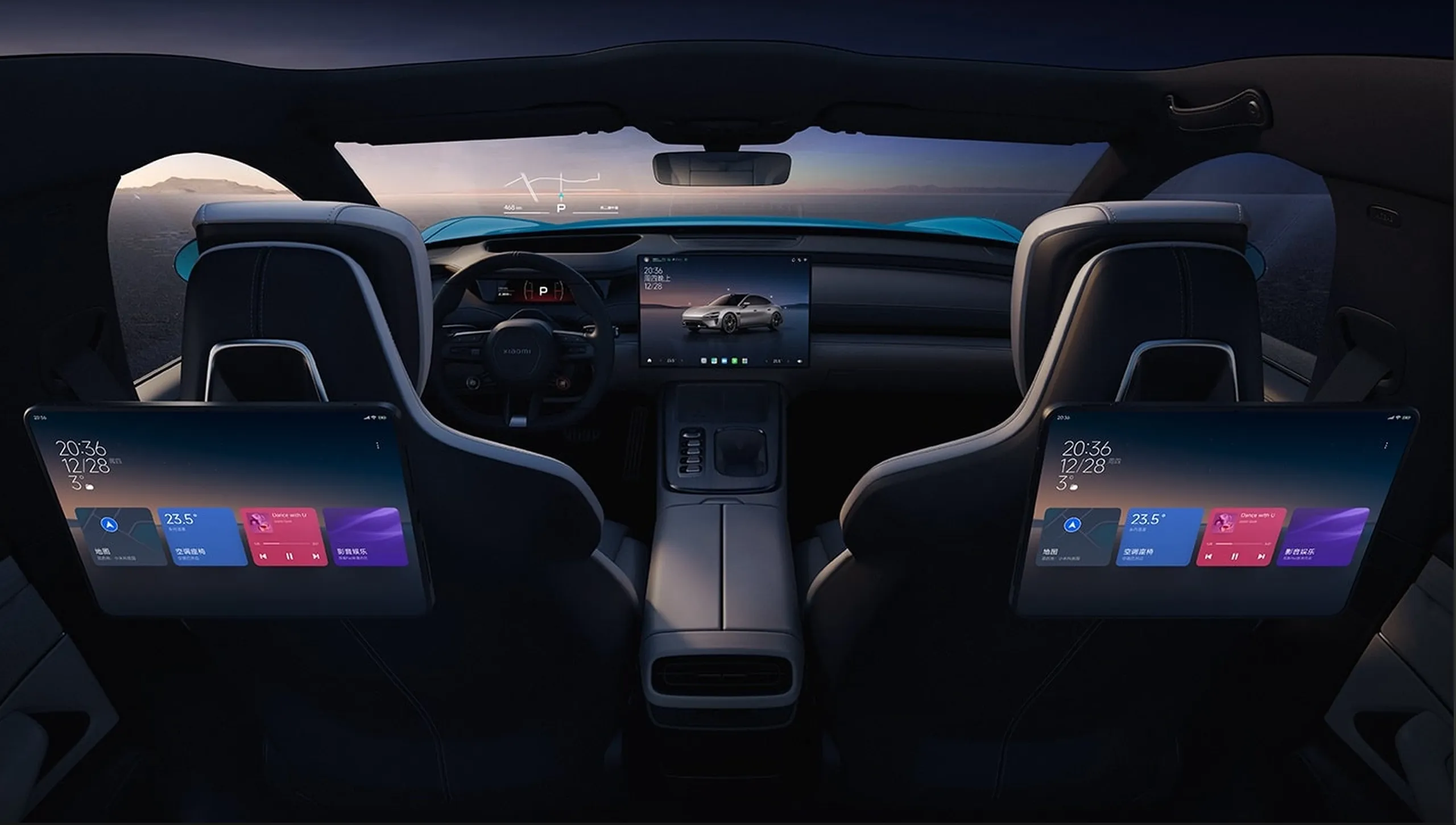
So when it came to luxury, the introduction of the electric powertrain leveled the playing field in terms of performance, and domestic companies also learned throughout the 90s and 2000s’ joint ventures with which foreign brands entered the Chinese market. Additionally, Chinese brands were better at interpreting their customers' preferences and offering them a new automotive experience focusing much more on software capabilities and convenience features compared to their European counterparts.

Some of the legacy luxury OEMs are actually going back to older solutions like the manual gearbox because their average customer wants that feeling of driving engagement that is lost with increasing automation. Chinese companies instead went in the opposite direction, going all-in on technology and creating a new and highly customizable experience for a customer base that generally has not the same long-standing attachment to combustion engines and the feeling they bring. Thus, it does not have the same expectations of driving performance from a luxury brand, but is actually showing to care more about technology.

xiaomi su7*Xiaomi SU7 interior

With significantly cheaper prices, many Chinese OEMs offer an in-vehicle experience that aims at driving performance but also a lot more, while the value proposition of European OEMs offering has likely become somewhat less relevant to the point where even the stronger branding cannot compensate the perceived lack of features and technology.

Can European OEMs turn this around?

The stronger players in the sector are managing to keep stable sales and constantly improving financial results thanks to significant increases in revenues coming from personalisation programs.

This strategy has been working very well for most players involved, led by Ferrari and Lamborghini, but also OEMs in more uncertain conditions, like Aston Martin, have reaped the fruits of this trend improving consistently their average selling prices over the last few years.

A gradual diversification of the product lines with the introduction of fully-electric vehicles that have currently been postponed for most luxury OEMs, could bring back the interest in the Asian market. However, improving success in a single market, however large, might not warrant the substantial investment needed for the development of these models.

The other option could be to gradually shift toward even more exclusive and limited models with a strategy closer to what the likes of Koenigsegg or Pagani have been doing. This would definitely shake the current company structure for these established OEMs, but potentially ensure strong profits with a more limited production that could also shield customers from depreciation that has been plaguing the segment lately, even for limited-run models.

Are Luxury Performance EVs Dead in 2025?

  • Brand: Porsche, Rimac, Rolls-Royce, Mercedes
  • Topic: Electric Vehicle Market, Supercars Future

2024 was a complex year for the automotive industry, with legacy automakers losing significant ground either in EV market shares, financial results, or both. This is due to several factors affecting the industry. Geopolitical, technological, and trends among consumers. While there is no doubt that the future of automotive is electric (at least in large part if not completely), the same might not be completely true for the luxury performance niche for the foreseeable future.

EVs are “young”. While cars have been around for well over a century, the true development of consumer-ready electric cars is barely around 15 years, and there are still countless areas of significant improvements that can completely change the product and user experience in years to come. Going from batteries to software, and more.

After early adopters jumped on the bandwagon and the excitement “died down”, it left space to critics and doubters. This, particularly in 2024, is reflected in a significant drop in EV sales in the West. China is the great exception, with EVs not only growing but reaching around 65-70% of the global share.

Luxury Automotive OEMs review their electrification strategies

It is throughout this difficult period for the industry with many OEMs committing significant investments in EV-related technology, like Ford's $14 billion for the EV expansion in the US, that some started going back on their development strategies.

The latest of which is none other than Porsche. The German automaker has been a strong and early promoter of the new powertrain technology, with its Taycan, initially named Mission E, and many more in between from concepts like the Mission R, or Mission X, to actual all-electric production version of its “traditional” lineup like the latest Macan.

It has to be said that Porsche never fully went in only one direction. A while back they made the headlines with their big investment in E-fuel development for their legacy models and classic cars (Link E-fuel article here), but an estimate of their investment in EV technology just in the last 3 years is around $25 billion.

Only a few months ago Porsche announced it was reviewing its EV strategy stating they are reducing their EV development targets. Key reasons for this have been sluggish sales of its EV models due to low demand, the significant investment required to continually develop software and technology for its new models, and, not to be underestimated in the luxury sector, the drastic depreciation hitting EVs in general, trend for which the Taycan has unfortunately become a symbol.

Porsche Taycan Depreciation over 1 and 4 years

depreciation

A quick look at the Taycan (Coupé) current rate of depreciation shows a quite worrying situation, that any buyer in this segment would seriously consider before the purchase. Compared to 2024’s prices for the different trim levels as new starting at £86,000, and topping at £161,000 (excluding the Turbo GT version that was not available in the previous generation Taycan), models purchased earlier in the same year depreciate by an average of 31% on starting prices that do not include options yet, and over 51% in 4 years. If options were included in original sales prices these percentages would increase even more.

A first announcement by the German automaker stated that the previous target of 80% of BEV sales by 2030 might not be achieved due to factors previously stated. Chairman Lutz Meschke said: “We will refresh our combustion engine cars, including the Panamera and the Cayenne, and of course, we will continue to rely on plug-in hybrids”. He continued “When it comes to research and development, you’ll see more flexibility in the upcoming years. We will develop new combustion-engined derivatives in order to give the right answer to customer demand”. This could, for example, be reflected in the decision of releasing an ICE version of the upcoming 718 that was notoriously set to become a BEV only, announced by the Mission R concept a few years ago, to try and renew the product line and revive its sales that has been somewhat slow over quite a few years.

mercedes cla elettrica*Mercedes-Benz BEV CLA Concept

Right before the German automaker, compatriots at Mercedes-Benz went through a similar process. Initially the development of the MB.EA-Large EV platform planned for 2028 was halted, then came the delay of the target of 50% sales of electrified models (BEVs and PHEVs) from 2025 to 2030, and it’s a few days ago the announcement that the production of the CLA concept unveiled a while back has also been delayed due to development issues.

In Great Britain too, automotive OEMs follow the trend. Aston Martin, amid a slowly and very gradually recovering financial situation, delayed the announcement of its first EV to 2026 which was initially set to come this year. Geely-owned Lotus has reportedly abandoned the plans to go 100% electric and Bentley too, which was set to reach the same target by 2030 confirmed that hybrids will likely remain on sale even after that date.

Is there more to this trend?

As mentioned previously, China is going strong and its EV market is in constant evolution with serious competitors coming to the global stage and making the headlines with important achievements. These days in the Western media the peak of this wave has surely been Xiaomi’s SU7 which in its “Ultra Prototype” iteration (which is not road legal) managed to attract everyone’s attention with a lap time of 6:46.874 at the Nürburgring Nordschleife becoming the fastest EV on the track. It comfortably outpaced the £1.8 million Rimac Nevera (7:05.29) and the new £186,000 Porsche Taycan Turbo GT with Weissach Package (7:07.55) with a prototype that is said to cost just around £94,000.

While this is working well for the mass market though in China, luxury automakers have a different and much smaller customer base, and on top of that for several of these brands the largest markets are still in the West (usually the USA) and currently made on average in larger part of people around 50+year-old or older. This demographic, grown up with specific expectations about the performance and sensations that a performance luxury car can and should offer seems fairly opposed to electrification and its added value proposition compared to combustion-engined cars. So, this is the obvious and most likely factor due to which the market niche is highly likely to remain mostly ICE-driven in the short to medium term, with hybrids decisively taking their place.

There are potential alternatives with the likes of Ferrari attempting a new approach to BEVs as discussed previously, or a new developing trend of Extended-range Electric Vehicles (EREV) which is mostly aimed at solving range-anxiety and thus not likely to make luxury car buyers fall in love with performance EVs.

xiaomi record*Xiaomi sets lap time at the Nordschleife

The most emblematic example of this change happening over the last year or so is the statement released by Rimac’s CEO Mate Rimac confirming that luxury car buyers simply do not want performance EVs. According to some, this could be hinting that upcoming models by the Croatian brand will get some sort of internal combustion powertrain component. In terms of sales the only exception in the year just passed has been the Rolls-Royce Spectre, which is naturally not focused on performance and thus (as founder Charles Rolls said over 100 years ago) takes advantage of the silent and smooth powertrain enhancing all the characteristics that brand’s clients look for.

What could be next?

As the market composition, especially for traditional luxury automakers seems unlikely to drastically change in the short term, a significant change could be once more driven by forward-looking markets like China.

With the offering of sporty BEVs increasing in China, customers more used to, or growing up in a market dominated by EVs may first start trends that define new value propositions more suited to the electric powertrain that go beyond straight-line acceleration (already proven not sufficient to convince sceptics) and would probably fall in technology applications and EV-specific driving-related use-cases.

Last but not least, a determinant factor that could change traditional performance car buyers’ mind is a revolution in EV battery technology. If new chemistries bring a significant improvement not much in power density, but in volume and weight reduction like some such as solid-state promise, they could help OEMs bringing down the overall cars' weight to the 1,500 kg average of current performance cars and thus significantly benefit dynamics and driving capabilities.

Has Luxury Automotive Peaked in 2024?

  • Topic: Electric Vehicle Market, Supercars Future

2024 has seen mixed results so far for luxury automotive companies, with brands continuing their strong performances (albeit with an ever-shifting business model), others that are stabilising, and others again that are instead going through significant difficulties.

Luxury Automotive Yearly Sales (2019-2024) 

sales*2024 Projection accounts for Q4
**The Graph Includes sales from Aston Martin, Bentley, Ferrari, Lamborghini, McLaren, Porsche, Rolls-Royce

The graph including the key brands in the space, shows the market's continued growth over the past 8 years averaging over 15% even with the sharp drop due to the pandemic impact which has seen a recovery with results exceeding 2019 levels just a year later.

Winners and Losers

Most brands with generally strong sales figures have seen a significant decline in sales or remained mostly stagnant up to Q3 2024. Specifically, British iconic brands Aston Martin, Bentley, and Rolls-Royce, volumes shrank by 17%, 27%, and 13%  respectively.

Aston Martin is rebuilding its brand and has recently renewed its entire lineup with the latest Vanquish, and the new Vantage following the updated DBX and DB12. With increased average selling price once more, if volumes are delivered, the brand is expecting positive financial results in 2025.

Bentley and Rolls-Royce attribute the slowing sales to challenging market conditions and a calculated slowdown due to renewing lineup respectively.

Porsche (numbers here including only their 911s' sales) and Ferrari remained mostly consistent with just a 2.5% and 0.1% increase, which especially in Ferrari’s case, with improving financial performance, is deliberately limited indicating a continued positive period for the Italian brand, as reported in the previous article New Luxury Automotive: Going Beyond Performance?.

The only ones that saw a strong improvement were the other Italian brand Lamborghini with a +8.6% thanks to the entirely renewed lineup featuring 100% hybridised models Revuelto, Urus SE, and the latest Temerario, and McLaren whose sales grew by 17% although it must be noted that this performance is still part of the brand’s gradual recovery after the 2018 peak and drop in 2020. McLaren too is in a renewal phase with the recent launch of its W1 following the updates with GTS and 750s models.

lamborghini lineup*New Lamborghini fully hybridised lineup

The projections following the 2024 trend for each brand bring for the first time in several years sales that are smaller in volume than those of the previous one. But what could that mean? Has the industry peaked, is it general economic conditions or there is something more specific going on in the industry?

Wider trends

What is happening in Luxury Automotive could be part of a larger trend in the luxury space. In 2024 in fact, several reports warn of a modest decrease between 1 to 3% in the first 2 quarters of the year, with projections for the close of the year equally cautious, varying between -4% and +4%.

The faltering demand in many sectors is attributed to macroeconomic factors. Rising prices (well documented in luxury automotive) against stagnating GDP in many countries, geopolitical uncertainty with conflicts increasing and public perception more and more divided would all contribute to a crisis that has the potential to affect different sectors in luxury for some time. Part of this ongoing trend is also China. With a 20% downturn the Asian country, which for many brands (and not only in automotive) is by far the largest market, affects negatively the global one. The situation is likely to be exacerbated by the recent US Election and the threat by President Trump of additional tariffs on Chinese goods. So, the more conservative approach toward disposable income might continue into next year as well.

A report from Vogue Business analyses the problem as a loss of sense of belonging among customers toward luxury brands. The value proposition in luxury products accompanied by unique services and customer experience is apparently shifting and not sufficient anymore.

"Brand VIP experiences have become homogenised, which makes the high-net-worth customer value them less" says an industry expert interviewed on the report.

What about Automotive going forward?

The wider automotive market is also struggling globally. S&P Global reports a -18.3% in Europe in 2024 so far, and -12% for the USA. China, on the other hand, in the volume market saw a modest 4-5% increase in the first quarter driven by new subsidies followed by generally uncertain results over the following months. This brought a 2.4% growth overall in the first 9 months of the year, as reported by CAAM.

China Domestic Market Monthly Sales (2022-2024)

china sales*Source: China Association of Automotive Manufacturers

Despite the different dynamics in the two segments, one constant for both is the decline in electric vehicle sales or commitment by some brands. Electrification seemed to be the next step even for luxury automotive, with more groups introducing hybrid models, and some starting with full-electric as well. Additionally, there have been the likes of Rimac, Pininfarina, and a plethora of other startups that started working on highly limited runs of electric hypercars claiming eye-watering performance figures that no ICE performance car ever reached. For a while, these cars looked like the new competitors that legacy brands would have to face and follow if they wanted to avoid being left behind. However, ultimately, consumers chose, and their voice (as a relatively small crowd) was loud. Brands started going back on their strategies and production plans to preserve their internal combustion engines.

Overall this slowdown is most likely caused by a mix of factors listed in this article, and while in business we can’t predict the future by looking at the past, it is possible to interpret the meaning of the current trends in the industry.

The past decade has seen consistent growth in the luxury automotive industry, driven by an increase in wealth in rich countries, with the emergence of new large markets (China ahead of everyone else). Also, the advent of social media, with a culture often based around an exterior image of success, shifted the attention toward material goods, and at the same time, the new wave of young wealthy individuals often coming from these very contexts became an increasingly significant share of buyers for luxury automotive brands. Porsche and many others reported how the average age of luxury car buyers has sharply decreased over the past decade.

The new business model in luxury automotive with cars themselves becoming more and more just a “part” of the whole experience, now enriched by personalisation and exclusive services, has also helped brands increase their margins (again as shown in the previous article) even with sales remaining the same, which in turn helped their exclusivity. But here too, like in other sectors of luxury, the value proposition that customers look for might be changing.

The automotive industry, regardless of the powertrain of choice, is changing and with it its customer base. The “saturation” reached over the past 10-15 years, saw new trends, but brands should ask what is next. A key challenge will be to decide whether to remain flexible and as dynamic as possible to accommodate new preferences and trends or maintain the course focusing on a core product line and strengthening exclusively the brand’s values.

Beyond products and services, in this industry the one constant that keeps proving a key factor for success is brand identity. A brand has to stand for something that consumers aspire to be a part of, whether it is because of its history or its success in motorsport, or its meaning in our wider culture.

Automotive Luxury Market in 2022: The Growth Continues

  • Brand: Aston Martin, Bentley, Ferrari, Lamborghini, McLaren, Porsche, Rolls-Royce
  • Topic: Strategy & Marketing, Supercars Future

The luxury automotive sector showed significant resilience over 2020 as the Covid pandemic broke out. While the wider sector has been faltering in its recovery, the luxury segment kept growing in the following year and in 2022 as well. Along with the general growth though there are other interesting dynamics that can be observed.

Larger volumes

The top-end of the segment, driven by a few extremely successful brands, has registered yet another growth year, increasing over 2021 by about 9%, and a further 3% the next one as displayed in the graph below. The larger automotive sector instead despite a sizeable improvement in 2021, almost stagnated in 2022, with the main cause for delays and bottlenecks still being the shortage of semiconductors.

Luxury Automotive Market Sales Volumes (2018-2022)

volume

The main contributor to this success over the past two years has been the continued growth of brands like Bentley, exceeding 15,000 yearly sales for the first time in its history, Ferrari (13,221), Lamborghini (9,233), and Rolls-Royce (6,021) all posting record results. Other OEMs such as Aston Martin, Porsche, and Maserati (still on the path of recovery) instead have been consistent while probably not exceeding expectations. Finally, more niche brands still going strong like Pagani, Rimac, Koenigsegg, and the likes also contributed albeit with very low numbers. Of the public companies in the segment only McLaren, which has not published its full-year figures (and is accounted for here with an estimate), will likely report a drop in sales since it stood at -13% in Q3 YOY.

Reflecting the general health of the segment is the market size evaluated at €566 billion.

Luxury Automotive Market Value (2018-2022)

value market

Evolving market trends: prices and personalisation

The most interesting data that emerges from these reports though is that while the value of the market has not only recovered but exceeded the record of 2019, sales numbers haven’t.

This is reflected by the growth numbers of various companies in the segment. While for all these the sales numbers have increased, both revenues and operating profits reached much higher growth suggesting an overall improvement in efficiency, and most of all a trend already seen over quite a few years: the general increase of luxury vehicle prices.

2022 Luxury OEMs with the largest revenue and operating profit growths

table growth

This increase in average selling price (ASP) takes different forms.

In 2022, Aston Martin boasts a 26% increase in ASP exceeding the £200,000 mark. This has been mainly thanks to the destocking efforts over the past few years.

In other instances, the base price of production models has comparatively increased, either because of new technologies or because they represent new additions to a lineup, as is the case for Ferrari’s SF90 Stradale and Purosangue. The first is priced at £379,000, while the latter specifically substituting the GTC4 Lusso, introduced in 2016 and sold at a price of around £243,000, is offered now at a starting price of £313,000. This trend is observable in pretty much every other luxury car manufacturer, with even more extreme examples in super low-volume ones such as Pagani.

Last but not least, the other important trend that is common to all these companies and represents an important and increasing source of revenue is personalisation. Every luxury OEM over the last 10-15 years has introduced and gradually expanded its bespoke program. Over the last two years, most OEMs quote bespoke and coachbuilding programs as major contributors to the sudden increase in revenues and profits.

The luxury market keeps evolving and, as mentioned previously in the article Tailor-made: What luxury car customers can't go without, the product itself is not sufficient anymore. With general wealth increasing in most developed markets, and a higher number of HNWIs, expectations have become higher too. Clients are looking for more than a high-end car, they want something that is also unique and distinguishable. So, virtually limitless selections of colours, materials, interior, and exterior specifications have been added by every automaker.

The other method used by automakers to cater to this demanding audience is the release of limited-edition models. Often derived in most parts from production cars, limited runs usually feature a few unique additions that can, at times, be only cosmetic. These rare models are more desirable as they also suffer much less from depreciation. The peak of this trend is represented by one-offs which have also been constantly increasing over the past 10+ years as shown in One-off Supercars: What’s the next step for luxury automotive?

dbs 770 ultimate volante*Latest example of limited-run by Aston Martin DBS 770 Ultimate Volante

Additionally, each OEM used different methods to realise efficiencies in production and resource management. Bentley’s ‘Dream Factory’ realised with a £2.5 billion investment significantly reduced water consumption, improved waste management, and overall carbon footprint. Others such as Aston Martin optimised product development processes that allowed them to maximise cross-carline component sharing. In turn this reduced processes and engineering complexity.

Unfortunately, for some OEMs, this also corresponded to significant layoffs over the last two years, which surely contributed to the reported results.

Further Brand diversification

Other important factors contributing to the growth of luxury automotive brands apart from the delivery of new cars, and the ones quoted above, are the pre-owned market and events.

As discussed previously (Luxury Automotive Resale Value and Depreciation: How and Why) the pre-owned market is extremely important for luxury automakers, and not only because low depreciation makes cars more attractive for potential buyers, but also because most new clients when approaching their first purchase chose a used vehicle.

What often happens next is that these clients end up owning more than a single car, in fact over 50% of a large sample of owners claim to possess more than one luxury vehicle. This choice is often strictly tied to branding and brand value, so clients effectively become part of a restricted elite where they also get involved in a plethora of activities that offer OEMs more opportunities to create additional revenue streams.

Bentley's latest announcement on this field is particularly interesting. With its latest program called “Extraordinary Journeys”, the brand offers highly curated road trips in selected locations revolving around the best driving experiences possible while moving through high-end hotels, fine dining, and other interesting cultural activities. While this is something that many brands organise for their clients, what is unique in Bentley’s case is that for the first time, they are opening these programs to non-clients, giving them the opportunity to drive a range of different models during the trip. This is not only a great additional revenue source, but also a smart way to attract new potential buyers and create brand advocates thanks to a proper 360° experience that goes beyond just the product.

Coming Years

Over the coming years, the luxury market has new important opportunities coming from the transition to electrification and with new technologies. SaaS (Software as a Service) creates even more options for personalization throughout the entire customer journey. From early stages to after-sales, OEMs can offer additional services and make their ownership experience even more unique.

rr spectre*Rolls-Royce Spectre is the first offering a customisable digital cluster according to clients' preference

The segment has been more resilient despite the difficulties the wider sector went through over the past 3 years, and so far signs seem to indicate the positive momentum might continue.

McLaren enters Formula E: into the Future of Motorsport

  • Brand: McLaren
  • Topic: Motorsport, Supercars Future

Another big name joins Formula E. From 2023, McLaren will acquire the Mercedes EQ Formula E team and join the full-electric racing series. There have been several big names going through the championship already, with some pulling out and others coming in. However, it is the first time we are seeing top-end luxury brands, with strong links to motorsport, joining the series. Could these be the first signals of a more important change coming soon?

Not Just McLaren

Right from the first season in 2014, Formula E has seen brands like Renault, Audi, Nio, Jaguar, BMW, Mahindra, Mercedes, and Nissan. The 2019-2020 season saw Porsche joining. McLaren’s announcement follows the one of Maserati published at the beginning of the year, which also talked about this entry as an important opportunity to look at the future of motorsport and a platform for electric cars’ development.

Formula E has had a positive season in terms of the audience in 2021 with a strong recovery over the previous year, but things are not as easy as they look.

Formula E yearly audience and percentage increase (in millions)

formula e seasons

First, the recovery comes from a difficult year, in which the sport was heavily affected by the pandemic with the championship starting late and holding only 11 races, with 6 in Germany. Secondly, as claimed by ABB Formula E the growth in 2021 is mostly driven by an increase in free-to-air distribution agreements in several different markets that lacked them before. As a result, countries like Germany, Italy, Brazil, UK, France, USA, and Indonesia saw significant audience growth.

So, while the growth could not be as impressive as it looks, another factor that has most likely limited it has been also the lack of races in Asia, which has been one of the most important stages for Formula E right from the first season.

Finally, another important point is the introduction from next year of the new Gen3 cars. They bring a new design, introduced recently during the Monaco E-Prix, which has sparked renewed interest. Most of all though, they bring another important power enhancement, up to 350 kW from the previous 250. Along with that, the cars will also be lighter, reach a higher top speed, and will be smaller and with a shorter wheelbase which should make them more agile. Overall the changes should translate into a significant performance improvement that will make racing more entertaining.

Formula E Different Generations Cars Spec

formula e car

Next season will also see an important change in rules. For the first time, pit stops to recharge will be allowed thanks to the new batteries capable of receiving recharge up to 600 kW.

A look at McLaren

With this move, McLaren doubles down on its motorsport strategy expanding once more adding the single-seater electric car series to Formula 1, IndyCar, Extreme E, and the different e-sports series.

McLaren Racing CEO Zack Brown released a statement saying:

“McLaren Racing always seeks to compete against the best and on the leading edge of technology, providing our fans, partners, and people with new ways to be excited, entertained, and inspired. Formula E, like all our racing series, fulfils all those criteria.”

This is important for McLaren’s marketing looking at the future. McLaren enjoys one of the strongest followings on social media, especially thanks to its F1-related reports Unboxed which still proves a winning formula thanks, especially, to the popularity of its drivers’ line-up Lando Norris and Daniel Ricciardo. More diversification will ensure a better reach and potential new audience, especially among the younger fans.

That is not all though. Formula E could be key also from the firm development perspective as it gives another opportunity to further develop EV racing capabilities, after the Extreme E series. The British manufacturer has in fact, like the rest of the segment, started its transition to electrification from the first hybrid model, the entry-level supercar Artura, which entered production and with the first deliveries scheduled for the end of Q2 2022. However, things have been far from simple since the start of the pandemic, and a deep dive into EV motorsports could give McLaren an edge over its competitors in the coming years.

2021 saw a partial recovery from the bad results of 2020, but still very far from the pre-pandemic levels, and the start of 2022 has not been positive as well.

McLaren Full Year and Q1 Sales (2016 - 2021, Q1 2017 - Q1 2022)

mclaren yearly sales

mclaren quarterly sales

Sales in the first quarter of 2022 have been the lowest in 6 years. Naturally, part of this was caused but the difficulties faced by the entire industry. From the aftermath of the pandemic to the chip shortage that is causing severe supply chain disruption for many OEMs. All these factors ultimately caused the delay in production for Artura.

Financial results too have not been really encouraging, with lower revenues and negative EBITDA. In this respect, additional investment dedicated to Formula E could prove a significant burden for the company, but at the same time, the Formula 1 budget cap introduced in 2022 has likely left room for different opportunities for all the companies involved, and also both budget and workforce to redistribute in other motorsport or business functions.

In conclusion, even with Formula 1 budget cap freeing resources, the financial risk is significant for the British automaker that also sold its applied technology division in 2021. Nonetheless, the entry into Formula E could be important for a number of reasons.

A lot will depend on Formula E’s popularity in the coming years, especially with the crucial introduction of the new Gen3 cars. While the sport’s popularity has been recovering from 2020’s difficult season, and new promotional deals are being arranged, it is not yet certain whether this series has already what it takes to become an established reality like other motorsport series.

formula e gen 3*Formula E Gen 3 presentation photo

Regardless, by acquiring the Mercedes EQ team, McLaren gets access to a strong team that has already succeeded in 2021 and is currently leading the ongoing championship. If this success will continue under the new ownership it could become another important marketing platform for the brand. Especially by looking at a future of motorsport (probably still quite far) in which EVs will become faster and thus more challenging and attractive than internal combustion engine cars.  

Lastly, even the luxury automotive segment moves relentlessly toward full electrification, and having a strong presence in different related racing series, offers a big opportunity from both a promotional and more importantly a technical development point of view.

Lamborghini Releases Huracán Tecnica: Are Sports Cars losing their appeal?

  • Brand: Lamborghini, Porsche
  • Topic: Electric Vehicle Market, Supercars Future

A few hours ago Lamborghini released its latest and probably final version of the V10 Huracán as it approaches the hybridisation of its full line-up. The Huracán Tecnica. According to the Cor Tauri strategy, announced by CEO Stephan Winkelmann, and discussed here Lamborghini Reaches for the Stars with Stephan Winkelmann: Direzione Cor Tauri, over the next two years the company will renew its entire line-up and then move forward to release the fourth model which should finally introduce the full electrification at Lamborghini.

In the OEM’s history, the Huracán has been an extremely successful model, even more than the game-changing Gallardo before it. Also, thanks to the new updated releases it has proven to be resilient as well in its almost 10-year lifecycle. But then the Urus has come.

Huracan tecnica*Source: Lamborghini media

In the lower segment, however, the 2-seater sports car is somewhat losing relevance. Why is it happening? Can it still be the strategic answer for struggling automakers? And is this trend going to reflect on the top-end of the market as well?

Over the last few years, the “go-to model” to ramp up sales figures has been the SUV, and it is still the hottest segment at any level of the automotive industry. For a clearer view of the impact of SUV models on the luxury performance automotive market here are a few related pieces:

Looking back 25 to 15 years ago, that role was up to the “entry-level” sports car. But since then, things have changed. One example now is Porsche’s 718 family with Cayman and Boxster.

It is well-known how during the 90s’ Porsche was practically saved from bankruptcy by the introduction of the Boxster. However, lately, the segment has stagnated for a few years.

Porsche 718 Boxster/Cayman deliveries by Year (2005-2021)

boxster sales

Apart from the clear effect of the 2008 financial crisis, the Cayman/Boxster range has been steady and has actually shown a slight downward trend since 2017 (considering also the virus outbreak impact).

The factors determining this dynamic are various.

1. The Pandemic

As just mentioned, the pandemic is definitely a factor affecting the sales of sports cars in lower sections of the market. A report from Forbes shows how these two years with Covid-19 have unequally impacted different consumers in the US. Luxury vehicles sales from $70,000 upwards have increased. Below that, up until a $40,000 price threshold, they have just remained stable, while between $40,000 and less than $20,000, the sales drop has been gradually more severe as the prices get lower.

sportscar income*Source: Forbes

Also, while sports cars like the 718 are already in the premium pricing bracket, they represent the entry-level option. So while the super-wealthy are likely to opt for the top-of-the-line 911, younger customers or less wealthy ones will probably be more conscious about spending on a vehicle that does not provide everyday practicality. Porsche itself, in fact, claims that the average 718 buyer in China, its largest market, is 31 years old.

Car Industry Analysis confirms the trend reporting that over 2020 C and D sports segments in Europe suffered a -70% and -33% registrations respectively.

2. Chip Shortage

The lack of semiconductors supply following the lockdowns and the gradually recovering demand caused more sales delays and higher prices that even rippled into the pre-owned market. These factors have probably discouraged potential buyers from purchasing a sports car. So, the resources have likely been focused on everyday usable vehicles not just by consumers, but also by OEMs to reduce delays on cars more in demand.

3. Generational changes

Last but not least is the general change in preferences. SUVs today are generally preferred because of their practicality, and in many cases, they have just become more representative of the current lifestyle. Also thanks to technical development, automakers are able to produce sportier and more dynamic SUVs that offer a driving experience closer than ever to that of a sports car.

According to Road & Track in modern society, compared to the 1990s, financial conditions, and especially the housing market and even rent affordability are forcing millennials and genZs away from sports cars and car ownership in general.

Forbes too, along with financial reasons for younger generations, suggests a substantial underlying change in how they perceive driving as just a necessity to move from one place to another, and the ownership experience as a burden and a potential cause for concern. Not only that but it is suggested also that this combination of variables could be what eventually will drive the majority of people toward self-driving cars (when the technology becomes available). This would effectively negate the main value proposition of any sports car.

Going Forward

Going back to Porsche’s example, even though entry-level sports cars back in the day have done for OEMs what SUVs are doing today, it is difficult to imagine how the same situation could repeat itself. Especially considering that whatever market is present has been probably already captured.

This is where electrification could offer a new path. First of all in terms of appeal to younger generations. EVs are the most modern option and definitely closer to the way millennials and genZs are used to interacting daily. Secondly, environmental consciousness is also likely to play an important role in this potential development.

Unsurprisingly, as of now, there are no real full-electric affordable sporty options. Earlier last year though, Porsche showcased its vision for the future of this segment.

mission r*Source: Porsche Media

Presented in the shape of a race car, the Mission Rhas been said to potentially represent the future direction for the next generation 718. Also, it will be the most technologically advanced model that Porsche will produce in the near future. Offering performance, and technology but with (relative) affordability in mind. This paradigm shift could be key to revitalising the interest in small 2-seater sports cars.

The luxury market

Certain trends seen in higher volume sections of the market have transferred to the top-end luxury one. Entry-level, more affordable options for customers to gain easier access to aspirational brands have been successful in the past. Both Ferrari California, and Lamborghini Gallardo have proven that.

The Huracán has done even better and has been a consistent seller so far, reaching what President & CEO Automobili Lamborghini America LLC Andrea Baldi said to be the physical production capability limit of around 2,500 units per year.  

Lamborghini Gallardo/Huracán deliveries by Year (2005-2021)

huracan sales*Huracán sales began in 2014, summing up with the last 265 Gallardo units.

With over 18,000 units delivered it is the best-selling Lamborghini ever, even though Urus will exceed this figure soon. The SUVs' popularity, in fact, has taken the luxury market by storm as well.

However, even if luxury OEMs are boldly diversifying, extending their reach to attract different audiences, it seems highly unlikely that sports cars in this market will suffer the same fate as those from volume car manufacturers.

The main reason is that apart from luxury and exclusivity, the driving experience and car capabilities are not just part of the vehicle, but they are part of the brand. This is already a stronger value proposition. Plus, branding is much more important for luxury firms.

Secondly, luxury brands maintain exclusivity and resale value by limiting the production numbers. Even more so with the current trend of developing successive more focused limited runs, like we have seen earlier this year with the Aston Martin Vantage V12.

In the current market, the traditional 2-seater small sports car is not going back to what it was, and OEMs might decide to discontinue certain models (like Mercedes did with its SLC). While this loss of appeal could be part of the reason why we do not yet have an affordable fully-electric option on the market, some should arrive in the coming years. A different approach, like the one shown by Porsche to better communicate with younger generations, could prove to be the missing piece needed to revitalise this segment.

At the same time, low-volume manufacturers are gradually moving forward too, but thanks to the characteristics of the luxury market, its exclusivity, and the very own DNA of the majority of these brands, they are unlikely to see the same decline suffered by volume automakers.

Gender Equality: Women in Automotive and Motorsport

  • Topic: Motorsport, Supercars Future

The discussion around gender equality has rightfully become central in every field today, whether it is sport, entertainment, or business. Naturally, in those environments that are still mostly male-led, there is a strong cultural component that is not going to change overnight. It certainly requires a gradual education, but it is definitely being helped by continued action ranging from companies governance to dedicated initiatives.

In the hope that celebrations like March 8th International Women’s Day will soon be obsolete, here is an overview of the current status of women in the automotive industry.

Automotive in the 20s

While there has been significant improvement in the last few years, there is still a substantial disparity in several markets.

In the US, in 2020, women accounted only for 26.1% of the total workforce in automotive. A similar percentage is registered in dealers and goes significantly down for repair and maintenance. Where there is a serious difference though is in managerial and senior roles.

A research by USA Today found that in the American market, except for GM where Mary Barra has been serving as CEO since 2014 and where 6 out of 11 board members are women. All the other major OEMs include a maximum percentage that is never above 35% and is actually down to 0 for some like Korean Hyundai-Kia.

graph executives women*Source: USA Today

An analogous situation regards the roles of executives as shown in the graph above where the definition includes positions as VP, equivalent or higher. A report by Deloitte from 2020 highlights the same imbalance among roles covered by women in the UK. Around 71% covers roles as employees or managers, while the percentage drops sharply as the seniority of the role increases, reaching just 1% for the board-level positions. Of this almost 30% work in marketing and sales while only 15% of the development and engineering roles are covered by women.

Women employment in automotive by Seniority Level

uk market women*Source: Deloitte

While the situation is improving, the issue, of course, does not seem to be just the hiring process, but also the talents’ retention. 40% of Deloitte’s surveyee claim they would change industry if they could start again, and up to 90% felt somewhat underrepresented in their work environment.

So, overall, issues with women’s representation in the automotive sector can be found at different levels. Not only with the hiring process but also when it comes to retention and career progression. Continued discussion to improve knowledge and overcome certain biases that are commonly present in the sector are solutions that can help to further improve the situation.

Luxury Automotive

Different luxury automakers are taking steps to ensure they provide a diverse environment that can offer the same opportunities to different groups whether it is race or gender.

table luxury oem gender gap*Both Ferrari and Lamborghini, as the other OEM apply an ‘Equal pay’ policy for men and women. But report differently from the British Companies
*Porsche too does not report a % in the gender pay gap, the one indicated is from Porsche Retail Group 

By looking at the improvements realised in these years, as well as the special programs and initiatives put in place by each automaker in the luxury space, it is evident how there are efforts being made to improve gender equality.

However, the other observation that emerges quite clearly from this table is the huge gap between men's and women's levels of employment. Which is even bigger as the seniority level increases. In this respect, the luxury segment reflects the same trend seen in the wider automotive industry.

This data reflects obviously on the Pay Gap. The British companies report according to the Gender Pay Gap Reporting Regulations required to employers with 250 or more employees in the UK. The percentages included in the table, in fact, indicate the difference in the means of the pay earned by all the men and women of each company. So, while the number does not imply a difference in compensation for the same role, it does reflect the lack of women figures in positions of high responsibility.

Even though these numbers are indications of how the industry is still vastly male-dominated whether it is for cultural reasons, or general interest in the sector, there are positive signs. Automotive may lag behind other sectors, but each company in its report highlights significant measurable improvements that accompany the educational and political initiatives.

Motorsport

In motorsport too steps are being taken by the most important sporting bodies like the FIA to promote gender diversity. But the road ahead is still long especially when it comes to high-profile competitions. One above all, Formula 1, that has not seen a female driver racing in over 40 years.

Two, in fact, are the only women that joined the sport and actually started a race. The Italians Maria Teresa de Filippis, and Lella Lombardi, who respectively started 3 races between 1958 and 1959, and 12 races between 1974 and 1976. After them, three more entered the sport, the last one another Italian, Giovanna Amati in 1992, but never took part in a race.

lombardi de filippis*From the left Maria Teresa de Filippis and Lella Lombardi

Automakers involved in motorsport are putting plans in place to improve women's condition in the sport. Ferrari supported FIA’s Girls on Track – Rising Stars Program. Already a year ago, it announced Maya Weug, who came on top in the FIA initiative, as the first female driver to enter the Ferrari Driver Academy (FDA). Later in 2021, Laura Camps Torras (16 years old) and Maria Germano Neto (11 years old) after winning the FIA competition joined the FDA as well, with the hope of reaching the Formula 4 championship.

The most high-profile initiative toward motorsport gender equality though is probably the W Series. An all-female Championship established in 2019 and structured to be as balanced as possible favouring the drivers’ talent.

W Series is quite revolutionary in many ways. Not only it is the first championship of its kind, but it is also free to enter. So, it manages to tear down both the political and financial barriers of motorsport at once. The twenty drivers race using the same car, a Tatuus F3 T-318 with an Alfa Romeo engine. During the first season, the engineers too were part of the same team. In 2021 instead (2020 was skipped due to the pandemic), different teams managed the drivers’ pairing.

This of course is not the only initiative. 2022 could see the return of the Formula Woman, a series that was held from 2004 to 2006 with the same purpose as the W Series.

It was not all smooth sailing for the one-make championship though. Initially, the new series received criticism and still does. Some like IndyCar racer Pippa Mann defined it as segregation of the female drivers more than an inclusive sporting event. On the other hand, two-time championship winner Jamie Chadwick spoke about it positively.

wseries*Source: W Series

What is sure is that while initially very divisive, the series has ultimately brought some positive publicity and media coverage to these young female drivers. One example is Jessica Hawkins who recently joined Aston Martin as a Driver Ambassador. While the concept might have seemed controversial, it is undoubted that it brought visibility and attention to the issue.

It cannot be the goal though. Sporting organisations should have a clear path for the future, using these series to accompany a cultural shift. They should move toward the unification of the different championships into a single one that, without any bias, can measure drivers against each other to give an opportunity to the best to emerge, regardless of their gender.

Similarly, in automotive, the numerous programs implemented by OEMs are bringing results and more diversity, but the definitive and long-lasting change will still require time, and planning future steps will be extremely important.

Bentley Beyond100 Strategy: 3D Printing in Automotive

  • Brand: Bentley
  • Topic: Strategy & Marketing, Supercars Future

Bentley announces a £3 million investment to enhance its 3D-printed components production. An important initiative for Bentley’s communication and marketing strategy as well as an innovation for the future sustainability and efficiency of the industry.

Thanks to this improvement the automaker has manufactured over 15,000 components in 2021. And plans are in place to further develop this technology in order to create proper vehicle components and offer more personalisation to customers.

additive manufacturing components*Source: Bentley Media

Which could be 3D Printing or Additive Manufacturing (AM) real benefits for the automotive industry in the long run? And how does it play into Bentley’s business and marketing Strategy?

First, let’s have an overview of the current state of this sector

Additive Manufacturing in Automotive

The AM industry has grown consistently over the past years. Data from Wohler Associates report a constant growth slowed only by the impact of the pandemic. The effect was likely partially felt in 2021 as well. Nonetheless, since 2015, the year-over-year expansion of this market has been around 20% up until 2019.

Additive Manufacturing Market Value in Thousand USD (2015-2020)

am market growth

In automotive 3D Printing brings several advantages, especially in the context of electrification. From small components to larger ones and more extensive use in general, AM allows for more accuracy and repeatability in manufacturing, as well as weight-saving thanks to the numerous new alloys obtained from special materials such as titanium or recycled plastics.

In turn, this creates designs that are more easily serialised and customised when needed, processes optimisation, and cost-efficiency. Which is also why a consistent number of companies applied AM in motorsport first.

Sustainable AM consultant and innovator EOS is a great example of such solutions applied to the automotive industry. Their brake pedal case study demonstrates the benefits of this technique. Starting from an aluminium component, the company wanted to develop the same piece while making it lighter and stiffer. The required result was achieved through the use of titanium and a hollow design that is often developed by really advanced algorithms or even AI.

The final result was a piece that weighed 178 g instead of a 190 (with the potential to go down to 80 g), and a reduction of displacement on stress from 1.8 mm to 0.6.

eos brake pedal*Source: EOS Brake pedal case study

Last but not least, AM can also be much more sustainable thanks to two main factors. One is recycling. More and more start-ups today are able to recycle the powder used for the production process, or waste materials to manufacture new pieces. And secondly, efficient, lightweight structures like the one shown before for the car pedal, simply use fewer materials making 3D Printing already more efficient, not even considering the potential for significantly lower waste.

The use cases range is already vast. From component prototyping for pneumatic and hydraulic systems, gearboxes, and more, to emission filters, fuel caps, headlights, and taillights frames, or structures, body kits, grills, wheels, tubes, turbines, and more.

As cars become more standardised at least for high-volume production, 3D Printing will become increasingly important for automakers.

When it comes to luxury automakers instead, naturally the most important advantages of AM use will be weight reduction, durability, and potential for experimentation. The best example seen since the pandemic hit (at the last official Geneva Autoshow in 2019) is arguably the use of different techniques for the Bugatti La Voiture Noire concept developed by designer Etienne Salomé. The wheels were developed through AI to achieve the lightest and strongest inner structure possible and then printed. The rear lightbar too was realised through AM.

bugatti wheel

bugatti taillights

But now, back to Bentley's latest investment

Bentley’s 3D Manufacturing and Beyond100

Upon announcing this initiative, the Crewe manufacturer stressed the attention on its sustainability. From a marketing strategy perspective, in fact, AM plays well into the Beyond100 plan that Bentley put in place a few years ago. A roadmap to becoming the most sustainable luxury automotive brand in the world, introduced a while back while talking about Bentley’s results and evolving strategy.

Bentley has wisely tackled the sustainability issue from different directions, improving on every aspect of the business. Waste reduction, energy efficiency, recycling, materials research and sustainability, fleet emission reduction, electrification, logistics, and so on. All these measures are putting the brand firmly at the front of the sustainable automotive revolution.

The large investment so far has been employed to realise tools to improve the manufacturing processes, create prototypes, racing car components, and parts refinement for the Bentley Blower Continuation project. All of these use a range of over 25 different materials. More importantly, the internalisation of this production allows also the company to produce more parts in-house without the need to outsource as much, giving back more control on manufacturing.

Finally, Bentley too, as did other OEMs like Ferrari and Lamborghini since 2020 used these capabilities to produce equipment that could help hospitals and their staff during the Covid-19 crisis.

The AM optimisation enabled a 50% cost-saving on all the produced components as well as a significant lead times reduction.

Every luxury automaker has to different extents employed 3D Printing in its production, as shown in the table below:

table AM introduction*Most companies like Aston Martin, Porsche, and Lamborghini have later internalised AM for the production of prototypes and components

There are a few interesting takeaways to observe from the table. One is that Koenigsegg's early adoption shows the company’s innovative potential. But also the concept reiterated by its founder Christian von Koenigsegg when talking about the freedom that smaller companies enjoy compared to larger ones when it comes to innovating and trying riskier solutions:

“For example, with the Regera, I don’t see any of the other established brands, daring to remove shifting of gears. It’s such a fundamental thing to take away from a sports car, that I think it’s only Koenigsegg that could make that decision. And I’m very confident about the decision […] We take more freedoms like that”

Another evident factor is the importance of racing activities for sports cars manufacturers. Ferrari, McLaren, and Porsche all implemented 3D Printing in their racing divisions first, due to the performance capabilities of such components, both in terms of weight reduction, and durability. It must be noted that others like Lamborghini have later implemented the use of similar parts for their racing cars as well.

Finally, while more OEMs are bringing these skills in-house, the first ones that did it right from the start seem to be those that are part of large automotive groups. One of the drawbacks of this technology is, in fact, its initial capital intensity, and the cost of materials. While both machines and materials will eventually become cheaper, as with every new technology in its infancy the costs are initially high. So, the backing of a large automotive group is once again key to bringing in innovation.

The future of Additive Manufacturing

3D Printing is already quite widespread in high-volume automotive manufacturing. Technological development, more stringent environmental regulations and cars standardisation will arguably make it the best option for many components’ manufacturing going forward.

For luxury and performance automotive though the use of AM will have different implications, as it has been so far. The factors mentioned above (except for standardisation of course) will likely serve the sector to improve the cars’ sustainability and most of all to bring more innovation and personalisation. Prototypes and bespoke pieces’ development will become faster, cheaper, and more efficient, to the point in which even for the top segment, this technology will likely become the new standard.

Gordon Murray’s T.33: How and Why

  • Topic: Strategy & Marketing, Supercars Future

Just a few days ago Gordon Murray made the headlines again with his company Gordon Murray Automotive (or GMA) and their latest creation. The T.33.

Right from the first look, the car seems familiar, yet different from anything else that arrives on the market today. Which is probably exactly what designers and engineers at GMA were going for. Powertrain and interior, in fact, convey the same message.

In a way, this T.33, like the bigger sister T.50 a while before, aims at preserving in the purest way possible those characteristics that make car enthusiasts fall in love with the sense of speed and the feeling of driving fast.

t33 view quarter

This is a field in which the phrase “without compromises” is used (maybe too) often. The truth is that almost always there are indeed several compromises made for a number of reasons. Regulations, industry standards, market research, wider market coverage, and so on.

Looking at what Gordon Murray Automotive is doing, and how they are doing it, makes it clear how this is probably the closest anyone has got to that “uncompromising” experience in recent years. At least in what the company is aiming for. The ultimate driving experience. This unique approach is enabled first of all by the name, capabilities, and reputation of the person behind the brand. Secondly, as Mr. Murray said himself, they are able to do what other automakers cannot thanks to their small size and really limited production.

So, let’s have a closer look at what this company is doing differently within this competitive space, and why it should work. But first, a look at its founder’s career, and why this young company already enjoys such a high reputation.

A bit of History

Simply put, Gordon Murray is a true motorsport legend. Automotive and Formula 1 car designer and engineer, he is an important personality within the industry and the father of some of the most iconic racing and road cars ever produced.

In ‘67 and ’68 he raced in the local National Class with the car he designed and built in his home country, South Africa.

A year later, he entered the world of Formula 1 where he remained for the following 20 plus years. He initially joined the Brabham team that started racing in Formula 1 in 1962 as a designer. In 1973, soon after the team was bought by Bernie Ecclestone from Ron Tauranac, Murray was promoted as Chief Designer.

He was the man behind the design of the famous 1978 BT46B  also called the “fan car”.

brabham bt46b*Brabham BT46B, photo by Edvvc

Murray adopted this solution to try and compete with the dominant Lotus 79, the car that perfected the previous concept developed by Colin Chapman, Tony Rudd, and Peter Wright took full advantage of the ground effect. They were the first to use the Venturi effect, which is still used today in racing cars and road-legal sports cars, to create an area of low pressure below the vehicle which increases the downforce and thus, improves its cornering speed.

The large fan at the back of the car was Murray’s response to Lotus innovation, or as he said himself: “it was born out of necessity”. As it often happens in Formula 1, he took advantage of a loophole in the regulations which stated that no movable device could be used for primary aerodynamic advantage. So, he passed the fan’s main function as a cooling solution for the car’s engine. The result though, was that sealing the underside of the car’s body, the fan created an immense suction effect giving the BT46B a significantly higher downforce.

To try and pass under the radar making the car look not very quick, Brabham went into qualifying with the full tank of fuel, making the car much heavier. During the race, it was a different story, and the BT46B won with a 34 seconds margin in its first and only race. It was withdrawn right after in fact, due to pressure by the other constructors and drivers complaining that the car picked up dust and rocks through the fan becoming dangerous for those following.

mclaren mp4 4*McLaren MP4/4

Murray went on to design the competitors on which Nelson Piquet won the 1981 and 1983 World Championships. In 1987, he was offered the position of Technical Director at McLaren. He collaborated with designer Steve Nichols and Neil Oatley to develop the race-winning MP4/3 and the successive MP4/4 and MP4/5 that between 1988 and 1990 won 3 Constructors’ Championships and 3 Drivers’ Championships.

In 1991 after leaving Formula 1, he worked for the then-called McLaren Cars company. There he headed the team that developed one of the most iconic and universally praised (and today, most valuable) supercars. The McLaren F1. It has been for several years the fastest car on the planet thanks to its many innovations. The carbon fibre monocoque, the fans (following the concept of the Formula 1 car, but with a different implementation), and the use of other rare materials, all contributed to make the F1 the real benchmark for supercars throughout the 90s and into the 2000s.

mclaren f1 fans*McLaren F1

After the experience with McLaren in 2007 Murray set up his own company. Gordon Murray Design Automotive Limited. They developed concepts for a small city car in 2010 and its electric version in 2011, as well as a new design, develop, and manufacturing process called iStream. This promises to deliver better results, more efficiently and with better results.

Apart from these, the company remained dormant up until 2018, changing its name to Gordon Murray Automotive in 2015. This is up until 2020.

T.33: a unique way

The new car priced at “only” £1.37 million, is almost half of the T.50 and is conceived to be a more civilised and usable high-performance sportscar. The first adjective we see associated with the new T.33 is “Timeless”. Mr Murray repeats it more than once in the several interviews he has released in these days. As he did for the t.50 in 2020 (if we do not consider the giant fan at the back of the T.50).

  • The first aspect that strikes as different in this company’s approach is, in fact, the design. Both the models released are extremely simple, and clean. According to their creator, today in automotive too much is done for the sake of aesthetics that in a few years will look outdated. Maintaining an essential design is what will ensure that timelessness even many years from now.
    The theme is carried inside as well. Everything looks essential, without coloured screens or other cosmetic features. And everything is done only for the driver.

    t33 interior*T.33 interior

  • Secondly, the powertrain. Both the cars feature a naturally aspirated V12, something that has become very rare in the modern industry, mostly due to environmental regulations. And it must be noted that Mr. Murray also said his next cars will also be hybridised.

  • The third is weight. T.50 and T.33 weigh 980, and 1,090 Kg respectively. Less than any other competitor on the market today, and by quite a margin. This gives these cars a better power-to-weight ratio than most of the others, despite having power figures that do not seem outstanding by modern standards. The T.50’s engine makes 650 hp, and 606 on the T.33.

    t50*T.50 rear view

  • Finally, transmission. The T.50 is only produced with a manual gearbox. For the T.33 also the automatic transmission option is offered but according to Murray only a small fraction of the clients required it, while all the others went for the manual. This is the last piece of the puzzle to offer the ultimate driving experience.

These four elements, in Murray’s vision, make everything that is needed (and is lacking in today’s market) for the best experience in a supercar.

As for the other principles driving GMA, they are similar to what other companies do. So, premium materials, the best quality possible, in-house engineering of the highest level, exclusivity, and unique customer journey.

But how can GMA get away with doing the things they want to first (not to say they ignored or did not have conversations with their clients), without following any trend, while many other companies are much more subject to customers’ requests, and preferences?

  • First of all, GMA is a small company, which makes it more flexible compared to larger automotive groups. They do not have to respond or meet shareholders' expectations or targets.

  • GMA is a young company. There are no specific expectations on its products. So, carried also by the strong name of its founder, they can be real trendsetters. They can search and do something that nobody else does. Which is very similar to what Christian von Koenigsegg stated about his company a while back.

    t33 rear view*T33 rear view

  • Their production is extremely limited. Each model will be produced in only 100 units, with 25 more for the track version of the T.50. 200 more cars will be produced on the same platform of the T.33 but Murray ensures that they will be very different models. Such limited production enables the manufacturer to produce everything in-house and come up with different solutions. At the same time, such a limited and unique product, coming from the creator of the F1 himself, will also hold a special appeal for any supercar enthusiast and owner.

  • They are effectively trend-setters. Which by definition take more risks, not following any current, or chasing what other brands are doing.
    Even more, GMA is actually reversing some trends. Simple and almost classic designs instead of aggressive and futuristic-looking ones. Obsession with weight instead of power. These are just two examples, and considering that most of their slots are already sold out, they must be onto something.
    This comes from a long past experience in motorsport that is updated and brought directly into the modern days. And the confidence of knowing better what makes for a great experience, and what will clients ultimately appreciate.

India: New Opportunities for Luxury Automakers

  • Topic: Electric Vehicle Market, Supercars Future

As of now, India is the fourth largest automotive market in the world. The luxury segment though accounts for less than 2% of the total due to high import tariffs that can be as high as 100% and due to the unique peculiarities of the Indian market. This subsequently hampers the growth efforts of high-end foreign automakers. 2021 has even seen this percentage drop below 1%.

The pandemic further exacerbated this situation as in 2021, imported vehicles’ sales were down by over 51%, to a mere 19,781 units (Zigwheels.com) compared to 2020.

However, there might be opportunities for these car manufacturers to establish a more solid presence in the Indian market, and it starts with electrification. But first, let’s back up a bit and see what is happening and how these automakers can hope to secure a foothold in this part of Asia.

Indian market overview

Despite the huge population and the size of the mobility sector, the market composition is extremely different from that of other large countries in Asia, Europe, or America. Over 80% of the market, in fact, is composed of two-wheelers. Passenger cars instead do not reach a 15% share of the market. As for sales they peaked at 3.4 million in 2019, as did the market overall with 26.8 million vehicles sold. The remaining percentage is accounted for by commercial vehicles and three-wheelers. This balance has remained pretty much unchanged over the last 15 to 20 years.

Passenger car sales in India by Year (in million units)

graph sales*Source: Statista

The government expects the market to grow to reach third place behind only China and the US pushed also by a CAGR of 44% of the EV segment between 2020 and 2027. But again it is probably not the EV segment that many can imagine. India so far has a per capita income of around $2000, but it has increased rapidly since the 2000s. Over the last 20 years, it increased by 374%.

India GDP Per Capita by Year

india gdp per capita*Source: Datacommons.org

Also, in 2020, India recorded a 5.9% growth in the High-net-worth individuals (HNWI) population, which was higher than the whole Asia-Pacific region. But the country is still far behind other large developed or developing nations. In the US, which has the highest number of HNWIs and represents the single largest national market for several luxury automakers, this group of people accounts for 2% of the entire population. In India, right now, it only reaches 0.02% of the population.

High-Net-Worth Individuals population in India (in '000)

hnwi graph*Source: Statista & World Wealth Report by Capgemini

Import Tariffs and EV Market

Currently, India applies:

  • 100% taxation on imported completely built-up (CBU) cars with petrol engines over 3000 cc or diesel engines over 2500 cc that have overall cost, insurance, and freight (CFI) over $40,000.
  • 60% on passenger cars below that price level and with engines with a smaller displacement
  • 30% tariff is applied on Completely knocked down (CKD) passenger cars including engines, gearbox, or transmission in pre-assembled status but not already assembled on the car’s body.
  • Import duty on used cars is 125% (SIAM)

Adding Goods & Services Tax (GST) and Compensation cess, the duty can go up by another 50% on large SUVs and luxury cars. And here is also where the difference with Electric vehicles starts. GST on EVs in fact is only 5%.

In 2015, the Indian government started a scheme called Faster Adoption and Manufacturing of Hybrid and Electric Vehicles (FAME), dedicating INR 8.95 billion (£88.5 million, €106 million) for subsidies on every category of electric vehicles, from two to four wheels. Incentives can reach up to €1,775 (£1,480) under this scheme.

FAME has been subsequently revised in 2019 and called FAME II. The second phase of the program instead established an INR 100 billion (£988 million, €1.183 billion) investment with around 85% dedicated to incentives for the purchase of EVs and the remaining 15% for the infrastructure development. Incentives come in direct price reduction for the consumer which is then reimbursed by the Government to the OEM who has registered at the National Automotive Board of the Department of Heavy Industry. They are calculated as INR 10,000 (£99, €118) per kWh for passenger cars (and they are 50% higher for two-wheelers).

The Indian Ministry of Heavy Industries reports an INR 8 billion (£79 million, €95 million) of incentives claimed so far with 225,011 EVs sold.

As far as import duty, electric vehicles right now do not enjoy any preferential treatment. And this, a few months ago, attracted the concern of Tesla’s CEO Elon Musk. Despite being invited by different Indian States Government representatives to set up production locally, Musk has called for import taxes cut more than once.

mercedes eqs*Source: Mercedes Media

Reuters reports that discussions between the company and the Indian government are stalling as it seems that no tax reduction is to be expected anytime soon. At the same time, Musk refuses to commit to any plan to set up factories in India as long as the Government does not grant any tax relief. So, from the outside, it looks like a vicious circle for now.

Other companies too have been outspoken regarding this issue. Mercedes-Benz India MD Martin Schwenk told the Economic Times that this policy hinders the market development and introduction of new technologies. Also, Mercedes which in 2020 sold 7,893 units in India, reckons that despite some locally assembled models, localising the production locally is not a viable option. The low volumes do not justify the investment required to set up production in India, and Indian Finance Minister has further increased by 5-7.5% the import duty on several components. Nonetheless, the company plans to expand its line-up bringing the full-electric EQS to India in 2022.

Is there an opportunity for Luxury Automaker?

The scenario for foreign OEMs is quite complicated, and with the change to electrification, it probably will not improve for ICE cars. Right now, the Government’s push to develop an EV market though is an important opportunity for those companies that assemble CKD vehicles in India.

Thanks to much lower GST (only 5%) and import duty compared to CBU cars, selling EVs is not going to be as expensive. This also means less commitment to the market which, as of now, could not have a wide enough target audience, as observed earlier. So, even though it has developed rapidly over the last 20 years, it could still be a risky bet for the future. For this reason, it seems unlikely that any of these OEMs will decide to directly establish production locally. And right now competitors like Audi, BMW, and Volvo too, along with Mercedes are mostly looking at imports or local assembly.

volvo electric india*Source: Volvo India

This, of course, represents an even bigger obstacle for manufacturers at the top of the segment, such as Aston Martin, Ferrari, McLaren, or Lamborghini. Even the pre-owned market, which is a big part of this industry segment and one that many new owners approach first is not a viable option due to even higher tariffs. Since they can only resort to importing, potential opportunities lie in the Government's decision-making first, and then in the EV market development that is arriving later in this segment anyway.

Ultimately in fact, even if the economic growth will continue as it did so far (except for these two years of pandemic), it will be up to the Government to stimulate the sector development in the right way, attracting investments and favouring a healthy competition.

Why 2021 was a record year just for Luxury Automotive

  • Brand: Aston Martin, Bentley, Lamborghini, Porsche, Rolls-Royce
  • Topic: Supercars Future

2021 just ended and several companies in the luxury space have been publishing news reporting record sales this year. In many sectors, a significant recovery from 2020’s crisis caused by the pandemic was expected, but few foresaw results exceeding or even equalling 2019’s ones. The average predictions claimed that the full recovery up to 2019 levels would be likely reached only by 2023.

It is early to talk about financial results since the complete annual reports will be published in a month or so from now. However, Q3 reports can already tell a lot, and the results indicate two important facts. One is the difference between the top-end of the luxury market and the lower segments. The second is that forecasts should always be considered with extreme care.

Luxury Automotive Revenue Percentage Change by Company (Q3 2019 Vs Q3 2021)

luxury revenue

Automotive Revenue Percentage Change by Company (Q3 2019 Vs Q3 2021)

mass revenue

The main reasons for the difficulties of high-volume car manufacturers are the uncertainty brought by the latest wave of the virus that impacted the market especially in the second half of the year, and the ongoing chip shortage that severely affected the supply chain and cars delivery to dealers and clients. The latter is discussed in more detail in Chip Shortage in Luxury Automotive: The Perfect Storm.

In Europe, in fact, over the 12 months of 2021, 11,774,885 vehicles were sold (UNRAE), a decrease of 1.5% over 2020 and 25.5 over 2019. The five major European markets, France, Germany, Italy, Spain, and the UK were mostly stable (with the exception of Germany that despite remaining the largest market lost 10%). The other important piece of data was the continued growth of BEV and PHEV. In France, Germany, Italy, Spain, and UK the increase in sales over 2020 was 64%, 72%, 128%, 66%, and 76% respectively. Even if starting from low numbers, the increase in just one year is quite significant.

5 Major European Market Total and Electrified Vehicles sales (2020-2021)

bev graph

So, what has made this year so different for luxury automakers?

Record Results

Quite a few companies at the top of the automotive luxury market announced their 2021 sales figures, and almost all were record-breaking. The last has been Rolls-Royce with 5,586 units, a 49% increase over last year. A few days before the British OEM, other announcements came from Bentley which sold 14,659 cars, up 31%, Lamborghini 8,405, +13%, and Porsche 301,915, +11%. Last but not least, Aston Martin also delivered 6,182 vehicles, thanks to a strong contribution of the new SUV DBX, for a total 82% improvement over 2020. While this is not a record result, it is still a strong improvement over 2020, and very close to the all-time high of 6,441 units of 2018.

How the luxury market reached record sales

There are several factors that distinguish the luxury segment from the rest of the automotive industry, most of which, in this case, were crucial to its success in 2021.

Semiconductors availability

Again the production volume plays a role in the resilience of luxury automakers in the current situation. With most of the companies producing in volumes below the 10,000 units, the chip shortage would arguably be more manageable than for companies producing in the hundreds of thousands or even millions of cars.

Additionally, companies that are part of a larger group benefit from the vast resources of their parent companies. Is the case of those under the VW umbrella, or Rolls-Royce with BMW. CEO Torsten Müller-Ötvös told Bloomberg:

“I’m very glad that we are part of the BMW Group. We had preferential delivery of semiconductors last year”

This allowed the company to fulfil every order in the book without delays and actually sustain a strong order book for this year as well.

dbx*Aston Martin DBX

Pandemic Indirect Effects

With regards to the record-breaking sales of Rolls-Royce, the CEO again interviewed, this time by Reuters, suggested that when Covid hit, travel restrictions followed leaving a lot of unspent disposable income. According to him a significant part of it has been spent on luxury goods.

Also, these past two years, surely made private vehicles the preferable choice over public ones for moving and even going on longer trips.

New models and hot segments

Each one of these manufacturers achieved the result thanks to one or two great performers. For low-volume manufacturers a single model can be a true game-changer, impacting the overall results much more than what a single model can do in the high-volume market. SUVs, once again,  were key in this context. Aston Martin is a good example. Its DBX, up until Q3 accounted for more than half of the overall sales. Lamborghini is too. In 2021, the Urus sales made up 60% of the total, with the Aventador slowing down again and the Huracán improving for the first time in three years thanks mostly to its new iteration, the STO.

Porsche improved also thanks to the success of its full-electric range. Another important trend, as mentioned in the beginning, is just starting now and it is set to accelerate in the coming years. Taycan and Taycan Cross-Turismo sold extremely well reaching 41,296 units, which made it the third most successful product range for the company, right below the two SUVs Macan and Cayenne, but above Panamera, 911, and 718. Porsche’s competitive advantage in the electric space could become even more important in the next years.

For Rolls-Royce instead, the new Ghost, and the release of its Black Badge version, contributed significantly to the record figure, along with the still successful Cullinan.

ghost black badge*Rolls-Royce Black Badge Ghost

A report from IEA claims that in 2021, SUV sales accounted for 45.9% of the total, reaching 35.5 million units globally. Clearly, the top-end luxury segment is still satisfying a strong and increasing demand. As proven by the numbers, most of the recent success and proper turnarounds, of luxury automakers are owed to the extreme popularity of this category, and the relevance of a single successful model in a relatively small product range produced in low volumes.

suv sales*Source: IEA

Environmental factors

An important role in the recovery of the luxury market in 2021 has been played by China, whose economy has grown by 8.1% this year, despite the challenges, and exceeding the 6% forecast established by the government.

Interestingly, the country had a major role during the 2008 global financial crisis as well. As the countries that were affected the most gradually recovered, a fast-growing China helped many companies offset the losses in other markets. This dynamic was reflected in the luxury market too of course.

All the automakers that reported great results in 2021 experienced significant growth in China. For some in particular, such as Bentley and Porsche (as visible in the Financials section) the APAC region is already the most important in terms of sales. So, a strong economy, paired with a significant concentration of high-net-worth individuals has been key, positively impacting their performance.

Considering the reports published in Q3, extremely positive results can be expected by the other competitors within the segment.

The factors that played a role last year will arguably continue to influence the market in 2022, but the electric transition will also play an increasingly important role. Like the SUV has helped drive many of these companies’ sales to new heights, the next turning point will likely be the introduction of electric vehicles and the capacity of the OEMs to connect their brand with the new automotive industry and a changing audience.

NFT in Luxury automotive: Ferrari and Lamborghini jump in

  • Brand: Ferrari, Lamborghini
  • Topic: Strategy & Marketing, Supercars Future

NFTs (Non-Fungible Tokens) have been around for a while, but only in 2021 we have seen this space literally boom. And this trend in technology directly linked to that of cryptocurrencies and blockchain, among others, is gradually affecting every industry in different ways.

NFTs are unique digital assets, corresponding to a unit of data stored on a blockchain. The blockchain technologyhas already proven to have a lot of potential for significant applications in automotive. In the case of NFTs, it ensures the authenticity of ownership through the digital ledger. This means that while an image, photo, video, or audio can be copied as any other digital piece of content, its ownership is securely determined.

In a world increasingly moving toward a digitalised everyday life and the creation of a metaverse, digital assets ownership will become key for future transactions and contracts. So, while we are still in the early stages of this revolution, new possibilities opened by this trend have sparked a lot of interest and a huge amount of new ventures. Automotive companies are also entering the space.

Among the first to try it, two examples that come to mind are Nissan and Alpine.

Alpine GTA Concept NFT

The Canadian branch of the Japanese automaker created an auction for some digital artworks of its iconic GT-R. The artworks realised by a local artist have been priced starting from a little over $200,000 and bundled with a real GT-R Nismo Special Edition that is sold for almost the same price, making the deal much more appealing. Additionally, all the profits above the initial sum have been destined for charity.

A little later Renault’s revamped motorsport brand Alpine sold artworks of its GTA Concept in five different liveries as NFTs. These have been offered then as the first branded models on the blockchain-based racing game REVV Racing where all the in-game cars are actual NFTs.

A lot of initiatives by the likes of Porsche, Maserati, VW (Malaysia), and Rolls-Royce followed these two with their own initial collection.

What about Ferrari and Lamborghini? How is this market developing and what can be expected for the future?

Italian luxury automakers jump on the bandwagon

Around a month ago, Lamborghini teased a new project under the hashtag #ToTheMoon and similar posts on social media have been published since. While the automaker has not revealed much yet, at the end of a few short trailers the NTF Pro logo appears. Lamborghini itself is featured in NFT Pro’s videos and appears in the long list of high-profile clients and partners (Juventus, Adidas, Atari, Accenture, Deloitte, AWS). The company specialises in digital transformation and promotes the importance of this new asset class in future markets through different solutions tailored for each specific client.

lamborghini to the moon

Just a few days ago, Ferrari too announced a new partnership in the same direction. The new collaboration is with Swiss technology company Velas Network AG. The company is building a blockchain-based ecosystem of services and products, which as Velas says, aims to “combine the best qualities of both centralised and decentralised solutions”.

While this might sound confusing, in its press release Ferrari tells us a bit more about its objective with this new partnership.

The agreement aims at delivering exclusive digital content for fans. This is an interesting choice, because differently from what we have seen so far for companies like Rolls-Royce, Ferrari did not include just its clients, but also its fans.

The direction is also confirmed by the fact that Ferrari wisely decided to use Velas as its title sponsor for the E-Sports series, both the one-make championship and the Formula 1 one.

ferrari velas

Before going on, it must be noted that as of now, NFTs have attracted also a lot of criticism for different reasons. First, due to the carbon footprint and energy consumption required by blockchain’s transaction validation. Second, due to the high amount of scams ongoing as the internet goes crazy for the latest innovation. All of which is also made possible by the fact that these markets, being so new, are mostly unregulated.

It is understandable then why both Lamborghini and Ferrari’s partners highlight the sustainability of their services and the effort and systems in place to grant the highest levels of cybersecurity.

NFT Market and what it means for luxury automakers

The overall size of the NFT market has grown exponentially in 2021. An analysis from Reuters says that the sales volume in the first three quarters of 2021 reached $10.7 billion in value, with the first two reaching “only” $2.5 billion. The frenzy for the new digital asset category seems to have slowed down in the last quarter, where the same analyst reports a total transaction value of $13.2 billion, which while considerable, is far lower than the growth registered in Q3.

Other agencies report different numbers, often depending on the asset category considered, whether is only on the blockchain or not. Nonetheless, it is always in the close-to-$10-billion range.

Another research led by McKinsey into sport-related NFTs reports how this category sales peaked in February at $138 million and dropped by over 90% up to July. This data can be relevant for automakers, as, especially for those involved in motorsport, a Sport NFT trend is definitely more significant than those related to art or other fields.

Sports NFTs sales by Month

sport nft*Source: McKinsey

That said, even more interesting is the segment about the buyers' demographic. The same research, in fact, reports that more than half of them are either speculators (which alone account for over one-third of the total) or tech enthusiasts, which also account for almost two-thirds of the overall spending. The rest is composed of collectors and sports fans.

This information paired with the data relative to the NFTs pricing by Reuters depicts an interesting picture.

NFT Sales by Price Bracket

nft prices brackets*Source: Reuters

While usually are the big numbers that make the headlines, when a few NFTs sell for millions, the majority of them is comprised between $100 and $1000. All these pieces of information suggest two conclusions. One is that despite what some enthusiasts claim, as of now, the NFT market has really little to do with art. The second is that it attracts a varied audience, not just super-wealthy individuals.

Thanks to their strong branding which is also one of their most powerful assets, luxury automakers can tap into that relatively small audience (at least for now) of fans that want to feel part of the brand. But it does not end there.

A proper dive into this technology like the one that Ferrari seems to be taking can open up many opportunities. Much like what was discussed in the presentation of Unreal Build: Automotive 2021, here too digital assets enabled by new technologies are an unprecedented way to enrich the brand and customer journey. This means that companies can deliver different types of materials to different targets, making the experience much more personalised. For owners with unique pieces that will increase the sense of belonging and the value proposition itself. For fans and enthusiasts something more to nurture their passion.

Circular Economy in Automotive: BMW i Vision Circular Concept

  • Brand: BMW
  • Topic: Electric Vehicle Market, Supercars Future

BMW has recently introduced its vision for the sustainable automotive industry and car of the 2040. The i Vision Circular. A compact four-seater developed with the objective of exploring what more can be done by automakers in terms of sustainability. The final aim with it is to begin the journey to become the most sustainable automotive company in the world. A claim that we have already seen by other companies such as VW, or Bentley (part of the same group), as nowadays, like in any other industry, sustainability has become a key marketing factor.

This is extremely important because, while in the short-term can induce some to promote the proverbial “greenwashing”, in the long term translates into a win-win situation for consumers and OEMs.

cgi graph*Source: BMW Media

Circular economy, introduced when discussing sustainability in luxury automotive, aims at saving 100% of the used materials, avoiding wastes, and establishing a closed-loop through reuse, repair, and recycling. Ideas and concepts are several. But, how is the circular economy working for the industry? And how it has been employed so far?

BMW gave this new strategy a graphic representation and synthesised it in its four pillars: Re:think, Re:duce, Re:use, and Re:cycle. These have been applied to the i Vision Circular concept.

Re:think

This is the initial phase that involves rethinking the production process of the car as well as its life cycle. It starts then from conceiving how to build the new model using as few materials as possible. The first example of this (and something that other automakers have already tried in the past) is the absence of bodywork paint. The i Vision, in fact, showcases the anodised aluminium body, and no paint is used on any component both inside and out.

Secondly, there is the energy-saving problem. Today, several automakers are already moving their production facilities toward carbon neutrality, reducing drastically the waste of water and recovery the heat that was previously dispersed to produce energy.

Rethinking involves also the engineering and composition of materials in a simpler way to make them easier to disassemble and replace.

Last but not least, in the rethinking of the entire process falls also the the supply chain's reshaping, and as discussed previously the blockchain has an important role to play, and BMW is already applying its technology

bmw blockchain application*Source: BMW Media

Re:duce

The reduce principle is expressed well by the “do more with less” saying. It can be particularly challenging for automakers in the premium and luxury segments. Modern-day cars in these markets usually boast refined exteriors and complex interiors with an extreme variety of materials. This is also something that clients have come to expect when buying a car from any of these automakers.

BMW however tries to show the way to achieve that premium feel while still reducing the use of different materials. Chrome and other trim elements are completely absent on the outside. Instead, the digital technology used for the headlights replaces the traditional “BMW face” integrating the “kidneys” and providing the option to even modify their aesthetic look.

bmw kidneys*Source: BMW Media

The same theme is present in the minimal interior with the prevalent use of alcantara and textiles, a few trim elements, and other glass components, used as digital surfaces for the various software integrations of the future.

Re:use

In the context of recyclability, modern technology plays a big role in many ways. Digital integration is the first. Thanks to OTA updates, in fact, the ever more important car software can stay up-to-date for several years, without any need for hardware components substitution or upgrade.

Secondly, BMW envisioned a system of easy-release mechanisms that allows the quick substitution of worn-out or damaged components.

The two aspects together ensure a much longer product life compared to current cars.

joyful circular system*Source: BMW Media

Re:cycle

The previously mentioned reduced use of materials, along with the single component quick disassemble mechanism, make recycling much easier and more advantageous.

The i Vision Circular is, in fact, already built from 100% recycled materials. And this is the final principle that creates the circular economy. Keeping every component within the loop of use and repair, reuse, recycle, and remanufacture.

Different approaches

As mentioned at the beginning, BMW is not the only one experimenting with concepts to visualise a concrete future for the company.

Direct competitor Mercedes-Benz did it a year earlier with the Vision AVTR (standing for Avatar, the 2009 movie from which the initial concept of the car was derived). Different from BMW, Mercedes focused much more on technological and driving experience evolution while still maintaining a focused eye on sustainability. And, as incredible as it seems, a working prototype has been realised as well.

The Vision AVTR aimed at creating a fluid object that looks and feels less like a car and more like a natural element with which we can interact. So, gone are the steering wheel and other traditional commands, substituted by a minimal central console and some visual light-activated controls.

mercedes-avtr1
mercedes-avtr2
mercedes-avtr3
mercedes-avtr1
mercedes-avtr2
mercedes-avtr3

*Source: Mercedes Media

The overall prototype concept seems much farther away compared to the BMW one, but Mercedes paid attention to the current direction, by using 100% recycled and sustainable materials that could be reused too.

Back in 2019, Bentley showcased its vision of a sustainable future in perfect style with the EXP 100 GT. This car in a way is closer to BMW’s concept but takes a different approach.

While it looks to evolve the user experience through technology, as it happens in the i Vision Circular, is not completely revolutionary and unprecedented in that respect as the Mercedes Vision AVTR. It actually attempts (and arguably succeeds) to preserve the same refined and luxurious experience of any other Bentley, while being completely sustainable. But the EXP 100 GT does not follow the “do more with less” principle. Instead, both interior and exterior feature a wide variety of materials, that are however all sustainable and sustainably sourced. This likely entailed next-level material research efforts, as the concept features unique things like recycled rice husks paint, wine-making derived leather-like interior upholstery and more.

What about the industry?

As of now, all the attention in the industry’s sustainability has been focused on powertrains emission and the transition toward electrification. And major automakers are rushing to adapt their strategies to this change that is coming faster than expected.

The European Commission expects to reach 30 million zero-emission vehicles on the road by 2030 in the continent. According to McKinsey in this scenario, a third of the total carbon emissions will actually come from materials production, and this percentage could go up to 60% by 2040. Especially, considering that Evs' production material emissions are calculated to be 1.5 to 2 times higher than those of an ICE.

Investigation into BEV vs. ICE life-cycle and material emissions

graph1

So, circular economy can already be considered as important as the powertrain transition for the decarbonisation of the industry. This shift can happen through the collaboration of various stakeholders in defining common objectives and best practices within the entire value chain in order to define a new industry standard.

In this sense, the most important industry-wide initiative so far is arguably the “Circular Car Initiative” developed at the beginning of the year by the World Economic Forum along with McKinsey and Accenture.

Starting from the analysis of carbon emission reduction from material production, the report defines several measures that can be taken to direct the industry and EV manufacturing in the right direction. Through the visualisation of abatement cost curves, it is possible to analyse the impact of the decarbonisation of various components both in terms of CO2 emissions reduction and costs (or savings).

Two major contributors to EV production’s emissions are steel and batteries, with the latter also representing the biggest difference between EVs and current ICEs, as visible in the left part of the graph above. Steel instead constitutes around 50 to 60% of the vehicle weight and can account for up to 40% of its material-related emissions (something that BMW is addressing as well in a separate project). Below are the abatement cost curves relative to these two components.

Possible steel abatement cost curve for low-carbon traditional steelmaking pathway in 2030

steel curve*Ccs: carbon capture and storage

Full battery abatement levers

battery curve

To achieve these complex goals the WEF Circular Car Initiative suggests a collaborative and non-competitive behaviour around specific topics that should involve the major number of stakeholders possible. The five key areas identified are:

  • Design: indicating the need for a revised approach to car manufacturing. From the components' production to the assembly, and finally to the disassembly phase at the end-of-life. BMW’s i Vision Circular is a great example of this.
  • Recycling: with particular attention to materials composition and collaborations with suppliers to reintegrate scrap materials into the cycle.
  • Financing: required for all those capital-intensive decarbonisation activities that at least initially will command significant investment.
  • Transparency: here once again, the discussion falls on the supply chain’s transparency and clear decision-making that can be helped (and in some cases is already) by blockchain applications.
  • Capability-building: to optimise processes and strategies based on communal sustainability targets.

Within the increasingly faster growth of the EV sector, production material circularity will become a central topic in the decarbonisation discussion. Not many players in the industry have shown a pro-active attitude toward this subject. BMW brought the issue to the public eye thanks to its concept presented in Munich and offered an interesting and feasible solution that addresses several questions raised at the industry level.  

Privacy Policy - Cookie Policy