Luce: A Misstep, or Ferrari’s Smartest Gamble?

  • Brand: Ferrari
  • Topic: Electric Vehicle Market, Supercars Future

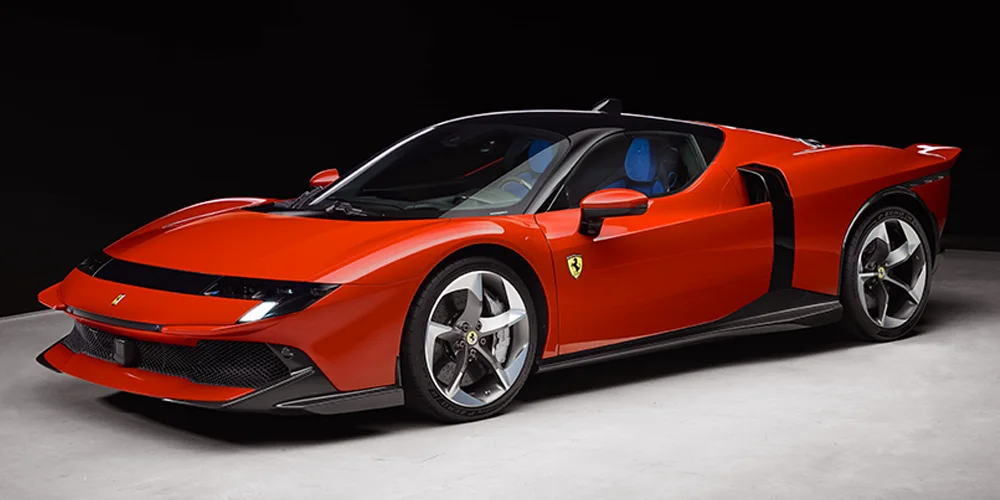
A few days ago, Ferrari released its much-awaited first electric model, the Ferrari Luce. Since the launch, there has been a continuous stream of opinions and pieces discussing its controversial exterior (and interior) design, whether the car truly represents the brand’s values or not, whether it is going to be a success or not, and whether it is going to damage the brand value in the long run or not.

When a company like Ferrari releases a new model, given its history and status, there will always be massive expectations around it by enthusiasts, experts, and actual customers. For this reason, when the design language changes, initial reactions are often mixed. In time, however, the perception shifts and eventually, as people get used to that new aesthetic, without fail, opinions become vastly favourable.

This time the initial reaction has been significantly stronger and (apparently) unanimous, moving personalities of the calibre of former Ferrari president and CEO Luca Cordero di Montezemolo, who expressed dismay towards the new vehicle and its potential detrimental effect on the brand. After this first negative wave, as it often happens, a second one arrived of people supporting the “underdog” and thus going against most negative views of the Luce.

Time will tell who is right, and the truth could very well be in the middle. In the meantime, it is useful and interesting to take a step back and look at the new Ferrari Luce from a higher perspective.

A New Vehicle

Although the Luce’s design, by Apple’s former Chief Design Officer Jony Ive and industrial designer Marc Newson (who previously worked on automotive and transportation projects like the Ford 021C), has been criticised, we all know Ferrari does know how to produce beautiful vehicles even beyond the collaborations with famous Italian coachbuilders such as Pininfarina, Scaglietti or others. Two of the most recent examples are the acclaimed 296 GTB and Daytona SP3. Vehicles that strike a perfect balance between modern lines, tribute to some of the best designs in Ferrari’s history and overall captivating looks. Beyond that, we can also confidently assume that Ferrari, being a company filled with talented people, fully expected the reaction they got at the Luce’s launch. So, what is the rationale behind this vehicle and its looks and what are its true target and purpose?

sp3 296*Ferrari Daytona SP3 and 296 GTB

Some key statements released by Ferrari’s key people are useful to start looking at the Luce with a better understanding:

“This type of operation allows us to explore alternative territories, encouraging what we call cross-fertilisation. In many cases, it is something out of the ordinary precisely because the designer was given the freedom to conceive a form completely outside the box.” Flavio Manzoni, Ferrari Chief Design Officer

“This is going to be the most versatile car we have in our range. Is not one size fits all, but is a car that is going to be great for any possible occasion” […] “Whenever we unveil a car, there are going to be incredible discussions. We’re going to have some great lovers and we’re going to have a lot of haters. We do expect this” Emanuele Carando, Ferrari Head of Global Product Marketing

“To my petrol heads that I meet, I always tell them, please don’t buy the Luce” Enrico Galliera, Ferrari Chief Marketing and Commercial Officer

These words already reveal the company’s stance toward the new electric model. There is a clear intention to cater to a new audience. An audience that potentially does not care for roaring engines and timeless Ferrari design identity, but for which the historical badge on a new practical, fast and technologically advanced electric vehicle is worth more. They are expected to represent around 80% of the buyers of the Luce. Reinforcing this vision is CEO Benedetto Vigna himself who said Ferrari would not force Ferrari clients to buy the Luce to have access to other models like it happens for more special ones. While not usually explicitly stated, it is well-known that Ferrari only invites and allocates slots for its most limited and sought-after models to its most loyal clients and collectors. It seems the Luce will not be part of this.

Last but not least, as car-related YouTuber Tim Burton (Shmee150) highlighted, one of the first internet personalities to release Luce-related content online this time was Marques Brownlee. A tech reviewer. One with a second channel discussing electric cars, but most famous for being a tech reviewer, not one of the countless car experts active on many platforms today.

It is important to remember that, whether one might agree or not, the modern Ferrari company is not afraid to experiment with new solutions to keep up with the times. The clearest example of this, even more than the first two hybrid models, is the SUV Purosangue. Although right from the name, to the V12 engine, and the strictly 4-seat interior Ferrari clearly wanted to maintain a strong connection with its heritage with this one, there is no doubt that the vehicle layout itself is something that was never attempted before in the history of the brand. And the markets so far have proven Ferrari right. Purosangue has been a success in sales and its resale value has been quite stable so far, something that cannot be taken for granted in today’s market, even for a brand like Ferrari.

Ferrari Models Average Depreciation Percentage in 2026 by Model Year

depreciation

Average depreciation in the UK for the most innovative Ferrari models SF90 Stradale, 296 GTB, and Purosangue (the first two because of the hybrid powertrain and the third because of the body type), considering an additional £50,000-£75,000 for options, is actually much lower for the SUV. Despite the scepticism of some toward electrification, this could be unexpected for some considering the much more conventional vehicle type of the other two from the perspective of a Ferrari customer expectation.

This success has probably given Ferrari even more confidence in the project that has been in the works for quite a while.

What is the Luce like?

While the Ferrari SUV has been a great success so far, the company was surely aware of the market rejection of the “electric supercar” as a concept itself. Superfast and more classically beautiful full-electric supercars such as Pininfarina Battista, Rimac Nevera, and even a GT like Porsche Taycan have not been a success, for both sales and resale value. Mate Rimac himself, involved in the future of Bugatti stated that there is simply no appetite for full-electric supercars.

battista*Pininfarina Battista

From there, the vision of a different electric Ferrari.

From a design perspective, except for the quad round taillights the Luce has basically nothing of the Ferrari look one might expect. The interior, while luxurious and highly refined has no visible carbon fibre, but mostly leather, aluminium, and glass. Also, while Ferrari has a great history of luxurious grand tourers, no four-door car was ever produced, before the Purosangue and Luce.

The Luce is also not the fastest Ferrari. While very quick (0-100 km/h or 0-62 mph in 2.5 seconds, and 310 km/h or 193 mph top speed), other Ferrari models match it or exceed its performance as do countless much cheaper fully electric competitors. This is relevant as another controversial fact about the Luce (despite Ferrari certainly not being famous for its affordability) is the price. The Luce is expected to start in the UK between £440,000 and £470,000. Significantly more than any other production model in the lineup.

ferrari luce*Ferrari Luce

On the technological side, Ferrari famously filed around 60 new patents for it. Among the most significant features is its four-motor electric architecture. Each wheel is independently driven, allowing Ferrari to manage torque for vehicle handling, not just a source of acceleration. Through advanced torque vectoring, the car can actively influence traction, rotation and stability in real time.

Another key development is the active suspension, four-wheel steering and electronic torque management to counteract the mass of the battery and preserve the vehicle’s agility despite size (the longest Ferrari ever at over 5 metres) and weight (2,260 kg). These should help make the car feel lighter, sharper and more responsive.

Its battery pack, while very large at 122 kWh, does not allow for an equally impressive range, rated at 530 km (330 miles). It is, however, developed with a long-term “Forever” philosophy. Reports indicate that the Luce’s battery has been conceived with a modular structure that could allow future cell upgrades as battery technology evolves.

The Luce also reinterprets Ferrari’s traditional gearshift paddles for the electric era. With no gearbox, the paddles adjust the car’s torque delivery and regenerative braking, giving the driver a more active role in shaping the car’s response.

Finally, the Luce introduces a new approach to electric sound. Instead of imitating a combustion engine, Ferrari uses the real mechanical vibrations of the electric drivetrain, particularly from the rear axle, and processes them according to the driving mode as previously discussed in New Luxury Automotive: Going Beyond Performance? This solution gives the car an authentic acoustic identity, rather than a synthetic soundtrack.

Questions and potential risks

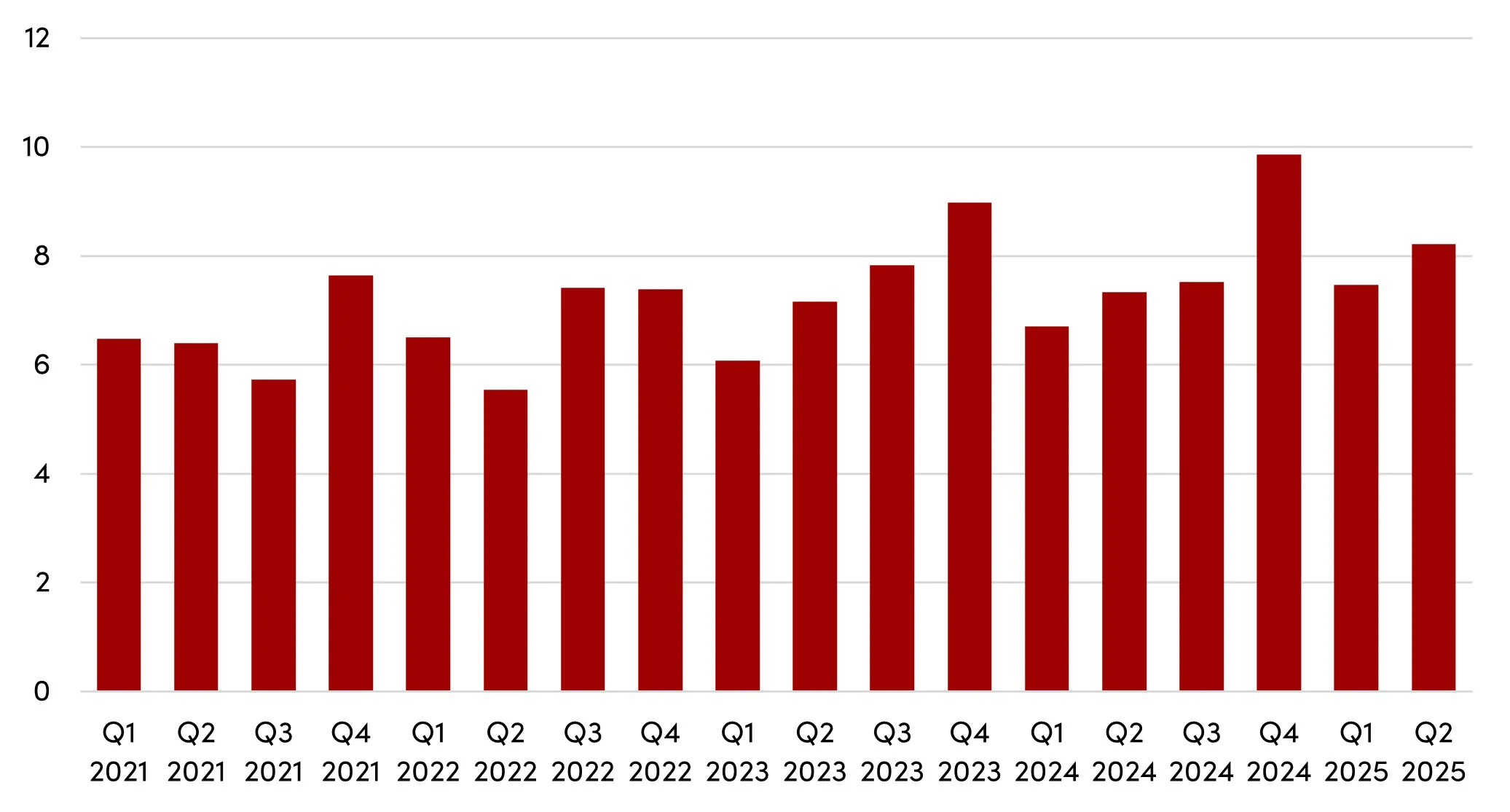
One of the main reasons for this decisive change of direction could be the drastic evolution of the Chinese market. Once one of the largest, if not the largest market for most European OEMs, particularly premium and luxury ones, today, it is shrinking by the day under the fierce competition of technologically advanced and price-competitive domestic brands. While sales in China were never the largest share of Ferrari’s yearly volume, the sales in the region have been decreasing for the Italian automaker as well.

Ferrari Yearly Sales in Mainland China, Hong Kong and Taiwan (2021-2025)

sales

This different approach could help boost the interest in the brand’s future in the Asian market. According to many though, regardless of the reasons behind it, it comes with severe risks.

The first is to be seen as derivative and dilute the brand value. One of the most common phrases heard in these days from the countless pieces and videos about the Luce goes more or less like this: “You could put any other badge on it and you would not know it is a Ferrari”. Something that would definitely never happen with most iconic Ferrari models of the past, even recent ones. Usually, the comment that follows is that Ferrari should have put the car under a separate badge like it happened for the Dino in 1969.

Another reasonable doubt or potential risk regards the EV-enthusiast audience itself. The new vehicles increasingly rely on an excess of screens, technological and connectivity features. Ferrari took a very refined and aesthetically toned-down route with the Luce, using several tactile physical controls and a somewhat restrained use of screens. This could be potentially seen as a limitation for a part of that audience that the Luce seems to be aimed at.

Finally, the more existential question that some pose is: Does Ferrari even need a new audience? One could argue that in 20 years Ferrari almost tripled its sales, which are always tightly controlled to maintain exclusivity. Thus to remain an exclusive, low-volume automaker it does not really need more sales or new audiences.

Ferrari’s electric future

The truth is that electrification is here to stay and it has to be a part of an automaker planning a long-term strategy. Ferrari has made a bold move in releasing a different vehicle such as the Lucewhile many competitors such as Lamborghini, Aston Martin, Pagani, have either cancelled or delayed their plans for fully electrified vehicles.

Does the Luce run the risk of feeling “disposable” as many other luxury EVs released over the past few years?

Enzo Ferrari famously said: “I don’t sell cars; I sell engines. The cars I throw in for free, since something has to hold the engines in”. Despite the lack of the iconic engine, it is quite safe to assume that Ferrari will sell quite a lot of Luce, as it has done lately with every model. Early reports suggest that the order book is already approaching the end of 2027. But the true measure of success will be in its desirability (or lack thereof) in the after sales and pre-owned markets.

Some have said the Luce took its place as the new Multipla. It is a provocative comparison, but not necessarily an empty one: the Multipla, after all, is still remembered for being an extremely smart and ingenious vehicle even if beauty was never its strongest argument. Ferrari, however, is also about beauty and that makes the Luce a far more delicate experiment. By establishing a presence in the EV market with a very different and more practical and approachable, yet highly refined, vehicle could enable Ferrari to draw in new enthusiasts. If successful, this would not only allow Maranello to gain valuable expertise, but also to preserve its positioning in a changing market and in time, introduce more “classically Ferrari” models, preserving its precious and unique heritage even in the EV space. Time will tell.
Ferrari reinforces the celebration of its heritage with modern vehicles

  • Brand: Ferrari
  • Topic: Strategy & Marketing

A while back I reviewed a trend consolidating in the luxury automotive industry that saw established automakers drawing from their heritage to create distinctive designs and perpetuate the values that distinguish a brand from the rest of the industry.

The relevance of this strategy, naturally, stands in the fact that only very few automakers have the reputation and history to put it in place. In the previous review, in the article Ferrari introduces Icona Series Daytona SP3: Heritage Cars in Modern Automotive, it was highlighted how most of this activity was carried out only through rare and very limited runs. These models, sold at significantly higher prices than “regular” production ones, were also the perfect candidates for collectors to massively appreciate in the after-sales market (this unfortunately has not happened for all of them).

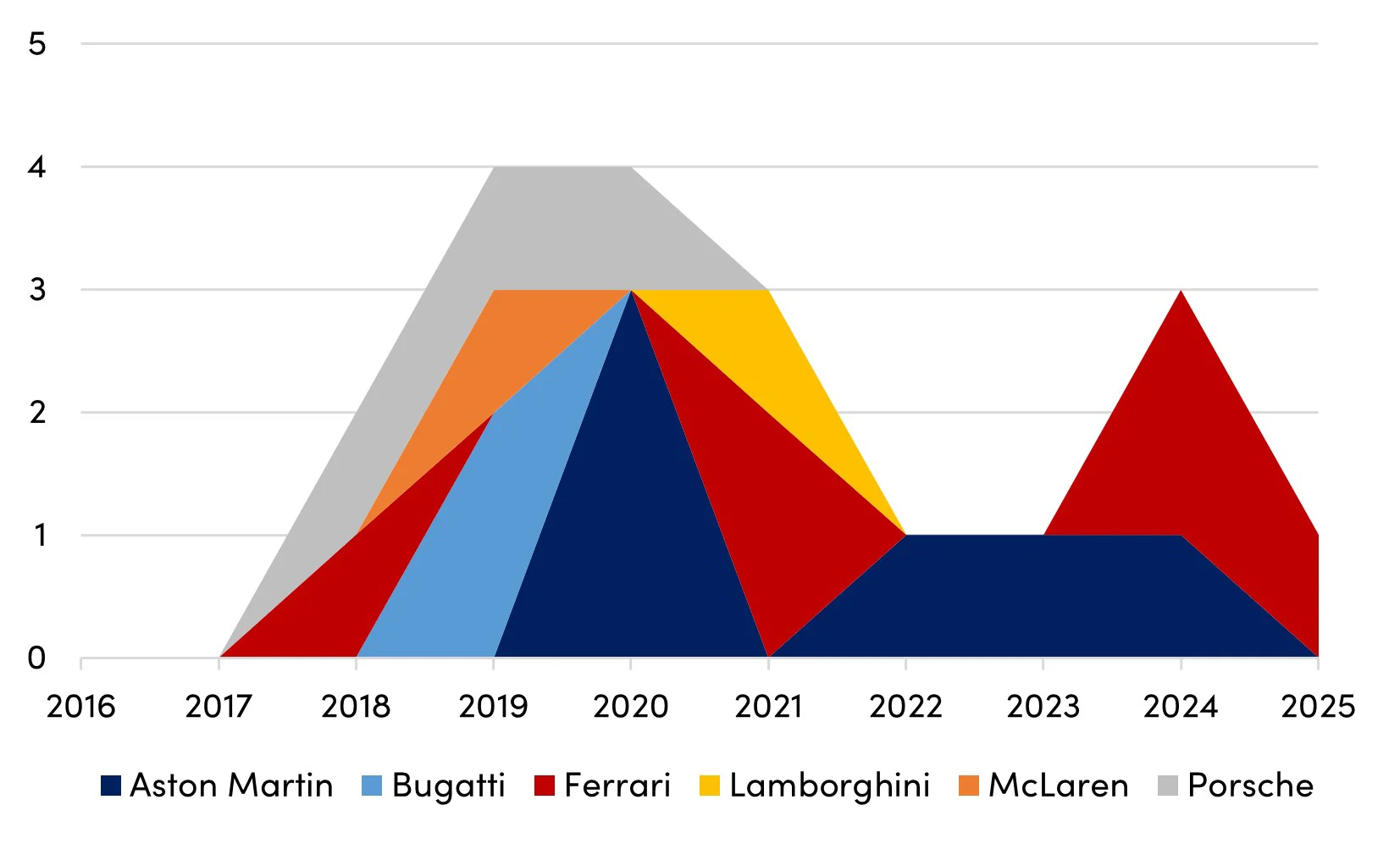
NUMBER OF MODERN HERITAGE CARS RELEASED BY MANUFACTURER (2016-2025)

graph

From the latest graph update it is evident how most of the trend has been limited to low-volume limited editions released between 2018 and 2021. Currently, Aston Martin, and even more Ferrari are strengthening it with their new products while other brands like Lamborghini and Porsche that make innovation and forward-looking vision key messages of their branding do not focus as much on it in their “regular” product line.

What about Ferrari?

Ferrari too started a while back with its Icona series. A unique initiative that created a separate product lineup made exclusively of rare (and very expensive) road-legal models directly inspired by the brand’s most iconic classic cars. Even more noteworthy, in this case, is the ones that inspired the two Icona series entries so far, Monza SP1/SP2 and Daytona SP3, are all racing and not road-legal vehicles.

However, different from its competitors, Ferrari pushed this initiative one step further. All the established automakers in the space strive to maintain their heritage intact to some extent. For example, Lamborghini with the wedge-shaped lines for its cars’ profiles, or Aston Martin with the flowing elegant lines and its iconic grille in the front.

However, in this case it is not just about maintaining single design elements through the product line, but about taking inspiration from single models’ design to give a unique character to a single one. And this is something that Ferrari started doing more and more in its latest generation that has already covered the entire key lineup of the brand with the sole exception of the SUV Purosangue which is a completely new vehicle category.

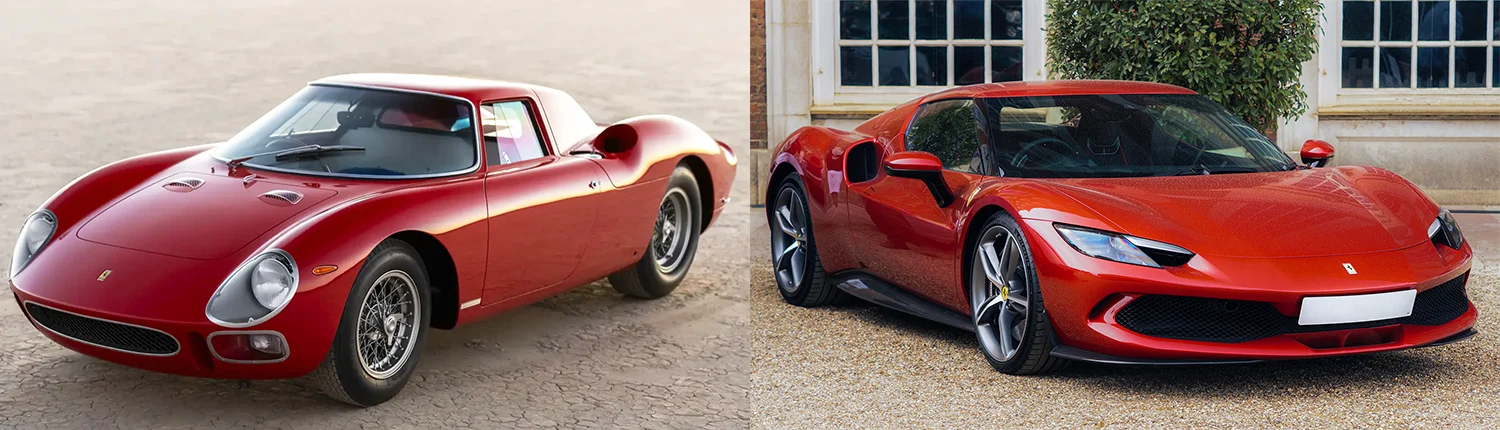
In the production models, this started with the 296 GTB, that took clear inspiration from the famous 250 LM in its overall profile, but even more in the side vents and rear shape (with some details also from the 1984 Testarossa) as well as the b-pillar cut.

296 250*250 LM and 296 GTB

Then, last year came the 12Cilindri. The car replacing the front-engine 812, celebrates the iconic design of the 60-70s 365 Daytona with modernised but very recognisable lines, especially in the front.

Right after that at the end of the year the LaFerrari successor F80 was released and that too brought some clear design inspiration from some icons of the past. In line with the “latest design language” by the brand it shares elements with the 12Cilindri but in particular, it recalls the most iconic of all, the F40. The last car approved by Enzo Ferrari himself.

Latest of the bunch is the 849 Testarossa, that right from the name recalls one of the most iconic Ferrari heritage pieces. The name was first attributed to a car back in 1956 when the heads of a reworked 4-cylinder engine were painted red, giving rise to what became the 500 TR (for Testa Rossa, literally Red Head). To the second version called 500 TRC soon followed by the 250 Testa Rossa, that featured a version of the V12 on the 250 Gran Turismo with the valve covers painted again in red. It was in 1984 that the name jumped from race cars to road-legal ones with one of the most recognizable Ferrari models ever that took the definition as the name itself turning it into a single word Testarossa (instead of the two separate ones).

The latest release from the house of Maranello, replacing the SF90 Stradale, draws from Ferrari’s heritage in its design as well, not just in the name. The overall design is more essential and angular, with a black band in the front that ties in with that of the 12Cilindri and F80 and a shape that takes inspiration from the 1980s designs such as 288 GTO or Testarossa. According to Ferrari, the back instead, with the two winglets and less busy surfaces compared with the predecessor SF90, take inspiration from the 1970s prototypes. This is quite evident when looking at racing prototypes such as the 512 S from which it takes also the two front bonnet extensions (already seen in the Daytona SP3 that was explicitly inspired by those same race cars).

849 testarossa*Ferrari 849 Testarossa

The three production models currently on sale, along with the F80, cover the entire Ferrari lineup with cars that effectively take direct inspiration from models of the past.

What are the key advantages in today’s market?

There are several frameworks developed in marketing and business strategy that look into the potential of this kind of activity and product development.

According to Brown, Kozinets, and Sherry the so-called retro branding and retro brands, cater to the modern "inordinate fondness for revivals, reenactments, remakes, reruns, and re-creations". And while this was present in the early 2000s as per their research, in luxury automotive has certainly gained momentum over the past 6-7 years.

Their analysis identifies the 4As of retro branding. Allegory (brand story), Arcadia (idealized brand community), Aura (brand essence), and Antinomy (brand paradox).

Allegory indicates symbolic stories and narratives used to bring resolution to consumers’ ‘moral conflicts’. Arcadia refers to the utopia of a special and better past world and community. Aura evokes a powerful sense of authenticity communicated by the brand through uniqueness of brand values and ‘DNA’. Antinomy is identified as the paradox of technological development seen both as an unstoppable and necessary force, as well as the key factor pushing consumers to look for past simpler, slower, less stressful (and overall better) times.

Ferrari’s Allegory is built in its stories and narratives, right from the beginning with Enzo’s passion for racing, to its numerous successes and how the unique European industry in those days (in this specific case in Italy) developed with a unique attention to hand-crafting, luxury and quality, while the world was moving more and more toward mass production and the democratization of the automobile. The stories come from countless witnesses and even, in more modern days, from cinema and television, where the Ferrari brand always represented something aspirational and the ultimate dream and/or achievement.

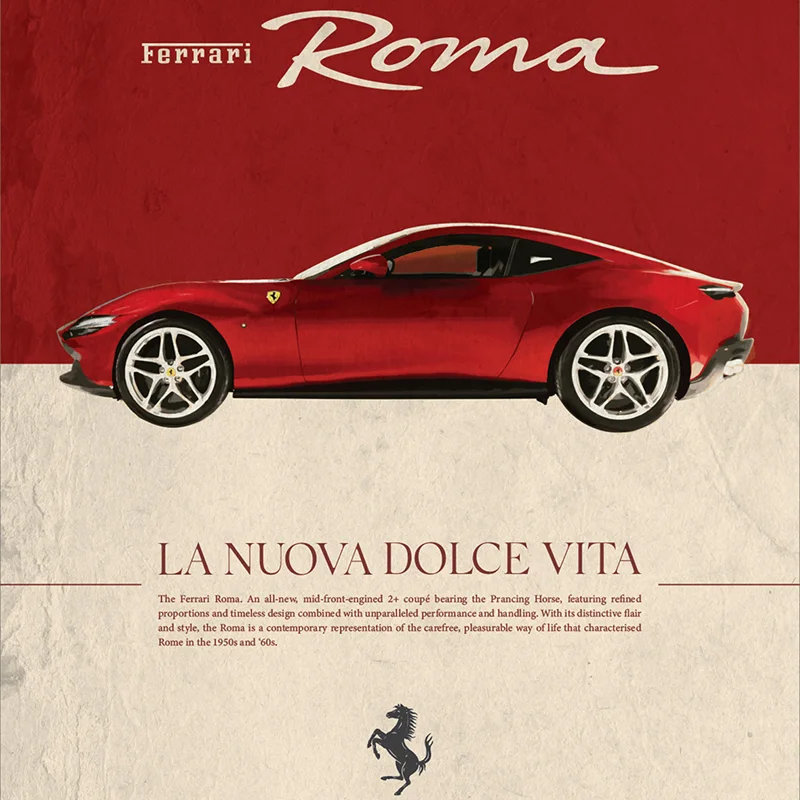
The concept of Arcadia connecting to the past, fits into Ferrari’s strategy in a modern world and automotive industry where electric vehicles and new technologies are increasingly levelling the playing field and lowering the entry barriers for new competitors. The current references to Ferrari’s past, both in naming and styling of new models, bring in today’s brand identity the continued successes and domination of a racing world that is the true essence of the brand, but built on a technology that is changing faster and faster. Even if it was replicated in numbers today, in fact, it would certainly have very different characteristics that could be replicated by modern competitors, differently from the past ones. Furthermore, this past world and its iconography are recalled once more with Ferrari’s Italian identity through naming. The recent entry-level lineup featured in order, Portofino, Roma, and now Amalfi. Places that, like the rest of the country, thanks to tourism have become more than ever the destination of people looking for classical beauty and the famous concept of ‘La Dolce Vita’, used by Ferrari itself in the initial marketing campaign of the Roma but quoted as 'La Nuova Dolce Vita' (The New sweet life).

la nuova dolce vita

As for Aura, with the objective of bringing the brand essence with these new products, while technology evolves, and Ferrari embraced it extensively, both in terms of powertrains and vehicle dynamics as well as interior software and hardware, designs, as mentioned are drawing increasingly from the brand’s past and bringing a retro essence. This kind of strategy can be risky, and has backfired recently for other brands. Consumers might ‘see through’ the initiative and consider it not genuinely adding value, but using ‘cheap nostalgia’ to short-term gains if it stopped at names or design features. This, however, has not been the case for Ferrari that, so far, has always brought significant improvements to each new model it has introduced.

Finally, Antinomy is conceptualised around the idea of the paradox in marketing driven by technological advancement and progress which are unstoppable but also cause people to desire to return to simpler, slower, less stressful times. In Ferrari’s case this paradox is evident in the push toward electrification and product digitisation against the heritage in design and “emotional” connection between driver and vehicle that made the brand what is today. Both are adopted today, in a product line that is embracing hybridisation and digital technology while, as stated before, design is increasingly staying connected to the brand’s roots.

The combination has worked effectively for limited runs in the Icona Series. On the other hand, one of the worst cases of depreciation in Ferrari’s recent history is the SF90 released in 2019, which attempted to innovate in both directions. Several pre-owned models are selling between 40 and 50% less than their original price after option. While this situation is certainly not exclusively due to car design or technical characteristics, Ferrari has corrected its course with the successor. High production numbers, along with a difficult automotive market condition certainly affected the SF90 resale value, but the 849 Testarossa aims at representing more closely the brand, adding more value to its presence in a crowded market even if potentially falling into the paradox of retro branding.

Is China moving away from European Luxury?

  • Brand: Aston Martin, Ferrari, Lamborghini, Porsche
  • Topic: Electric Vehicle Market, Supercars Future

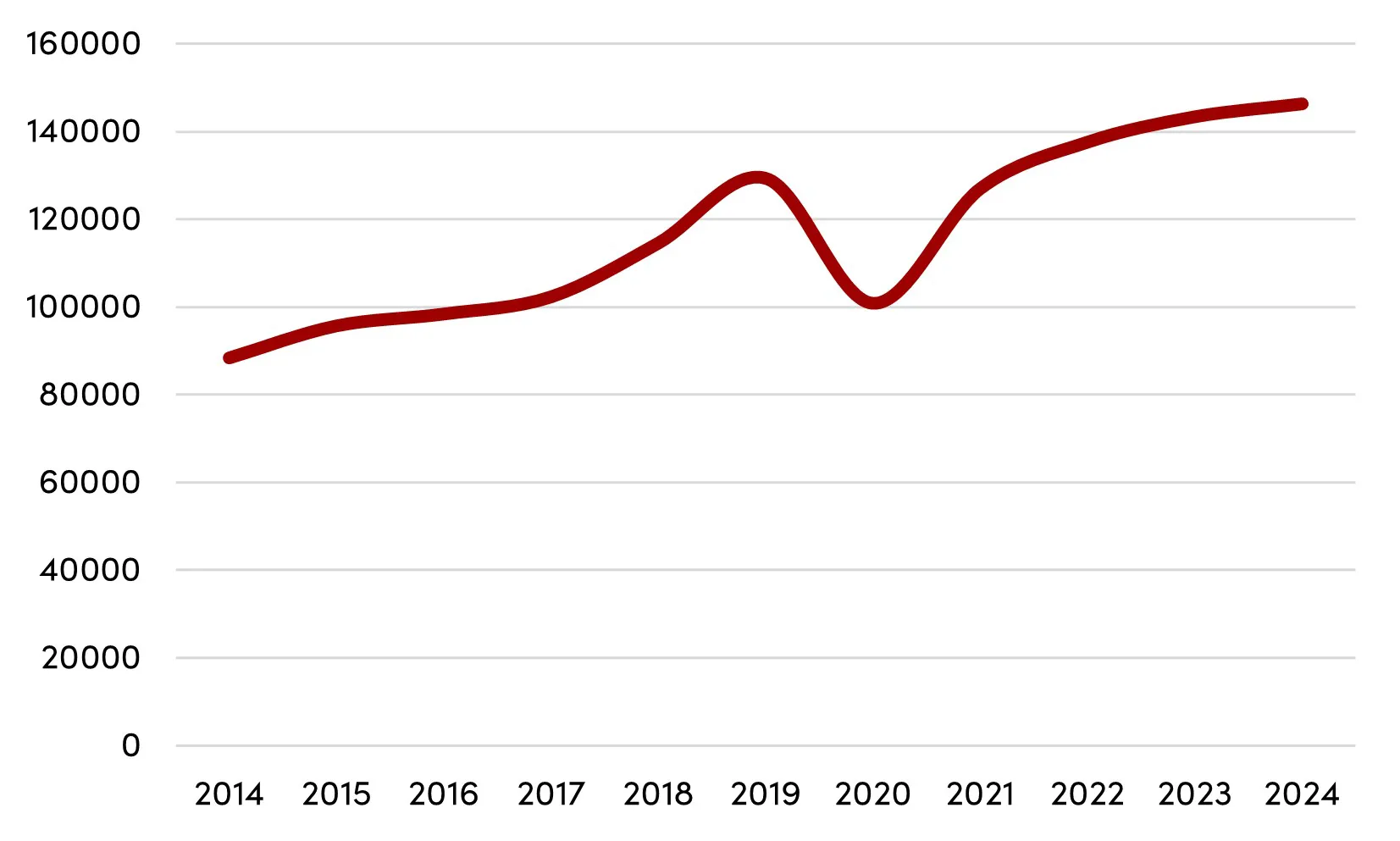
Over the past 10 years, the luxury car market has grown consistently, with several brands growing to financial and sales volume peaks in their history.

Yearly Luxury Vehicle Sales (2014-2024) 

luxury sales*The Graph includes annual sales by Aston Martin, Bentley, Bugatti, Ferrari, Koenigsegg, Lamborghini, McLaren, Pagani, Rolls-Royce, and models above the €150,000 mark from Porsche, Lotus, Maserati, Audi, Mercedes, and BMW.

While in the aftermath of the pandemic, it took only two years for the luxury market to reach and exceed the previous peak reached in 2019, the trend that seems to emerge and that could be confirmed in 2025, considering the volume reported so far by major OEMs is one of gradual slowdown or, in a worst-case scenario, stagnation.

A big factor in this trend could be the radical transformation of the Chinese market. Because, in this growth over the 2010s, the USA has almost always been the largest single-country market for most of these OEMs. However, a close second, and quickly growing (for some even larger than the US), has been China.

Porsche is one of the best examples of this. After a launch in 2001, by 2015 China had become the single largest market for the German automaker and has remained so up until 2023, when, with a 25% share of sales overall, it was overtaken by the USA at 27% (while Porsche still recorded a healthy +3.3% volume growth). And this is part of a larger trend that can be observed across different companies.

A luxury slowdown in China

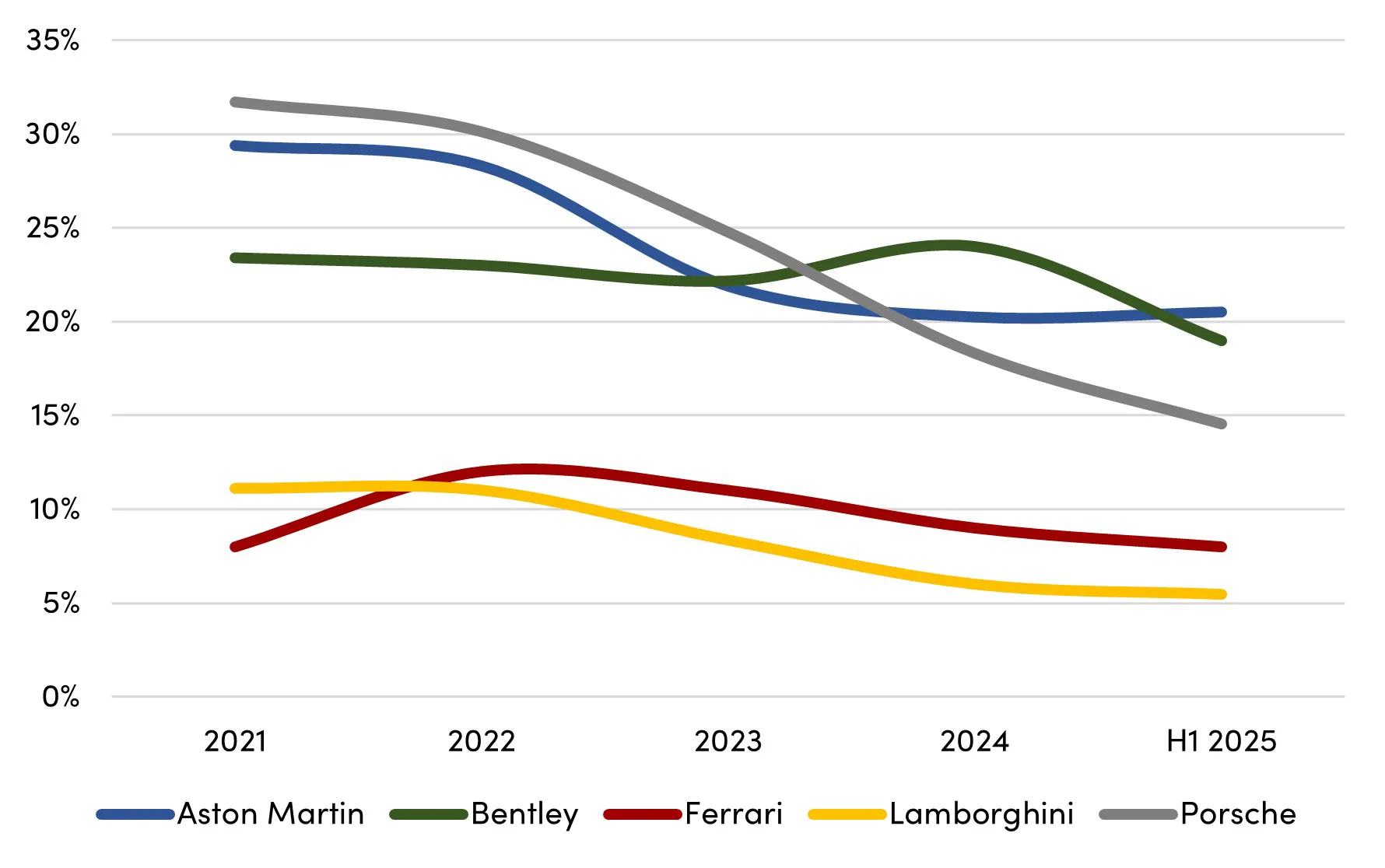
By looking at regional sales from automakers that shared the data over the past few years, it is evident a gradual slowdown in the Chinese market across the industry.

Luxury Automakers Yearly Share of Sales in the Chinese Market (2021-H1 2025)

china share

Since 2021, the one company that has remained more stable and for which China was never the largest market, as a much larger share of its sales relies on European Markets, with a sizeable one in the US as the largest single market, is Ferrari. Despite this, Ferrari too shows a slight decrease from the 2022 peak. A similar situation is observed for Bentley, for which China sales share remains quite stable, and a more noticeable slowdown is visible only in 2025 so far. It must be noted, however, that while shares for the British companies have remained mostly unchanged until last year, the overall sales figures haven’t. Sales in 2024 for Bentley were 30% lower than in 2022.

In the middle is Aston Martin, for which this decrease has been more evident, from a 29% share of sales in China in 2021 to 20% in 2024 and 2025 so far. The company, though, similar to what has been just said for Bentley, has also experienced a sales slowdown in 2024, and likely in 2025 too, albeit less dramatic than that of its British competitor.

Worse off, in this overview, instead appear Porsche and Lamborghini. With some ups and downs for the first one and consistent growth for the second, their presence in the Asian market has shrank more markedly than for the others. Both companies under the VW umbrella have seen their share of Chinese sales halved over these four and a half years. Porsche went from over 30% in 2021 to just 15% so far in 2025, and Lamborghini over the same period from 11% to just 5%.

Why is this happening?

The Chinese automotive market has not slowed down, but actually kept growing after recovering from the pandemic, reaching 30 million in 2023, exceeding that in 2024, and 2025 seems on track to get even higher.

China Passenger Vehicle Quarterly Sales (2021- H1 2025) 

quarterly sales

However, Chinese customers are increasingly buying domestic brands, vehicles, and technology. The introduction of EVs has been the perfect opportunity for the Chinese government to push for a fast change in a market that had been dominated by European automakers up until a few years ago. This came mostly thanks to their performance, quality, and brand equity, all coming from a much longer experience. The most established segments, therefore, were the premium and luxury ones. On the volume side, while foreign OEMs had a consistent share, that was already decreasing earlier due customers' price sensitivity and Chinese OEMs' lower prices.

So when it came to luxury, the introduction of the electric powertrain leveled the playing field in terms of performance, and domestic companies also learned throughout the 90s and 2000s’ joint ventures with which foreign brands entered the Chinese market. Additionally, Chinese brands were better at interpreting their customers' preferences and offering them a new automotive experience focusing much more on software capabilities and convenience features compared to their European counterparts.

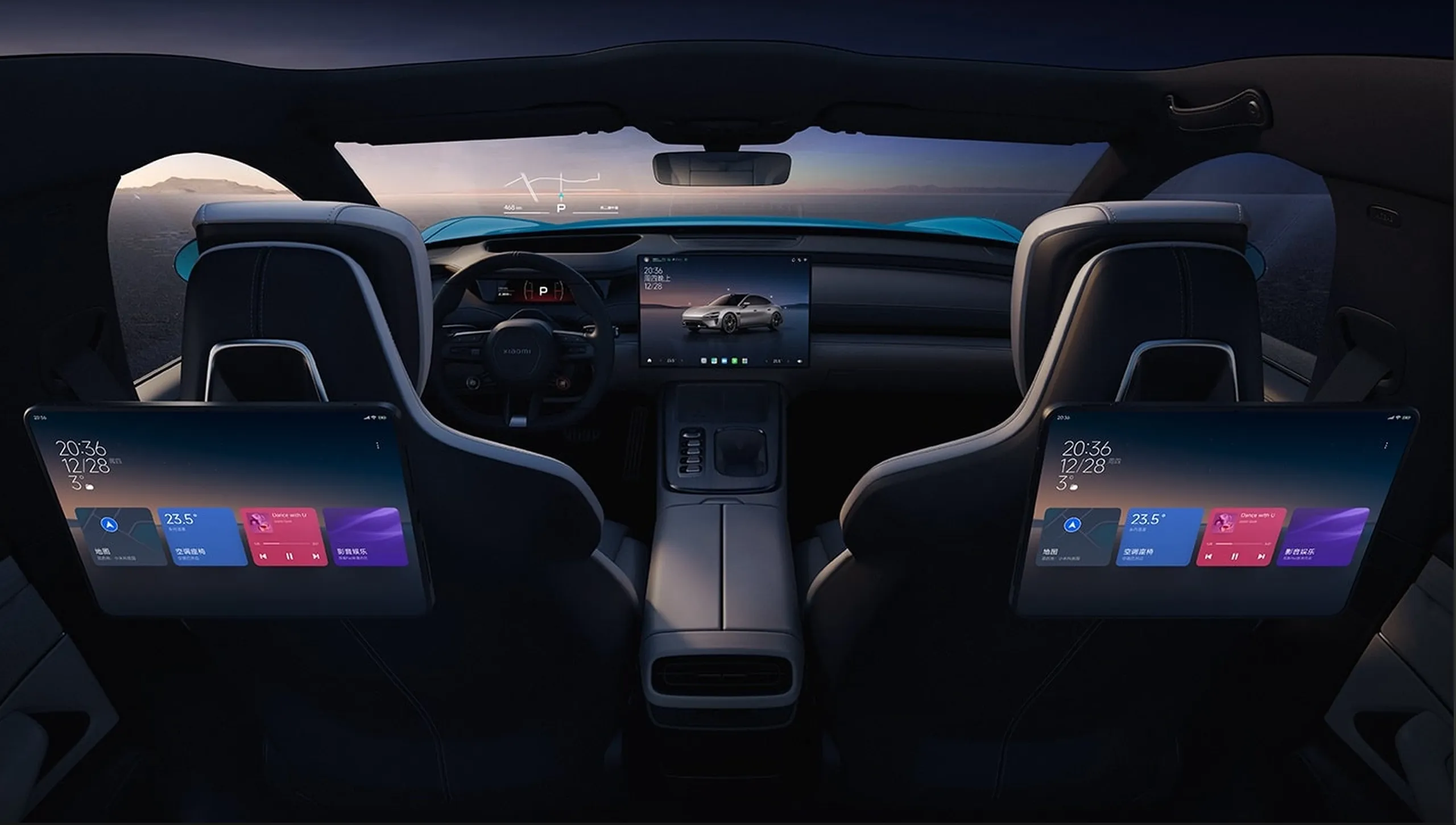
Some of the legacy luxury OEMs are actually going back to older solutions like the manual gearbox because their average customer wants that feeling of driving engagement that is lost with increasing automation. Chinese companies instead went in the opposite direction, going all-in on technology and creating a new and highly customizable experience for a customer base that generally has not the same long-standing attachment to combustion engines and the feeling they bring. Thus, it does not have the same expectations of driving performance from a luxury brand, but is actually showing to care more about technology.

xiaomi su7*Xiaomi SU7 interior

With significantly cheaper prices, many Chinese OEMs offer an in-vehicle experience that aims at driving performance but also a lot more, while the value proposition of European OEMs offering has likely become somewhat less relevant to the point where even the stronger branding cannot compensate the perceived lack of features and technology.

Can European OEMs turn this around?

The stronger players in the sector are managing to keep stable sales and constantly improving financial results thanks to significant increases in revenues coming from personalisation programs.

This strategy has been working very well for most players involved, led by Ferrari and Lamborghini, but also OEMs in more uncertain conditions, like Aston Martin, have reaped the fruits of this trend improving consistently their average selling prices over the last few years.

A gradual diversification of the product lines with the introduction of fully-electric vehicles that have currently been postponed for most luxury OEMs, could bring back the interest in the Asian market. However, improving success in a single market, however large, might not warrant the substantial investment needed for the development of these models.

The other option could be to gradually shift toward even more exclusive and limited models with a strategy closer to what the likes of Koenigsegg or Pagani have been doing. This would definitely shake the current company structure for these established OEMs, but potentially ensure strong profits with a more limited production that could also shield customers from depreciation that has been plaguing the segment lately, even for limited-run models.

Marketing Racing #15: Ferrari goes sailing

  • Brand: Ferrari
  • Topic: Marketing Racing

In a different phase for the luxury automotive sector, where marketing diversification is changing for different brands (as discussed in Is luxury automotive marketing changing?), at the beginning of the year Ferrari released a statement that changes things quite a bit once more.

It is of a few years ago the announcement that Ferrari was cutting back significantly on its marketing diversification by reducing its licensing agreements by 50% and the product categories offered by 30%. This decision came along with the creation of a proper department dedicated to the creation of fashion items and apparel. High-quality, limited edition items entirely created in-house for a division that is expected to eventually account for 10% of the company's total revenues.

This time the initiative could be of the same magnitude if not greater. CEO Benedetto Vigna stated that the Italian automaker will enter the sport-sailing segment. While this is not the first time that the brand has been associated with the world of sailing (an example is the longstanding partnership with yacht maker Riva) and, definitely not the only one (many companies such as Aston Martin, Lamborghini, Maserati, and Bugatti realised speedboats in collaboration with industry partners, or sponsored sailing competitions), this one seems different.

lamborghini 63*Tecnomar & Lamborghini 63


What and how

First of all this one will not just be a sponsorship, a marketing collaboration, and not even a limited run of luxury boats made for clients.

The joint statement by Ferrari's chairman John Elkann and Vice President Piero Ferrari read:

"We are about to embark on a thrilling journey that will expand our racing heritage. With this new competitive challenge, motivated by our capability to innovate, and our commitment to sustainability, we will push ourselves beyond our current limits. We are happy to be able to rely on Giovanni's extraordinary experience, determination, and team spirit."

In the statement, they are referring to famous Italian sailor Giovanni Soldini who will participate in this project acting as team principal of this new division. The competition is aimed at achieving records such as the Jules Verne Trophy for the fastest unassisted world circumnavigation by any type of boat.

This one by Ferrari in particular, despite the scarce details so far, is expected to be a state-of-the-art hydrofoil sailboat with next-generation technical solutions that will be realized in a dedicated facility in Pisa, Tuscany. It is said it will likely be a monohull sailboat close to the AC75s for the America’s Cup.

Focused expansion

From a business perspective, this is an interesting initiative for several reasons.

First of all, it does not just represent a marketing opportunity, and it is unlikely to be the start of a “reopening” of Ferrari’s strategy after it scaled back its activities. So far, it looks more like a focused expansion in an industry that is closely associated with luxury and (as mentioned previously) with luxury automotive. This would mean that Ferrari will expand but in a very controlled manner, which can be resource intensive but if successful would grant even greater visibility and learning opportunities as well regardless of the final outcome. This is enabled also by Ferrari’s financial performance that, over quite a few years now, has comfortably exceeded that of any competitor. In 2024, once more the company improves reaching an operating profit of €1,8 billion in a year when most of its direct competitors struggled to even remain profitable and those who did not were still far from such results.

hydrofils

The second aspect that is potentially extremely valuable about this initiative, (might seem obvious to write it) is its uniqueness. This project sets Ferrari apart from the rest of the industry. As mentioned, other projects in the same industry were all focused on either sponsorships or collaborations with industry manufacturers to produce motor yachts, never a hydrofoil boat with a dedicated team. With no competition on the same level, this initiative can substantially increase its brand equity expanding it to new audiences as well.

Last but not least, as for many projects within this industry, this will not just be about sailing for the sake of it, but it will also target the development of both racing (likely aerodynamics) and sustainability technologies development. In performance luxury automotive, innovation can come from the most diverse sources and industries. The project then has the opportunity to become for Ferrari something similar to the XX Program. A development platform which, even if on quite a different scale, and in a very different context, might actually be even more helpful in providing new solutions and ideas.

Ultimately, this initial endeavour could lead to more initiatives in the same industry establishing Ferrari as a true “player” in this market as well. This would contribute to its racing reputation and potentially also to new product opportunities in the future.

In Marketing

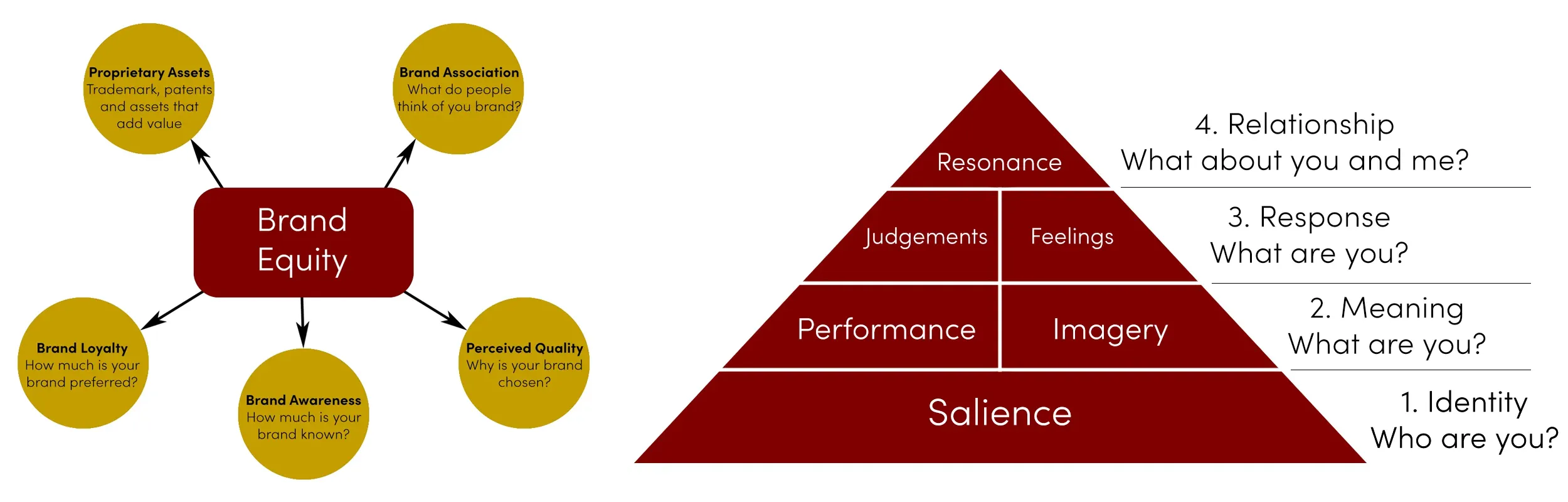
Two well-known Brand Equity Models from Aaker and Keller look at brand equity from different perspectives, and both can be useful to frame Ferrari’s latest initiative in a competitive ecosystem.

The first one looks at assets and liabilities in terms of brand awareness, loyalty, perceived quality, brand association, and proprietary assets, while the second, also known as the Customer-Based Brand Equity (CBBE) Model, looks at creating brand image by building ideal touch points with customers to shape their perception through four key phases, or levels, Identity, Meaning, Response, and Relationships.

frameworks*Aaker (left) and Keller (right) Brand Equity Models

In terms of brand extension or diversification, one should look at Leverage, how much core brand equity transfers, and Fit, or whether the new field feels natural to consumers.

Ferrari’s initiative leverages similar principles of research of peak performance with lightweight construction, use of composite materials, carbon fibre, study of aerodynamics, and computational fluid dynamics. These are present in racing whether it is Formula 1, Endurance (recently reintroduced with the WEC LMH program), and even in the luxury performance car development and production.

As for Fit, sailboats are naturally very different from cars, and the target audience might differ significantly as well. Core values of the brand and value proposition of its product such as sound, smell, and quality, for example, could risk dilution or simply not fit entirely. On the other hand, however, we know that sailboats and the world around them are culturally linked to luxury automotive, even in key places like Monaco, and as demonstrated by the many industry crossovers so far. Beyond this though, it is clear to understand why Ferrari focused this new challenge on racing. Racing and its success are at the core of Ferrari’s brand value, and this endeavour’s execution choices, by involving Italy’s Luna Rossa successful skipper Giovanni Soldini, and other Maranello’s key figures, ultimately consolidate that perception.

New Online Course Available Now

  • Brand: Aston Martin, Bentley, Bugatti, Ferrari, Lamborghini, Maserati, McLaren, Pagani, Porsche, Rolls-Royce, Mercedes, BMW
  • Topic: Electric Vehicle Market, Finance, Strategy & Marketing, Supercars Future

Following up on the first half of the Luxury Automotive Strategy and Marketing online course published a while back, the second half is now available on Udemy at the link HERE.
As for the previous one, this course too is thought for enthusiasts and university students who want to learn more about the workings of the industry. While it is not necessary to have completed the first half to be able to understand and learn this second one, the two are closely linked and form a complete picture.

So, after learning about the key players in the industry and how their branding and strategies compare to each other, this new section looks at market dynamics highlighting the main trends, some academic analysis of them, and an overall view of the global luxury market numbers. Last but not least, a couple of interesting case studies conclude the course comparing diversification strategies and innovation in luxury automotive.

I hope you'll enjoy it. Don't forget to leave feedback and get in touch to know more.

Cover homepage alt copy 3

Is luxury automotive marketing changing?

  • Brand: Aston Martin, Bentley, Ferrari, Lamborghini, McLaren, Pininfarina, Porsche, Rimac
  • Topic: Strategy & Marketing

Times of uncertainty and overall luxury market slowdown as highlighted in previous articles have brought difficulties to several brands in the segment. However, regardless of current and recent success or struggles, trends in brand, diversification, and marketing strategies have changed significantly.

Driven by various factors for different brands, whether one calls it a more cautious approach or a focused one, after quite a few years of expansion and diversification, most OEMs in the segment seem to be pulling back on both product and marketing strategies.

Diversification

While quite a few brands in the segment had diversified quite aggressively in the past, some of these strategies have gradually changed. One of the best examples of this is Aston Martin. As discussed in a previous article (Not just Luxury Cars: Aston Martin Diversification Strategy), through the 2010s the British automaker started several partnerships and diverse activities that materialized in several limited products and concepts including the likes of bicycles, speedboats, real estate, and even submarines and aircrafts. The latest of these projects is probably the motorcycle AMB 001 developed along with British motorcycle manufacturer Brough Superior and introduced in 2020 for a limited run of 100 units sold for around £100,000.

aston martin amb001*Aston Martin AMB 001

But Aston Martin is not the only one. Some of these activities continue and will most likely continue in the future. The collaboration with video game developers is by now one of the most established strategies in the industry in which every automaker takes part and that has even expanded in the last few years beyond just racing games.

Others however could have been a phase or one-offs to look for new opportunities or business models but seem to have been completely abandoned.

Real estate projects have been relatively popular for a while among luxury automakers, with the likes of Bugatti, Porsche, Pininfarina, and Bentley (as well as the just-mentioned Aston Martin) and more all entering partnerships with high-end developers for residential buildings in selected areas such as Dubai or Miami. These have recently slowed down or almost disappeared.

Similarly, various OEMs have also reduced the release of branded merchandise like Ferrari removing a significant share of everyday objects and accessories, or Bentley not following up on its collaboration with Fanatec for driving simulators steering wheels.

Product trends

On the product side, a key trend that seemed destined to get stronger in the coming years, but that, at least for now, has almost completely stopped is the production of one-offs.

An initiative that in the era of high customisation represented the absolute top of luxury automotive tailoring. Something that Ferrari has been doing for the past 20 years now, and that over the last 8 or 9 has been consistently growing with more OEMs developing similar initiatives year after year. This went on up until 2023, to almost completely stop in 2024.

Yearly One-Off and Few-Off production by Brand (2006-2023)

graph one off

A similar result would be displayed if few-offs were included. 2024 saw only a few releases and only some were very limited (below 100 units) and presented significant updates compared to the “regular models” like the Lamborghini Huracán STJ released in only 10 units to celebrate the end of the model’s lifecycle.

It is still unclear whether this is just a casual slowdown, while the automakers continue developing their own personalisation programs, but the slowdown is certainly noteworthy.

On the product side, 2025  so far has also seen a substantial slowdown in the release of production models, with only 2 major releases by an established automaker consisting of Aston Martin’s convertible versions of its new Vantage and Vanquish models. This is certainly not only due to strategic changes, as over the last 5-6 years, most established brands released entirely new product lines that in this market tend to last between 5-10 years, sometimes without any significant mid-life refresh. That said, uncertainty with electrification in the luxury segment and other factors have certainly played a role too, and overall the release rate over the first 4 months of 2025 represents an average 71% slowdown compared to the previous 6 years.

Reversing Course on Electrification

As just mentioned this is probably one of the biggest factors of instability in the current market. As the electric vehicle market started developing legacy OEMs and luxury brands started working on the development of luxury EVs. But things did not go according to plan.

Porsche was among the first and its Taycan has been one of the fastest depreciating vehicles on the market reaching a -51% in just 4 years, with over 30% over just one.

Similarly, other OEMs that launched electric supercars or hypercars have struggled to sell out even extremely limited runs. It has been the case for the likes of Pininfarina and Rimac too which has been at the forefront of this transition right from the start. However, since the beginning, even Rimac’s CEO Mate Rimac has been quoted saying that customers in this segment simply do not want full-electric vehicles, which will likely force the brand to introduce hybrid powertrains facilitated by its joint venture with Bugatti. Aston Martin too has currently delayed its first EV.

As traditional strategies have not worked as expected, OEMs had to rethink or expand their plans. Ferrari, set to release the first fully-electric vehicle in 2025, is likely to introduce a unique vision for it as discussed in a previous article (New Luxury Automotive: Going Beyond Performance?).

macan*Porsche Macan EV

Porsche while still struggling in selling its GT Taycan, despite the mid-cycle refresh which brought several improvements, seems to have found a solution to successfully build its EV portfolio. In 2025, 25.9% of the vehicles sold were EVs, led by the recently introduced Macan EV SUV. Over the first 3 months of the year, the SUV sales grew by 14% to 23,555 units sold. Of these over 60% (14,185) were full-electric ones, confirming a certain appetite for comfortable and sporty family luxury vehicles rather than exclusively performance ones.

This trend is surely going to reflect on the marketing and product strategies of luxury OEMs preserving their strong identity instead of exclusively focusing on what the future holds for the industry, which in turn could also give them competitive advantages against upcoming competitors.

Refocusing on motorsport

Beyond Formula 1 which has been skyrocketing in popularity over the last few years, endurance is certainly getting more attention and become a key marketing tool for most legacy luxury performance brands.

mclaren lmdh

Following Porsche and Ferrari, most other brands followed in rapid succession. Lamborghini announced its LMDh participation with the SC63, Aston Martin confirmed its entrance in the LMH category in 2025 with a racing version of its Valkyrie. Last but not least McLaren too announced they will be participating in the FIA endurance championship from 2027.

Conclusions

Luxury automakers’ marketing and programs' expansion slowed down over the past 1-2 years following difficulties in the industry for several brands driven by a general slowdown in automotive and in the larger luxury sector, along with changing trends in consumer preferences.

Where for a while it seemed like most companies were more and more frequently trying new strategies, these have ultimately been decreasing with automakers refocusing on core values, legacy products, and (when relevant) motorsport.

One exception however is coming from Ferrari. After the pull-back in diversification and the claim of wanting to become “a luxury brand”, a few days ago Chairman John Elkann announced a new project for a Ferrari sailboat coming soon. While the sailing segment is not exempt from crossovers with the luxury automotive one, this seems like it could be a larger project with a bigger commitment that will be discussed in future articles.

New Luxury Automotive: Going Beyond Performance?

  • Brand: Aston Martin, Ferrari, Pagani, Rimac
  • Topic: Electric Vehicle Market, Strategy & Marketing

The current luxury automotive landscape is shaped by a specific trend that has influenced various players and could increasingly define new products in the near future. In a way, it might even seem like the industry is going backwards. But the truth is that recently something has fundamentally changed in how the value proposition of luxury cars is conceived. And electric cars might be a big part of this.

In the early days of the automotive industry, cars were rare objects for the rich and the daring who wanted to experiment first-hand with this new technology. Cars were not thought for the mass market and were entirely built by hand and highly personalised, at least until the advent of the Ford Model T in the early days of the past century. In Europe in particular the trend of hand-crafted cars and coachbuilders who would specify a body according to the client’s specifications continued for a while. Along with the aesthetics, one of the defining characteristics of cars at the time was performance, and racing was a powerful marketing tool for it.

This is true today as well, but there is more going on. I have already touched previously on how customization is gaining more importance today, and how it has become a significant share of companies earnings (to know more check Tailor-made: What luxury car customers can't go without and One-off Supercars: What’s the next step for luxury automotive? ). In its Q2 2024 report, Ferrari quotes a +16.2% in revenues, and as it happened several times already, among the contributing factors is consistently mentioned increased popularity of personalisation programs, which also allows for the significant margins made on every single vehicle sold. But in the modern industry of supercars and hypercars it is becoming more and more common to see taglines about “the fun of driving” or “driving involvement" rather than the continued comparison of 0-100 km/h (or 0-62 mph) times and top speeds that has been the benchmark of most new performance cars’ headlines for many years.

The trend has been developing for a few years now. Ferrari is a prime and most successful example of this and it is visible in the comparison between revenues and sales figures over the last few years. Right after the pandemic and the quick 2021 recovery, revenue growth remained consistent at almost 20% while sales growth has been gradually limited toward the 15,000 units mark dropping significantly to around 3% in 2023 highlighting the increasing margins made on each model thanks to increasing personalisation demand. 

Ferrari's Sales and Revenues Growth Percentage by Year (2020-2023)

ferrari growth

Enjoyment over performance

With the advent of electric performance cars, obliterating normal combustion engine cars in acceleration performance, some initially thought this new technology benchmark would be the driver for the future of the industry. But, at least for now, things are going in a different way.

Despite environmental regulations limiting emissions and engines’ size, which have been the main factors in the growing adoption of turbochargers and superchargers for automakers to keep boosting performance, we are seeing more “going back” to naturally aspirated large high-revving engines. This is naturally, in part, allowed by the fact that environmental restrictions are different for low-volume manufacturers, but hybridisation is one key enabler for this. Supporting electric power allows OEMs to maintain engines that become the centrepiece of a vehicle by offering more involving and immediate response when driving, along with the soundtrack that all collectors love.

The same goes for manual gearboxes. While dual-clutch transmissions and other more daring alternatives (from the likes of Koenigsegg) have reached high levels of refinement with smooth and lightning-quick gear changes, once again OEMs are finding a key selling point in the involvement and driving enjoyment that a manual stick shift offers. While more classics-inspired low-volume automakers like GMA had that single formula right from the start, others are going back to it. Aston Martin recently produced a few limited editions with manual gearboxes. The same goes for Pagani, which not only reintroduced it in its latest Utopia but also made it available for unique iterations of the Huayra. The Italian automaker also claimed that so far over 70% of the very limited Utopia production run has been ordered with a manual gearbox.

manual gearbox*Aston Martin Valour and Pagani Utopia reintroducing manual gearbox

All these trends suggest that as technology has improved and made a leap forward, unlike in the old days, some OEMs have understood that performance numbers can only go so far, and what counted the most at the end of the day for a car owner was the enjoyment and driving involvement, rather than 0.1 seconds less to reach 100 km/h.

Luxury OEMs changing plans

One of the most controversial pieces of news around the topic came a few months ago from an interview with Mate Rimac. The founder and CEO of Rimac Automobili has, in just over 10 years, become the one symbol worldwide for performance automotive electrification as discussed in previous articles on Rimac’s growth and marketing. Its Nevera has become the fastest-accelerating road-legal car in the world to the point where most other top-of-the-line high-performance supercars would seem slow in comparison and has also broken many records. After all this, however, a few months ago, Rimac has been quoted as saying that the future of electric hypercars is uncertain because clients simply do not want them. The reasons for this would apparently, be a refusal to accept a product that is seen as “imposed by politics” with environmental regulations pushing greener vehicles, and a lack of emotional connection with such cars. As mentioned earlier, clients today want more and more something that is unique. Electric vehicles are becoming mainstream, and at the same time instead loud cars with big engines that were already rare are becoming even more so. These would be the key reasons driving clients away from EV supercars and toward a more familiar experience of performance and sound involvement, even if this means inferior performance.

In this context, two companies are taking different but equally interesting action on the matter. On one side, Aston Martin recently announced that they delayed their upcoming EV by at least 1 year (from 2025 to 2026) due to low demand. They instead stuck with big V12 engines and a limited application of hybrid powertrains on the likes of Valkyrie and the upcoming Valhalla.

On the other, Ferrari is trying to “make the EV emotional”, by doing it differently from anyone else. A patent filed by Ferrari a while back shows a unique project for the potential development of an upcoming electric prancing horse.

 Ferrari's EV patent

ferrari new patents

The plans show how the new EV would feature an e-drive axle and a sound-transmission devise that uses air pressure and vibrations to send sound to the cabin via an acoustic conduit. No electronics or speakers were used to produce sound, making it not just an imitation like some proposed at times, but a proper sound, just likely different. Ferrari would also add resonators on the axles that should amplify the sound coming from the e-motors. Specific valves enabled by an ECU would allow the sound profile and volume to change and adjust in the same way as an active exhaust system opens and closes valves to increase the volume. According to Ferrari, the solution is not devised exclusively for added drama, but also to give drivers a better awareness of what the car is doing at any given time.

Conclusions

The industry seems to have come full-circle since its early days. On the marketing side, personalisation is an increasingly important requirement for clients and OEMs are getting an equally growing share of revenues from customisation programs along with unique limited runs of special editions, or unique models. And like in the early days of the industry, these cars have to be unique to represent the owner's status and identity.

On the other hand, though the technical driving force has changed. Technology for the sake of evolution and performance is being “refused”, with demand steering manufacturers toward larger combustion engines, manual gearboxes, and tactile analogue controls that one might have thought would start disappearing in favour of electric motors, automatic gearboxes (or none at all), and 100% of control integrated into digital infotainment systems. Performance is not as defining as it used to be, while experience both in the car and outside is so more than ever.

Automotive Luxury Market in 2022: The Growth Continues

  • Brand: Aston Martin, Bentley, Ferrari, Lamborghini, McLaren, Porsche, Rolls-Royce
  • Topic: Strategy & Marketing, Supercars Future

The luxury automotive sector showed significant resilience over 2020 as the Covid pandemic broke out. While the wider sector has been faltering in its recovery, the luxury segment kept growing in the following year and in 2022 as well. Along with the general growth though there are other interesting dynamics that can be observed.

Larger volumes

The top-end of the segment, driven by a few extremely successful brands, has registered yet another growth year, increasing over 2021 by about 9%, and a further 3% the next one as displayed in the graph below. The larger automotive sector instead despite a sizeable improvement in 2021, almost stagnated in 2022, with the main cause for delays and bottlenecks still being the shortage of semiconductors.

Luxury Automotive Market Sales Volumes (2018-2022)

volume

The main contributor to this success over the past two years has been the continued growth of brands like Bentley, exceeding 15,000 yearly sales for the first time in its history, Ferrari (13,221), Lamborghini (9,233), and Rolls-Royce (6,021) all posting record results. Other OEMs such as Aston Martin, Porsche, and Maserati (still on the path of recovery) instead have been consistent while probably not exceeding expectations. Finally, more niche brands still going strong like Pagani, Rimac, Koenigsegg, and the likes also contributed albeit with very low numbers. Of the public companies in the segment only McLaren, which has not published its full-year figures (and is accounted for here with an estimate), will likely report a drop in sales since it stood at -13% in Q3 YOY.

Reflecting the general health of the segment is the market size evaluated at €566 billion.

Luxury Automotive Market Value (2018-2022)

value market

Evolving market trends: prices and personalisation

The most interesting data that emerges from these reports though is that while the value of the market has not only recovered but exceeded the record of 2019, sales numbers haven’t.

This is reflected by the growth numbers of various companies in the segment. While for all these the sales numbers have increased, both revenues and operating profits reached much higher growth suggesting an overall improvement in efficiency, and most of all a trend already seen over quite a few years: the general increase of luxury vehicle prices.

2022 Luxury OEMs with the largest revenue and operating profit growths

table growth

This increase in average selling price (ASP) takes different forms.

In 2022, Aston Martin boasts a 26% increase in ASP exceeding the £200,000 mark. This has been mainly thanks to the destocking efforts over the past few years.

In other instances, the base price of production models has comparatively increased, either because of new technologies or because they represent new additions to a lineup, as is the case for Ferrari’s SF90 Stradale and Purosangue. The first is priced at £379,000, while the latter specifically substituting the GTC4 Lusso, introduced in 2016 and sold at a price of around £243,000, is offered now at a starting price of £313,000. This trend is observable in pretty much every other luxury car manufacturer, with even more extreme examples in super low-volume ones such as Pagani.

Last but not least, the other important trend that is common to all these companies and represents an important and increasing source of revenue is personalisation. Every luxury OEM over the last 10-15 years has introduced and gradually expanded its bespoke program. Over the last two years, most OEMs quote bespoke and coachbuilding programs as major contributors to the sudden increase in revenues and profits.

The luxury market keeps evolving and, as mentioned previously in the article Tailor-made: What luxury car customers can't go without, the product itself is not sufficient anymore. With general wealth increasing in most developed markets, and a higher number of HNWIs, expectations have become higher too. Clients are looking for more than a high-end car, they want something that is also unique and distinguishable. So, virtually limitless selections of colours, materials, interior, and exterior specifications have been added by every automaker.

The other method used by automakers to cater to this demanding audience is the release of limited-edition models. Often derived in most parts from production cars, limited runs usually feature a few unique additions that can, at times, be only cosmetic. These rare models are more desirable as they also suffer much less from depreciation. The peak of this trend is represented by one-offs which have also been constantly increasing over the past 10+ years as shown in One-off Supercars: What’s the next step for luxury automotive?

dbs 770 ultimate volante*Latest example of limited-run by Aston Martin DBS 770 Ultimate Volante

Additionally, each OEM used different methods to realise efficiencies in production and resource management. Bentley’s ‘Dream Factory’ realised with a £2.5 billion investment significantly reduced water consumption, improved waste management, and overall carbon footprint. Others such as Aston Martin optimised product development processes that allowed them to maximise cross-carline component sharing. In turn this reduced processes and engineering complexity.

Unfortunately, for some OEMs, this also corresponded to significant layoffs over the last two years, which surely contributed to the reported results.

Further Brand diversification

Other important factors contributing to the growth of luxury automotive brands apart from the delivery of new cars, and the ones quoted above, are the pre-owned market and events.

As discussed previously (Luxury Automotive Resale Value and Depreciation: How and Why) the pre-owned market is extremely important for luxury automakers, and not only because low depreciation makes cars more attractive for potential buyers, but also because most new clients when approaching their first purchase chose a used vehicle.

What often happens next is that these clients end up owning more than a single car, in fact over 50% of a large sample of owners claim to possess more than one luxury vehicle. This choice is often strictly tied to branding and brand value, so clients effectively become part of a restricted elite where they also get involved in a plethora of activities that offer OEMs more opportunities to create additional revenue streams.

Bentley's latest announcement on this field is particularly interesting. With its latest program called “Extraordinary Journeys”, the brand offers highly curated road trips in selected locations revolving around the best driving experiences possible while moving through high-end hotels, fine dining, and other interesting cultural activities. While this is something that many brands organise for their clients, what is unique in Bentley’s case is that for the first time, they are opening these programs to non-clients, giving them the opportunity to drive a range of different models during the trip. This is not only a great additional revenue source, but also a smart way to attract new potential buyers and create brand advocates thanks to a proper 360° experience that goes beyond just the product.

Coming Years

Over the coming years, the luxury market has new important opportunities coming from the transition to electrification and with new technologies. SaaS (Software as a Service) creates even more options for personalization throughout the entire customer journey. From early stages to after-sales, OEMs can offer additional services and make their ownership experience even more unique.

rr spectre*Rolls-Royce Spectre is the first offering a customisable digital cluster according to clients' preference

The segment has been more resilient despite the difficulties the wider sector went through over the past 3 years, and so far signs seem to indicate the positive momentum might continue.

Luxury automotive Q1 2022: diversification and changing management

  • Brand: Aston Martin, Bentley, Ferrari, Lamborghini, McLaren, Porsche, Rolls-Royce

The global automotive industry is still going through a difficult period, with sales in the first quarter of 2022 shrinking in each continent. With negative effects stemming from Covid-19 cases still present despite the general media indifference of the last few weeks, supply shortage, especially with semiconductors, and uncertainties with the Russia-Ukraine war, the outlook is still worrying.

March 2022 saw sales in both the US and EU drop by over 20%. Q1 decrease was less severe overall but still reached a significant -10% in both markets (Nasdaq, Statista, Unrae). Asia might partially be an exception. While Reuters reports a 14% drop in sales in Japan in January, according to CAAM, instead, China maintains the positive momentum with a 10% growth in March, and an 8% overall in Q1. Notable is also the sales of NEV doubling in March with around half a million units sold.

Automotive Market growth % in Q1 2022/March 2022 by Region

graph

This again shows the difference between the volume market compared to the high-end luxury one where. As discussed before, and while for some the hardship is not over yet, for “the usual winners” it all seems smooth sailing and more.

Luxury segment: Winners and Losers

The usual 5, Rolls-Royce, Ferrari, Lamborghini, Bentley, and Porsche, manage again to post yet another record quarter or a really strong one at least. In terms of sales, Rolls-Royce and Ferrari top the chart, increasing their respective sales both by 17% and reporting strong financial results as well.

Right after Lamborghini increases its sales by 4.8% and reports positive financial results as well with revenues and operating profits improving by 13 and 25%.

Porsche and Bentley both reported a sales drop of 4.9 and 4.6% but record financial figures signalling an important focus on business efficiency during this uncertain time. Revenues and operating profit at Bentley improved by 41 and a staggering 162%. At Porsche, the same figures grew by 4.1 and 17.4%.

table q1 2022

After a positive 2021, with a bold recovery from the previous year, thanks to the introduction of the SUV DBX, Aston Martin seems to be back in troubled waters. Sales decreased by almost 14% with only the GT segment improving, and the DBX sales dropping 41%. Also, despite the revenues increase, financial results are not positive as well.

What’s next?

The continued growth of the segment is probably coming from increasing property prices and the stock market growth of 2020 and 2021. According to property consultants, Knight Frank these unique conditions created over 51,000 new Ultra-high-net-worth individuals (UHNWI), classified as people with at least $30 million of investable capital, bringing the overall number to 610,569.

Top automakers are responding by following the current trend in the industry and expanding their portfolio to cover the widest portion of the market possible.

The one that paved the way over the last two decades and is still pursuing such a strategy is Porsche. Q1 of 2022 confirms the Taycan range as the third best-selling after the two SUVs, but above the 911, which is a key indicator of how more and more people are interested in the sporty luxury automotive experience (and in this case even electric mobility) without being “limited” by the typical sports car’s lack of practicality and everyday usability.

Notably, Ferrari has been doing the same. If it does maintain the growth rate by the end of the year, while still strictly controlling its sales numbers, it will have almost doubled the figure in 9 years, from the 7,000 units of 2013.

Ferrari Sales, Growth Percentage (2013-2021) and Product Range value Proposition

ferrari graph and percentage

Ferrari product

More important than that though, is the portfolio expansion. Since 2013, right after the LaFerrari, the brand added a 4-door line (FF, GTC4 Lusso), that will now be substituted with the SUV Purosangue, a new GT line (Roma), a higher-end, high-performance hybrid (SF90 Stradale). Most recently the new V6 Hybrid, that while dictated, as a choice, by the more restrictive environmental regulations, does not substitute the mid-engine V8 line (at least not yet).

Along with all this Ferrari makes sure to retain also the very top niche of its clientele with the personalisation program and the One-off, discussed more in detail as a trend here. Its latest born the SP48 Unica introduced just a few days ago.

The other brands Rolls-Royce, Lamborghini, and Bentley, as discussed have all very successfully entered the SUV segment, but that is not all. Much like Ferrari and Porsche, they too are nearing the release of additional models that will expand their lineup. For Lamborghini, it will be the full-electric fourth model, which according to what has been said by some representatives it could be more of a GT model. Rolls-Royce too has the full-electric Spectre coming soon. And last but not least, Bentley’s new model which debuts today will sit at the top of the range, expanding the brand’s reach, but not introducing a new electric powertrain.

Other OEMs that are going through difficulties or “losers” (in a figurative way regarding this last period, of course) are adopting similar strategies. But there is more going on behind the scenes for both McLaren and Aston Martin in the search for stability.

McLaren, whose market potential was investigated in the last article’s 5 forces analysis, unexpectedly has not released any report after Q3 of 2021. Its range expansion has consisted so far in the addition of the GT to the range. More importantly, however, there is also an important restructuring.

It is of last week the announcement of the new CEO finally taking place at the head of the British company after Mike Flewitt left its role. Michael Leiters will start in his new position effectively on July 1st. Before this, he held senior positions at Porsche and has been CTO at Ferrari. This important announcement followed some other major changes in important corporate roles within the company.

There is also the now long-standing rumour about the Audi buyout of McLaren’s F1 team that would at one point involve also the automotive division. The deal was first denied by McLaren in November, but speculations continued as ongoing discussions were not excluded. Despite various media outlets still talking about it, from recent statements by the likes of Zack Brown, it looks like nothing is going to happen (at least in the short term).

Similarly, it is of a few days ago the announcement of Aston Martin’s change of leadership. After just two years, Tobias Moers, the man behind the rise to power of AMG, called by Lawrence Stroll to save the British car manufacturer, will be substituted. While Moers will remain close to the top management of the firm, the role of CEO will go to ex-Ferrari Amedeo Felisa who held the same role in Maranello from 2008 to 2016. With him, another former Ferrari executive, who worked at Alfa Romeo and BMW, Roberto Fedeli will join Aston Martin as the new CTO. Both of them arrive from Chinese Silk-FAW which is attempting to establish a presence in the Italian motor valley to produce electric performance cars.

amedeo felisa roberto fedeli*Amedeo Felisa and Roberto Fedeli

Aston Martin too has a significant product expansion planned, but its recent difficulties have left it behind the competition. Especially in the transition to hybridisation and electrification. The mid-engines Valkyrie and Valhalla have already been significantly delayed. In an interview with the Guardian, Stroll himself said that Moers’s contribution was key to restructuring the company in a critical moment. Now, someone else is needed to bring it to the next stage. While all the people involved are certainly capable, and extremely experienced professionals, only time will tell if these fast changes in management will have the positive effect Mr. Stroll is hoping for. Aston Martin went through the rough destocking phase, and out of it had a good 2021. The financial risks however are not over, and this first quarter does not look promising.

Between restructuring and vast portfolio expansions, the luxury segment continues its overall growth while the rest of the industry falters. Despite the global increase of HNWIs, one wonders if all the contributing factors that caused such a severe contraction of the automotive sector in 2022 will eventually affect the luxury segment as well. For now, a few companies are setting the trend and look very much in control of the narrative and the direction of the market.

Ferrari Purosangue: Business Strategy with Product Diversification

  • Brand: Ferrari
  • Topic: Strategy & Marketing

Pretty much everyone by now has seen the spy shots of Ferrari’s upcoming SUV (or FUV for Ferrari Utility Vehicle) Purosangue leaked a few days ago, way ahead of its launch. Just a few days later the automaker, as expected, reported record results for 2021. Sales have increased from the solid 9,119 units of 2021 to an all-time high of 11,155. Financial performance has been positive as well with revenues increasing by 23.4% as did all the other figures reported in the Financials section.

Differently from other automakers that have a rather balanced presence in each continent, Ferrari sells a much larger share in the EMEA region, which accounted for almost 50% in 2021.

Ferrari regional market shares of its total 2021 sales (%)

Ferrari 2021

In this context, the general assumption is that considering the continued strong performance of the SUV market, Ferrari too will access a new demographic that will contribute to further raising the Prancing Horse’s sales. Estimates for the period between 2022 and 2023 vary from a somewhat conservative 15,000 up to a probably overly optimistic 20,000.

By looking at what Ferrari’s competitors have achieved so far thanks to their own SUV models, it is easy to understand the optimism. As shown in the graph below, all the luxury SUV models released so far since their launch have accounted for almost half of the total sales (and even more in the case of Lamborghini). Not only that, but of these four direct competitors, Lamborghini Urus, Aston Martin DBX, Rolls-Royce Cullinan, and Bentley Bentayga, the first three have pretty much consistently doubled their automakers' yearly sales. The only exception seems to be Bentley with the Bentayga, where over the first 4 years since its launch in 2016, the overall sales remained quite stable, meaning that the SUV had probably cannibalised part of the other models’ sales. 2021 however, with a modern and up-to-date range was a great success for the British manufacturer that increased its sales by a significant 31%. This made it the highest seller within this market niche by quite a margin with 14,659 units delivered, and also signalled a good success for all the three models of the range, Bentayga, Continental GT, and Flying Spur.

Percentage of SUV units sold against total sales by Automaker

graph suvs sales*Percentages are calculated on each automaker's sales when SUVs have been delivered for the full year. Aston Martin (2021), Bentley (2016-2021), Lamborghini (2019-2021), Rolls Royce (2019-2021)  

It is easy then to see why the Purosangue is expected to quickly become a best-seller. Just the two spy shots created a huge ripple effect throughout the internet for the novelty of an iconic brand like Ferrari going a different way with an SUV, even though it was already known. So, it is safe to say that when the actual production-ready vehicle comes out it will attract even more attention.

Purosangue by name and by nature

One trait, possibly even be the most important one, that will have to distinguish the Purosangue is that it will have to feel and drive like a Ferrari. Words spoken way earlier by Sergio Marchionne in an interview with Top Gear and reiterated many times after. The name itself meaning Thoroughbred is a clear indication of that.

Enzo Ferrari said: “I don’t sell cars. I sell engines.”. So, Ferrari started from the engine. The Purosangue, substituting the shooting brake line of FF and GTC4 Lusso, in its first iteration will feature the naturally aspirated V12 proper of all the top-level front-engine Ferraris. This will already separate it from the competition which has mostly adopted the turbocharged V8, with the exception of Bentayga’s W12, and Cullinan twin-turbo V12 which is certainly aimed at a different demographic.

Later versions, likely featuring the Turbo Hybrid V6 seen in the 296 GTB will also be offered. Apart from engine details, it is known that the car is based on the Roma platform which makes the project more cost-efficient and will have rear-hinged doors in the back but there is not much more for now about the most important factor, its dynamics.

purosangue pics*leaked Ferrari Purosangue photos

The Small Volume Manufacturer Status

If Ferrari does significantly increase its production number will it lose the small volume manufacturer (SVM) status? The simple answer is no. At least in the short term. But here are a few details.

Major automotive markets apply increasingly restrictive regulations for fleet’s CO2 emissions. In the US the EPA allows access to Light-Duty Greenhouse Gas alternative emission standards to OEMs with national sales inferior to 5,000 units.

Similarly, for the European Commission SVM or Niche Car Manufacturer can apply for a derogation on emissions target. The difference between the two is that the first includes all the automakers that sell less than 10,000 vehicles, while the second accounts for those counting between 10,000 and 300,000 registrations. While not specified in the text, the definitions refer only to registrations within the EU as both Ferrari and Bentley are listed as SVM.

What about the risks of diversification

In every new venture or new product line expansion, there is a certain degree of risk.

In this case, the one risk quoted most frequently is that Ferrari might be too late in the segment where its competitors have literally been selling thousands of vehicles for the most part of the last 4 years. While this seems unlikely, there is still the possibility that somehow Ferrari could sell significantly fewer SUVs than expected.

Nevertheless, thanks to its current strength, Ferrari’s strategy itself hedges the company from this risk. Its 2021 annual report (as the ones before) state:

“…our current growth strategy contemplates a measured but significant increase in car sales above current levels as we target a larger customer base and modes of use, we increase our focus on GT cars, and our product portfolio evolves with a broader product range.”

Or as Ferrari Commercial and Marketing Senior Vice President Enrico Galliera told Autocar, Ferrari’s current growth does not rely on selling higher volumes of the same models. For this reason, they will proceed “without pushing a single model”but expand into new and higher-end segments like it has been for the SF90 which is around 25% more expensive than other production models.

This should not only shield Ferrari from losing exclusivity but also offer relative protection from a single model’s potential poor sales. Differently from what could happen to Aston Martin that relied and is relying much more on its DBX’s success. So, as it happens for all the other production models, Ferrari will deliberately limit the sales numbers of the Purosangue against its demand.

Ferrari product range

Going further this product diversification, which could also be called just expansion if compared to recent Ferrari ventures like the Ferrari Style fashion line, comes through internal development in a related niche. This means that Ferrari already has the core competencies and set-up to succeed, and does not need significant acquisitions to approach this new segment.

Also, its value chain contains competitively valuable cross-business relationships. Thanks to shared platforms costs, expertise, and resources can be shared too.

Lastly, there is one potential liability stemming from Ferrari’s recent activities in GT cars range expansion and brand diversification. The loss of focus from both a production and marketing perspective. While it is early to talk about it, moving in many different directions and stretching the resources over several models in a complex product line could eventually have a detrimental effect on the brand image and reputation.

Conclusions

Already in 2019, Ferrari has started a process of diversification in various directions, and so far has been very successful in its effort. As of now, there are no signals, either from the company’s strategy or the market trend, suggesting that the upcoming SUV Purosangue could deliver poor results or be received badly from its audience.

If any difficulty might arise that will most likely be in the long-term if Ferrari’s strategy results to be too ambitious and overreaching.

NFT in Luxury automotive: Ferrari and Lamborghini jump in

  • Brand: Ferrari, Lamborghini
  • Topic: Strategy & Marketing, Supercars Future

NFTs (Non-Fungible Tokens) have been around for a while, but only in 2021 we have seen this space literally boom. And this trend in technology directly linked to that of cryptocurrencies and blockchain, among others, is gradually affecting every industry in different ways.

NFTs are unique digital assets, corresponding to a unit of data stored on a blockchain. The blockchain technologyhas already proven to have a lot of potential for significant applications in automotive. In the case of NFTs, it ensures the authenticity of ownership through the digital ledger. This means that while an image, photo, video, or audio can be copied as any other digital piece of content, its ownership is securely determined.

In a world increasingly moving toward a digitalised everyday life and the creation of a metaverse, digital assets ownership will become key for future transactions and contracts. So, while we are still in the early stages of this revolution, new possibilities opened by this trend have sparked a lot of interest and a huge amount of new ventures. Automotive companies are also entering the space.

Among the first to try it, two examples that come to mind are Nissan and Alpine.

Alpine GTA Concept NFT

The Canadian branch of the Japanese automaker created an auction for some digital artworks of its iconic GT-R. The artworks realised by a local artist have been priced starting from a little over $200,000 and bundled with a real GT-R Nismo Special Edition that is sold for almost the same price, making the deal much more appealing. Additionally, all the profits above the initial sum have been destined for charity.

A little later Renault’s revamped motorsport brand Alpine sold artworks of its GTA Concept in five different liveries as NFTs. These have been offered then as the first branded models on the blockchain-based racing game REVV Racing where all the in-game cars are actual NFTs.

A lot of initiatives by the likes of Porsche, Maserati, VW (Malaysia), and Rolls-Royce followed these two with their own initial collection.

What about Ferrari and Lamborghini? How is this market developing and what can be expected for the future?

Italian luxury automakers jump on the bandwagon

Around a month ago, Lamborghini teased a new project under the hashtag #ToTheMoon and similar posts on social media have been published since. While the automaker has not revealed much yet, at the end of a few short trailers the NTF Pro logo appears. Lamborghini itself is featured in NFT Pro’s videos and appears in the long list of high-profile clients and partners (Juventus, Adidas, Atari, Accenture, Deloitte, AWS). The company specialises in digital transformation and promotes the importance of this new asset class in future markets through different solutions tailored for each specific client.

lamborghini to the moon

Just a few days ago, Ferrari too announced a new partnership in the same direction. The new collaboration is with Swiss technology company Velas Network AG. The company is building a blockchain-based ecosystem of services and products, which as Velas says, aims to “combine the best qualities of both centralised and decentralised solutions”.

While this might sound confusing, in its press release Ferrari tells us a bit more about its objective with this new partnership.

The agreement aims at delivering exclusive digital content for fans. This is an interesting choice, because differently from what we have seen so far for companies like Rolls-Royce, Ferrari did not include just its clients, but also its fans.

The direction is also confirmed by the fact that Ferrari wisely decided to use Velas as its title sponsor for the E-Sports series, both the one-make championship and the Formula 1 one.

ferrari velas

Before going on, it must be noted that as of now, NFTs have attracted also a lot of criticism for different reasons. First, due to the carbon footprint and energy consumption required by blockchain’s transaction validation. Second, due to the high amount of scams ongoing as the internet goes crazy for the latest innovation. All of which is also made possible by the fact that these markets, being so new, are mostly unregulated.

It is understandable then why both Lamborghini and Ferrari’s partners highlight the sustainability of their services and the effort and systems in place to grant the highest levels of cybersecurity.

NFT Market and what it means for luxury automakers

The overall size of the NFT market has grown exponentially in 2021. An analysis from Reuters says that the sales volume in the first three quarters of 2021 reached $10.7 billion in value, with the first two reaching “only” $2.5 billion. The frenzy for the new digital asset category seems to have slowed down in the last quarter, where the same analyst reports a total transaction value of $13.2 billion, which while considerable, is far lower than the growth registered in Q3.

Other agencies report different numbers, often depending on the asset category considered, whether is only on the blockchain or not. Nonetheless, it is always in the close-to-$10-billion range.

Another research led by McKinsey into sport-related NFTs reports how this category sales peaked in February at $138 million and dropped by over 90% up to July. This data can be relevant for automakers, as, especially for those involved in motorsport, a Sport NFT trend is definitely more significant than those related to art or other fields.

Sports NFTs sales by Month

sport nft*Source: McKinsey

That said, even more interesting is the segment about the buyers' demographic. The same research, in fact, reports that more than half of them are either speculators (which alone account for over one-third of the total) or tech enthusiasts, which also account for almost two-thirds of the overall spending. The rest is composed of collectors and sports fans.

This information paired with the data relative to the NFTs pricing by Reuters depicts an interesting picture.

NFT Sales by Price Bracket

nft prices brackets*Source: Reuters

While usually are the big numbers that make the headlines, when a few NFTs sell for millions, the majority of them is comprised between $100 and $1000. All these pieces of information suggest two conclusions. One is that despite what some enthusiasts claim, as of now, the NFT market has really little to do with art. The second is that it attracts a varied audience, not just super-wealthy individuals.

Thanks to their strong branding which is also one of their most powerful assets, luxury automakers can tap into that relatively small audience (at least for now) of fans that want to feel part of the brand. But it does not end there.

A proper dive into this technology like the one that Ferrari seems to be taking can open up many opportunities. Much like what was discussed in the presentation of Unreal Build: Automotive 2021, here too digital assets enabled by new technologies are an unprecedented way to enrich the brand and customer journey. This means that companies can deliver different types of materials to different targets, making the experience much more personalised. For owners with unique pieces that will increase the sense of belonging and the value proposition itself. For fans and enthusiasts something more to nurture their passion.

Ferrari introduces Icona Series Daytona SP3: Heritage Cars in Modern Automotive

  • Brand: Ferrari
  • Topic: Strategy & Marketing

Last weekend at Ferrari’s Finali Mondiali held at Mugello Circuit in Tuscany, the company presented the highly anticipated new entry in the Icona Series started back in 2018 with the presentation of the Monza SP1 and SP2. This time made its first appearance on stage (and on track) the Daytona SP3.

Back in October 2018, Ferrari introduced the new Icona Series Concept as tapping into a leitmotif of the most evocative cars in the company’s history to create a new segment of special limited series cars for clients and collectors. The intention is to use a modern aesthetic to reinterpret a timeless style, with technologically advanced components and the highest performance possible through continuous innovation”

sp3 330 412*Daytona SP3 on track at Mugello with 330 P3/4 and 412P

So, whereas the Monza SP1 and SP2 modernised the concept of speedster, or barchetta in Italian, taking inspiration from (iconic) models such as the 166 MM, 750 Monza, and 860 Monza, which also inspired the name of the model itself, the Daytona SP3 draws design cues from legendary Ferraris sports prototypes, such as 330 P3/P4, 350 Can-Am, 512 S, and Dino 206 S.

In an Interview with Motor1, Ferrari Chief Design Officer Flavio Manzoni, with regards to this project, says:

“This wasn’t a simple retro-design project based on a single model. The thing we were most passionate about was the evocative concept of a Sports Prototype […] The Sports Prototypes were designed for the track, but at the same time they were extremely beautiful, proper sculptures, very sinuous and powerful.

We were inspired by this evocative power, but we projected these stylistic cues into the future”

But what else is there for the Daytona SP3? And what does this model mean in the context of the luxury performance automotive niche?

THE DAYTONA SP3

The name, like the car, takes inspiration from the events that happened at the Daytona 24 Hours of 1967 where Ferrari took the first 3 places with 330 P3/P4, 330 P4, and 412 P. These were also the cars that influenced the 1968 Ferrari 250 P5 Berlinetta Speciale shape (visible especially in the Daytona SP3 rear) later used for the Alfa Romeo 33 Speciale and inspired the commission of the 2006 one-off Ferrari P4/5. Both were designed by Pininfarina and confirmed the fascination for those historic models.

daytona2
daytona1
daytona3
daytona2
daytona1
daytona3

The car preserves the targa top of some of these models as well. The powertrain too celebrates that heritage. The Daytona SP3 features, in fact, the rear-mounted naturally-aspirated 6.5 litres V12 seen recently in the 812 Competizione, but tuned here to produce 840 cv (829 hp), 697 Nm of torque, and revs up to 9500 rpm. The chassis is derived from the LaFerrari, but no hybrid or electrical components have been added.

The driving position is also reminiscent of those racing cars, with seats completely integrated into the tub and the pedals board sliding to adjust to the perfect position. Several innovative aerodynamics solutions allowed the design to remain as clean and streamlined as possible while also being enriched by details such as mobile panels recalling classic supercars’ pop-up headlights.

eyelid*Daytona SP3 ‘Eyelid’

The final result anyway is as futuristic as possible. From the overall exterior sculpture to the interior featuring every bit of engineering and digital technology seen in the latest Ferrari models.

MODERN HERITAGE MODELS

To different extents and with different levels of success, the celebration of automotive heritage through special limited-edition models has become an important component of the brand strategy for several companies in the luxury performance market segment. Both because it enhances brand equity and it is the one characteristic that cannot be replicated in any way by any of the numerous new players entering the market helped by the electric technology that significantly lowered certain entry barriers.

The examples are a lot and in pretty much every competing company that can ‘afford’ such strategy.

MAIN LUXURY PERFORMANCE AUTOMOTIVE COMPANIES FOUNDING YEAR

timeline*The Scuderia Ferrari was actually established in 1929 as the Alfa Romeo racing team and became independent in 1939, while the first road car produced to fund the racing team was built in 1947
**McLaren racing team was founded in 1963 by Bruce McLaren while the actual automotive company was effectively established only in 2010

There have been a few examples of this strategy in the past like the aforementioned 2006 P4/5, or sometimes just produced as a concept like the Lamborghini Miura Concept designed the same year by Walter De Silva.

In just the last five years though, there has been an increasing number of releases of such vehicles. Much like it is happening for the One-off trend, this is also about strengthening the brand and offering a rarer product and a more unique customer experience. In some cases, the two even coincided. Like for Aston Martin’s Victor, which is a one-off but also an explicit celebration of its 70s and 80s ‘British Musclecar’ phase with the Vantage.

NUMBER OF MODERN HERITAGE CARS RELEASED BY MANUFACTURER (2016-2021)

heritage models

  • The same year Aston Martin released also the V12 Speedster and the DB5 Goldfinger Continuation, produced in just 88 and 25 units respectively.

  • In 2019, Bugattiafter the limited run of the Divo unveiled two new models. Modern cars directly tapping into the company’s long history. The one-off La Voiture Noire recalling the story of the lost Bugatti Atlantic, and the Bugatti Centodieci derived from the EB110 and built in only 10 units.

  • Even the ‘Future Shapers’ at Lamborghini allowed themselves to look back at the legendary Countach with a limited run of 112 revised and updated versions of the 80s icon.

  • Despite being one of the youngest companies in the segment, McLaren Automotive managed the same ‘nostalgia’ operation through the Elva. The third modern speedster, this time inspired by the concept of open-top racing cars M1A, M1B, and M1C developed by Bruce McLaren himself and outsourced to British Company Elva in the 60s. Production for this was originally set at 399, and successively lowered to 249 and ultimately to 149 units.

  • For Porsche, there was the 2018 Classic’s Project Gold one-off 993. This was followed by the project called Heritage Design Strategy, which in 2019 and 2020, saw the 911 Speedster and the 911 Targa 4S Heritage Design Edition. Although not completely new models, the cars boast unique specifications and options available. These limited runs are set for much higher numbers with 1,948 Speedsters and 992 Targa 4S.

HUNGER FOR MODERN HERITAGE CARS

Heritage and branding are some of the most important factors in the modern luxury automotive company strategy as seen a few times before. For this reason, throughout the years, strategies have always been carefully crafted around them, but this is important today more than ever before.

The increasing number of these models directly inspired by the companies history suggests an ever stronger interest in rare and highly customisable vehicles, as well as the will to feel a sense of belonging to a brand. Additionally, they bring various advantages to the manufacturers.

First, they represent an important resource for the OEMs because they offer an opportunity to set themselves apart from any new competitor, and also a great resource to reinforce brand identity and develop new projects.

Ferrari itself has been applying a similar formula to its production models. The last two entries in the line-up, Roma and 296 GTB incorporate clear design cues from the companies history. The first takes inspiration from the 50s and 60s GTs, such as 250 GT, and GTB/4 (Daytona), while the second recalls models like the 250 LM but also some 80s cars especially in the rear.

296 GTB 250 lm*2021 Ferrari 296 GTB and 1963 250 LM

Second, margins also will naturally be much higher. Most of the time, these limited editions sell between €1 and €2 million. Some for a lot more, like in the case of Bugatti (around £10 million and much more for the one-off). A  few, like the two Heritage Edition Porsches for a lot less. But considering the average lower prices Porsche charges compared to its competitors, and the higher production numbers of the two models, they too sell at a significant premium between £25,000 and £30,000.

Going back to the Daytona SP3, by looking at the numbers in the last few years, it is evident how Ferrari’s stronger reputation and customer loyalty are making the difference when it comes to limited editions. Except for Porsche that sells in a different price bracket, all the other heritage models are produced in much smaller numbers.

Clients are approached way early in the process, and the cars are (most of the time) all sold out by the time of the unveiling. Manufacturers are able to plan these numbers to make sure the car sells out, and Ferrari in the “speedsters run” delivered 499 Monza, while Aston Martin limited the V12 Speedster to just 88 models and McLaren slashed the production number twice. This number was most likely even less than what it could have been because the car without a windshield is not homologated for road use in the US and Asia. The Daytona SP3, in fact, is set for a production of 599 units.

The fact that just these two models selling for over €2 million each total a production of almost 1,100 units is remarkable, and it is something that no other company in this market is managing to achieve. The Daytona SP3 represents another success in the celebration of one of the strongest brands in the world, and one that will fortify its position even more.

Marketing Racing #12: Ferrari and Epic Games' Fortnite Deal

  • Brand: Ferrari
  • Topic: Marketing Racing, Strategy & Marketing

Automotive companies’ collaborations with video games developers to promote their own image and product are not a new thing, and racing video games have been around for a while now.

It started with Atari’s Gran Trak 10 in 1974, but it took until the mid-80s, thanks to the evolution of the graphics, to start seeing models that resembled the car every player dreamed of driving. Then, the 90s with the introduction of 3d graphics changed the game completely and opened the path for what we have today. Players had the possibility to choose from an increasing range of different models, and gradually get to more expensive and prestigious ones as they proceeded in the game.

fortnite cover ferrari blog intra

These early digital experiences were instrumental for many players born in the 80s to start developing their passion and influence their future preferences and decisions. As stated by Luca Venturi in our interview in regard to his experience at Pagani, clients who drove the Pagani in a videogame as kids grew up with the dream of owning one (and a few skilled ones managed to). For this reason, in terms of marketing games have soon become as important as cinema, if not more.

GLOBAL VIDEO GAME MARKET VALUE FROM 2020 TO 2025 (IN BILLION USD)

graph1*Source: Statista

Certainly, the videogame industry is now larger than the film industry, and, according to Business Insider, thanks also the boost received during the pandemic lockdowns the industry revenues in 2020 exceeded those of the sport and film industry combined.

It is no secret then why video games and sim-racing have become such an important marketing channel for car manufacturers. The latest episode of the Marketing Racing series focused as well on an interesting case related to the virtual racing industry.

But going back to Ferrari's appearance in Fortnite, what is different from other similar marketing initiatives? And how?

FORTNITE

First of all, Fortnite is not a racing game. It is an online third-person shooter multiplayer whose main playing mode is the battle royale, and up until a year ago, it did not even feature cars.

The game was first released in July 2017 with a different mode. The Battle Royale was added two months later as a free-to-play game that included also in-game microtransactions, which turned into the main revenue source for the developer. As it happens in numerous free-to-play games today, microtransactions allow players to purchase a range of virtual items for small amounts of money. They can vary from simply cosmetic ones to objects that help to win the game.

In this context, since its inception, came numerous collaborationswith Fortnite. The vast majority is from the entertainment world, with items or skins from movies, tv, and animated series. Star Wars, Marvel Cinematic Universe Avengers, John Wick, Batman, to name a few. Some also came from sports personalities, like Neymar Jr. or LeBron James, or important sporting events and leagues, such as NFL, or UEFA Euro 2020.

Ferrari, however, is the first automaker to establish a partnership with Epic Games in its successful multiplayer. And this surely is a significant departure from the ‘regular’ appearance in a racing game. 

FORTNITE REVENUES FROM 2018 TO 2020 (IN MILLION USD)

graph2*Source: Epic Games
**In 2020 the game generated also $1.1 billion on mobile platforms before its ban
 

Following the rise in popularity of this kind of game, Fortnite quickly turned into a success too, becoming the major source of revenue for the company.

As of now, with an estimated 350 million accounts in 2021, and 80.4 million monthly active users Fortnite is one of the most successful games in the world.

FORTNITE USERS FROM 2017 TO 2021 (IN MILLION)

graph3*Source: Epic Games

Figures regarding streaming platform Twitch also indicate a massive and still growing audience, despite a flattening slope, if compared to the first two years.

graph twitchSource: TwitchTracker

So let’s have a look more in detail into Epic Games’ deal with Ferrari and its potential meaning.
 

296 GTB AND THE COLLABORATION

In Fortnite, the newly-released 296 GTB replaces one of the few cars available in the game (incidentally the sports car that has a clear resemblance with a classic 80s model by Lamborghini). This is also a unique feature among the game’s collaboration that usually involves items and skins that can be purchased by players.

In addition, with the car comes a series of secret achievementsthat players can try to complete. This is an even better way to involve them with the brand presence.

Finally, the special initiative includes also a bundle of clothing itemsthat can be purchased for the characters. These are clearly inspired by Ferrari’s recent fashion show, which again was, at least partially, aimed at the young demographic who is more likely to play Fortnite.

FORTNITE PLAYERS AGE GROUPS (%)

graph4*Source: Statista 2018 Data

The update is not permanent, even though the time frame is not specified. Through social media, the deal received mixed reactions. On the one hand, some met the news with scepticism, probably fearing a loss of focus or prestige of the brand. On the other, there was excitement both for the presence of such an important brand and for the game itself.

Most importantly, the ones who welcomed the new collaboration are the people to whom the initiative was directed at. The quantity of streaming and video content produced on the matter, with several million views on different platforms (YouTube, TikTok, Twitch) in just a few days signal the attention that both the game and the brand are getting from a certain audience as well as the interest toward this unprecedented partnership.

ferrari bundle*Ferrari Bundle available for purchase in Fortnite store. Source: Fortnite

The combination of these initiatives (the fashion show, the collaboration with Epic Games), along with the announcement of the incoming electric model by John Elkann a few months back (which has many more implications beyond this one) are clear moves to renew the brand image, keep up with the times and increase Ferrari’s appeal in the eyes of the young generations. Something that so far other brands like Lamborghini did better than Ferrari.

As said by the former CEO:

“our interpretation and application of these technologies both in motorsport and in road cars is a huge opportunity to bring the uniqueness and passion of Ferrari to new generations”

Finally, an indirect advantage of this collaboration is the application of Epic Games’ Unreal Engine. As shown during the Unreal Build: Automotive 2021 the potential for use cases within the automotive industry are numerous, and not just with configurators. So, this experience could be the start for the development of interactive digital content for clients and future more ambitious collaborations.


Ferrari’s Fashion Show: Diversification in Luxury Automotive Marketing

  • Brand: Ferrari
  • Topic: Strategy & Marketing

Last weekend, Ferrari held a fashion showfor its renewed clothing line right at the factory, beside its assembly lines. The event announces Ferrari's shift toward an even higher market segment in the fashion industry, and the brand’s attention toward a new audience. And this is not all.

ferrari fashion show*Ferrari fashion show in Maranello. Source:CNN

Along with the renewed fashion venture comes the revival of the iconic ‘Il Cavallino’ restaurant in Maranello, which will be led by Michelin-starred chef Massimo Bottura to extend even further the reach of this brand. And all of this happens on the back of the appointment of physicist and semiconductor specialist Benedetto Vigna as new Ferrari’s CEO.

The new designation signals the will of the company’s management to follow the industry developments of innovation and electrification that cannot be ignored catering also to a younger audience. Something that was already evident from the previous claims by now-former CEO John Elkann about the first full-electric Ferrari.

The plan itself was revealed back in 2019 when the then CEO Louis Camilleri announced the partnership with Armani for the fashion product line development, then renewed in 2021 to dress drivers and team during formal occasions and events, and Ferrari brought in former Armani Head Designer Rocco Iannone, now in the role of Brand Diversification Creative Director at Ferrari.

ABOUT FERRARI’S STRATEGY

Both the foray into the fashion and food industries are not new for Ferrari nor for the industry in general. But they represent a potential improvement over an existing strategy.

ristorante cavallino*Enzo Ferrari at Il Cavallino restaurant. Source:Ferrari Magazine

Pretty much every other brand in this space has similar partnerships or diversification strategies going on, especially in fashion apparel and lifestyle items. From Aston Martin to Bentley, McLaren, Lamborghini, Porsche, and Rolls-Royce. Even in lower segments of the market similar strategies are applied and have been applied for years now.

As Ferrari’s Chief Brand Diversification Officer Nicola Boari told Reuters “Nothing will change in our brand strategy” except for the products and message directed at a younger customer base that is in his words instrumental to the core business.

In this respect, particularly interesting is the way in which the fashion collections will be delivered in the future. Ferrari will not adopt the model used by fashion houses. Instead, following an annual collection, the company will release its collection in ‘drops’ sold through dedicated Ferrari boutiques, like it has been happening with brands like Supreme and Kanye West’s Yeezy. The method consists in the release of a highly limited quantity of products from a collection with a relatively short advance. This formula has created the ‘hype’, or urgency for scarce goods that has proven extremely successful among the young audience.

Here, more companies are adopting the same model. Nike, Gucci, Adidas, Louis Vuitton, and Burberry have since tried their own clothing drop. Despite being popular, success is not ensured. Much is played by how the brand is perceived and if its message is aligned with the audience it is trying to attract.

According to the report by McKinsey, the fashion industry suffered a 93% drop in profits in 2020. And a recovery with actual growth compared to the 2019 levels is predicted to come around the end of 2022 and the first months of 2023. Ferrari, however, has placed pretty high expectations on this program. According to the plan, it should account for 10% of the overall profits within 7 to 10 years.

In terms of sponsorship, commercial, and brand (thus including a wide variety of activities), revenues always accounted for between 14 and 15% of the total, with a more significant decline in 2020 going down to 11%.

Ferrari revenues graph

WHAT HAS CHANGED?

While these steps might seem expansions, they are actually refocusing, and consolidation moves. And as some fear that Ferrari might end up diluting its brand, this plan aims exactly at the opposite.

Back when it was announced by Louis Camilleri, in fact, the CEO claimed:

Our current offerings are too stretched and are in danger of diluting our very precious brand equity,”

The result of this initiative is a 50% reduction of licensing agreements and a 30% reduction of product categories offering. Meaning that some lower-range product lines will disappear as well as some licensed retailers leaving space to fewer locations and a reduced but more luxurious range.

ASSESSING THE NEW STRATEGY

In Harvard Business Review, Markides (1997) defines some guidelines for brand diversification under questions to which decision-makers should have a clear answer.

Along with extensive research and financial assessments, the definition of some crucial characteristics highlighted by these six questions can be decisive in hedging the risks connected with diversification strategies. Going into detail, they are:

  • What can our company do better than any of its competitors in its current market?
  • What strategic assets do we need in order to succeed in the new market?
  • Can we catch up to or leapfrog competitors in their own game?
  • Will diversification break up strategic assets that need to be kept together?
  • Will we be simply a player in the new market, or will we emerge a winner?
  • What can our company learn by diversifying, and are we sufficiently organised to learn it?


I thought it would be interesting and potentially insightful to see how these questions would apply strategically to Ferrari’s new venture.

1.  WHAT CAN OUR COMPANY DO BETTER THAN ANY OF ITS COMPETITORS IN ITS CURRENT MARKET?

The first question can be somewhat deceptive. Because when thinking about what Ferrari does best, one could be led right away to think about luxury and performance cars. And while that would not be completely wrong (of course), it would also not be the right answer for the question. 

Markides himself states:

“Before diversifying, managers must think not about what their company does, but about what it does better than its competitors”

So, there are countless factors under which one can judge an automotive business, many objective ones and some quite subjective. Is it performance? Is it design? Pricing? Product range? Sales strategy?

Where Ferrari excels arguably more than any other firm (and not just in luxury automotive) is Branding. And there are lots of arguments in favour. In the last few years alone, Ferrari has been named multiple times World’s Strongest Brand by consultancy Brand Finance. Its history and heritage are renowned in the whole world and its influence spans across many industries. Not only automotive and motorsport, but entertainment, cinema, and, of course, fashion and more.

In a survey I conducted among over 300 luxury car owners, the Ferrari brand was ranked highest for its importance in the purchase decision.

BRAND IMPORTANCE FOR THE CAR’S PURCHASE DECISION RANKED BY LUXURY CAR OWNERS (1-10)

graph lkdn

The Ferrari brand value and its desirability are also reflected in the low depreciation rate of the majority of its cars. Even though, this is also thanks to its production and sales strategy.

Such brand equity is surely relevant when it comes to haute couture.

2. WHAT STRATEGIC ASSETS DO WE NEED IN ORDER TO SUCCEED IN THE NEW MARKET?

As far as strategic assets go, to make it in the fashion business, Ferrari certainly has already significant expertise. Adding to it, comes the knowledge of partner Giorgio Armani, one of the most iconic names in the fashion industry, and the new Creative Director Iannone that brings too many years of experience in the industry.

The brand as mentioned in the previous paragraph plays a crucial role too. Ferrari is already synonym with high-end luxury, and top-notch craftsmanship and refinement. This refocus should consolidate even more its position as a fully-fledged luxury brand, more than just a luxury automotive one.

In addition to that, Iannone will also oversee the design and image for all the other non-automotive activities such as the design of the flagship stores that will host the collections drops.

“A triad of materials – terracotta, red high-tech glass, and white bricks – will dominate the stores’ design”he said to Vogue, to represent three Ferrari’s pillars, Heritage, Technology and Craftmanship.

The one strategic asset that might represent a risk is an intangible. The knowledge of this new audience that Ferrari is looking to communicate with. There has been a gradual shift in its communication, which is visible via social media and suggests an awareness of this potential issue. Ferrari could, in fact, lack the core values and communication strategy to properly align its offer with the targeted young audience.

3. CAN WE CATCH UP TO OR LEAPFROG COMPETITORS IN THEIR OWN GAME?

With this latest move, certainly, Ferrari has taken a step ahead of its competition in automotive. Even though, as said, every other company in this niche can boast a high-end apparel product line, none quite compare with this one.

So, while Ferrari arguably does not need to catch up to its automotive competitors, it is a different story when it comes to the fashion sector. Leapfrog seems unlikely but catching up with well-established fashion houses and younger brands all pursuing similar strategies in the medium to long term should be achievable thanks to the aforementioned strategic assets. Especially catching the ones competing in the ‘hype game’, that made of their branding and perceived scarcity their bigger strength.

Finally, in an interview, Iannone mentions how even the collection itself will somehow play into the brand’s strengths. The designer has taken inspiration from Ferrari’s heritage obtaining a futuristic motorsport-related aesthetic that uses technical fabrics, some even partially sourced from plastic bottles, all in a sophisticated

clothing detail

package. Using the brand’s unique characteristics even for these products is surely a way to set it apart from the competition.

4. WILL DIVERSIFICATION BREAK UP STRATEGIC ASSETS THAT NEED TO BE KEPT TOGETHER?

Being an overall strategy that has been employed by Ferrari and many competitors for a long time, diversification in the fashion industry, as well as entertainment and other ventures does not seem to present such risk.

These days, some expressed concern over a potential loss of focus by the brand, losing sight of its core business in favour of diversification. However, as explained by Louis Camilleri in 2019, this plan is set out to achieve the opposite.

5. WILL WE BE SIMPLY A PLAYER IN THE NEW MARKET, OR WILL WE EMERGE A WINNER?

Ferrari can count on a series of assets that are virtually impossible to imitate by any other company in the world both in automotive and fashion, and this probably represents its biggest strength.

The brand equity, the company’s history, and the reputation achieved give it a significant competitive advantage, as long as it plays within its field. Ferrari has always been a brand for a selected niche and while this remains its driver, it has a high chance of ‘winning’, even in a relatively new niche.

Instead, trying to become a luxury brand ‘for many’ (a definition that might sound counter-intuitive) could represent a risk, or at least would require a longer time to establish.

https d1e00ek4ebabms.cloudfront.net production 651ba9bb 4060 4bfd b4fd d5963c5fd07b*Ferrari driver Charles Leclerc wearing pieces of the new collection. Source:FT

6. WHAT CAN OUR COMPANY LEARN BY DIVERSIFYING, AND ARE WE SUFFICIENTLY ORGANISED TO LEARN IT?

In terms of learning, this can be an important experience to establish the brand even more as a luxury one and to develop its perception in the eyes of an expanding customer base. This could also give way to other ventures outside of the fashion industry.

It can be an invaluable opportunity to learn about ways to communicate with a new audience of potential future customers in a new luxury market that was not explored before. And finally, the learning could translate into an advantage in automotive when catering to this new consumer group.

Ferrari has numerous advantages in this context that give strength to the new initiative, thanks to its unique assets that are not easily replicable. Probably, the potential misalignment with the values of a young generation more focused on first-hand experiences and awareness of the important challenges of our time represents a major risk. Ultimately, developing the brand into a proper luxury icon in different fields could also protect it from risks connected to a changing automotive industry and evolving perception of automotive in younger generations.

Beyond Ferrari 2025 First Electric Car: Sustainability in Luxury Automotive

  • Brand: Bentley, Ferrari, Lamborghini, McLaren, Porsche
  • Topic: Supercars Future

Ferrari just held the Annual General Meeting of Shareholders, and the Exor CEO and current Ferrari CEO John Elkann gave some important statements. The most-reported these days has certainly been the one about the release of a full-electric model by 2025. The year promises to be full of surprises, as many of Ferrari’s direct competitors, Aston Martin, Bentley, and rumours say even Lamborghini, plan to release their own EV in 2025.

Most of the talks, however, have been focused on Ferrari “continuing to execute the electrification strategy in a disciplined way”. But in the modern automotive industry that has become almost a necessity. The most interesting partof the statement was arguably the following one:

“our interpretation and application of these technologies both in motorsport and in road cars is a huge opportunity to bring the uniqueness and passion of Ferrari to new generations”

It shows what is the rationale and the vision behind the first claim. The renewed strategy of the company that so far, in some ways, looked more detached from its younger audience of potential future clients. It shows Ferrari’s intention to be there to inspire EV enthusiasts, which are on average much younger like it has inspired generations before them with its ICE supercars and race cars.

ferrari sustainability cover*John Elkann, Exor CEO and Current Ferrari CEO

But there is more. Another part of that statement, in fact, confirmed the plan to become carbon neutral by 2030, putting Ferrari’s sustainability plan in line with those of its competitors like Bentley and Porsche.

The term sustainability in this context can be approached by various sides of a business. HR, Gender Equality, Risk Management, and more. The focus here is on environmental sustainability.

So how are Ferrari and other OEMs in this segment tackling the difficult tasks of sustainability and carbon neutrality?

ELECTRIC VEHICLES

Sustainability is a central topic in every industry and is approached in numerous ways. In automotive it is the factor that brought the largest change since its inception. I am referring to the electrification of course. The first automobiles to ever be produced were actually electric, but right after, the lack of technological development brought the industry in a different direction. Throughout the years then, luxury automotive and motorsport developed characteristics that nowadays are closely linked to internal combustion engines (i.e., sound and performance delivery). In the 90s GM tried again to mass-produce an electric vehicle and came remarkably close to succeeding. Then came Tesla.

EV1*GM 1990s first electric vehicle EV1. Source:GM Heritage Center

Environmental sustainability, however, is a different matter for low-volume manufacturers. Their overall emissions, due to the limited production and delivery numbers, as well as the reduced usage of the cars sold, are on a completely different scale compared to huge automotive groups such as VW or Toyota.

But now every company is moving at least toward partial electrification. And this is the case for luxury performance automakers. While for now, they cannot move away from ICE completely, they are taking steps to gradually move in that direction.

So, let’s see what measures automakers in the luxury segment are taking.

ENERGY EFFICIENCY

One of the first steps taken already several years ago by companies was energy consumption reduction. This is mainly achieved through a Cogeneration plant. A system that instead of dispersing the heat generated by electricity production, and producing the heat necessary through a separated process, solves both the problems at once. The Cogeneration system recovers heat that is used later where needed.

Similarly, the trigeneration plant produces cooling as well using the same process. This is the solution adopted by Ferrari, Lamborghini, Porsche, while McLaren uses a cogeneration solution paired with the waters of its lake used for cooling.

mclaren technology centre*McLaren Technology Centre

The second method adopted for energy efficiency is the use of renewable sources. Solar panels are quite common and usually installed either on rooftops or on dedicated sites.

Finally, energy-efficient lightingwith the use of LEDs or natural light instead of other solutions can give a significant contribution. According to McLaren, the Technology Centre thanks also to its large glass surface, saves around 13,000 kWh per year this way.

In this respect, Bentley has taken on the role of leader. A big part of its communication strategy today is directed at the sustainability problem. First with the EXP100 GT concept in the context of its Beyond100 Strategy, and secondly by achieving the certification of carbon neutrality for its plant with the aim of becoming carbon positive by 2030.

CIRCULAR ECONOMY

A circular economy is a system working in a closed-loop and aimed at avoiding wastes. It is created through the reuse, repair, recycling, and refurbishment of used raw materials and products. Of course, under the necessary condition of realising it with the use renewable energies.

Much like resources saved for energy efficiency, any waste that is recovered from the production and reused is an important step forward.

Circular economy and recycling along the entire value chain are two pillars of every manufacturer's sustainability strategy. From Aston Martin to Bentley, Ferrari, Lamborghini, McLaren, and Porsche, all have been improving sustainability policies, which for now are mainly aimed at the recycling of water, batteries, and carbon fibre.

circular economy graph

One increasingly common practice adopted by automakers is the remanufacture of components, which consists of rebuilding them using both used and new parts.

High-volume automakers use remanufacturing at different levels, and according to the European Automobiles Manufacturers Association, this can reduce by 80% the energy consumption for components production, as well as 88% less water, and 90% fewer chemicals. Overall, wastes are reduced by up to 70%.

Luxury automakers, however, do not indicate this process within their sustainability reports. This could be due to different reasons. The need for the best quality possible, both objective and perceived could force them to use only new components even with classic models being restored. Also, their models are part of a smaller product line and, most of all, the production numbers are extremely low, likely making remanufacturing a non-viable or limited option.

This factor brings up the next points.

RENEWABLE MATERIALS

An integral part of the circular economy is the increase in renewable materials use. This happens now both on the interior and exterior of the car. Common examples are the non-animal interior trim materials that have gained importance with the topic of sustainability in luxury cars. Every company now, especially with newer models, offers these options. From faux leather to vegan leather, to a vast range of textiles in specialised tailor-made programs, or Alcantara that has become synonymous with sports cars interiors, this trend has changed the staple of ‘leather seats’ in luxury cars, while being environmentally friendly.

Is not just leather anyway. Wood veneers and other interior elements are being increasingly sourced and developed from and with sustainable sources.

Bentley EXP 100 GT seats*Interesting concept of Vegan leather obtained by grape skins in the EXP100 GT Concept. Source: Bentley Media

Now exterior materials too are being experimented with. Natural fibres obtained by renewable sources. In 2019 Porsche showcased a 718 Cayman GT4 Clubsport MR featuring a body kit made of natural-fibre composite materials. Various components are already being manufactured using these natural fibres, both in the interior and exterior of vehicles. For non-structural parts these have proved to be similar in weight and stiffness to carbon fibre, complying too with safety regulations.

SUPPLY CHAIN TRACEABILITY

The best practices adopted internally for energy efficiency and recycling are promoted along the entire supply chain. The major effort for automakers here is the management and control of the supply chain which needs to be on par with the company’s standards and regulations.

So along with the quality, suppliers need to certify the ethical business conduction, responsible sourcing of raw materials, compliance with environmental, health, and safety policies.

Luckily, new technologies can serve the industry in this respect. One is certainly Blockchain, as discussed previously, that can help to make even long and complex supply chains more transparent, traceable, and safe at any time. Many companies such as Mercedes or BMW use it already. Porsche which seems ahead of its competitors with the application of new technologies is employing Artificial Intelligence for a similar scope.

bmw blockchain application*BMW Blockchain Application. Source:BMW Media

SPECIAL MENTIONS

In this race toward green technology, among the established luxury automakers, VW Group is making a clear effort to quickly redirect its business. Porsche was the first to release a fully electric car with great commercial reception and has just unveiled a second: the Taycan Cross Turismo. Bentley too, as mentioned above is at the forefront of this wave.

Italian design house and now also automaker Pininfarina, has taken a similar role going directly into EVs with its partner Rimac. Similar to these, many other young companies are trying to achieve such results in the luxury hypercar space.

Finally, when it comes to ICEs and sustainability, there is also the ongoing development of synthetic fuels. A new source that could not only prolong the life of ‘traditional’ cars, an important topic for sports cars but also actively contribute to the reduction of CO2 with industrial plants capturing it. Once again Porsche has important investments in this area, and McLaren too is planning developments in this direction.

Privacy Policy - Cookie Policy